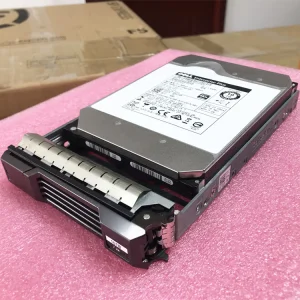
Explore our high-performance transceivers and enterprise rack servers designed to handle high-bandwidth data center throughput.
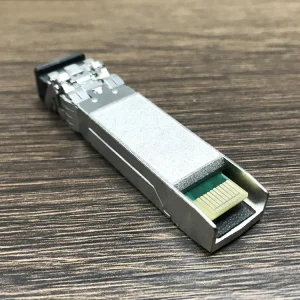
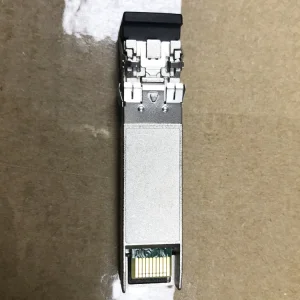
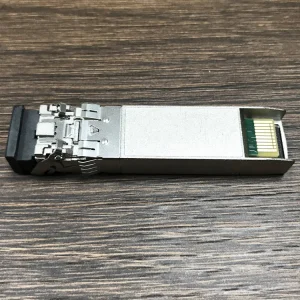
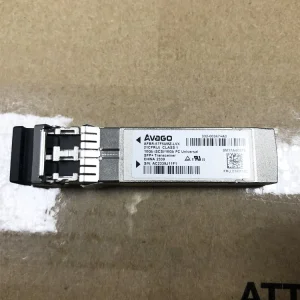
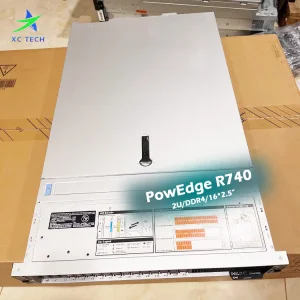

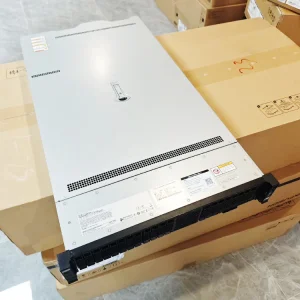
Our transceivers conform to the Multi-Source Agreement (MSA) standard, meaning they are fully operational across multi-vendor networks without vendor lock-in. Whether integrating into Lenovo switches or Dell PowerEdge infrastructure, connectivity is seamless.
Equipped with Digital Diagnostic Monitoring (DDM), system administrators can monitor real-time operating metrics including laser temperature, supply voltage, transmitter bias current, and receiver optical power.
Engineered to offer an MTBF (Mean Time Between Failures) exceeding 1 million hours, backed by a comprehensive 3-year warranty for industrial deployment security and lower lifetime ownership cost.
In an era defined by hyperscale data centers, 5G rollouts, and low-latency cloud compute instances, the demand for high-reliability optical communication interfaces has scaled exponentially. Enterprise procurement directors, network architects, and system integrators face dual pressures: maintaining flawless signal integrity while managing cost-to-performance efficiency. Small Form-factor Pluggable (SFP) modules, specifically 10G SFP+ and 16G Fibre Channel (FC) models, represent the critical foundation of modern network fabrics.
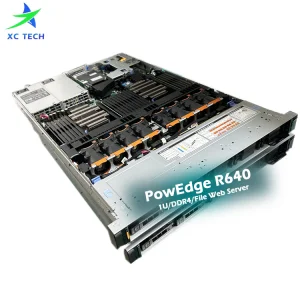
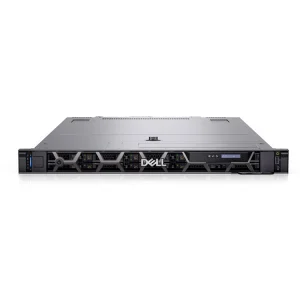
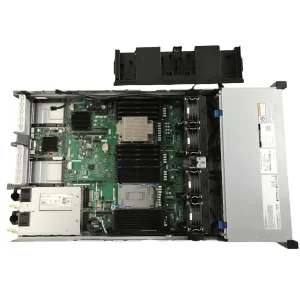
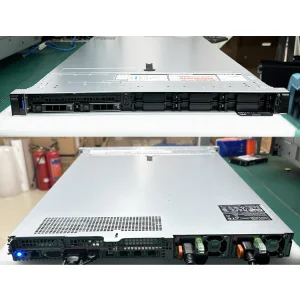
Global enterprise networks are transitioning from legacy copper infrastructures to single-mode and multi-mode fiber backbones. This transition is not merely a bandwidth upgrade, but a move to support complex server arrays. Equipment like the Dell EMC PowerEdge R740, R7615, and R640, or the Huawei XFusion FusionServer 2488H, process massive database reads/writes and virtualization workloads. Without high-speed optical links, server interfaces create data bottlenecks, preventing CPUs from operating at maximum capacity.
Fibre Channel (FC) technology remains a critical asset in storage area networks (SAN). The deployment of products like the Lenovo AC2339J11F1 10Gb/16Gb FC Universal SFP Module enables storage arrays to transmit blocks of data seamlessly. These modules support both 10G Ethernet configurations (for LAN environments) and 16G Fibre Channel protocols (for specialized high-speed SAN arrays), offering deployment flexibility.
Verified manufacturing processes, rigorous quality assurance, and global distribution operations driving structural supply chain resilience.
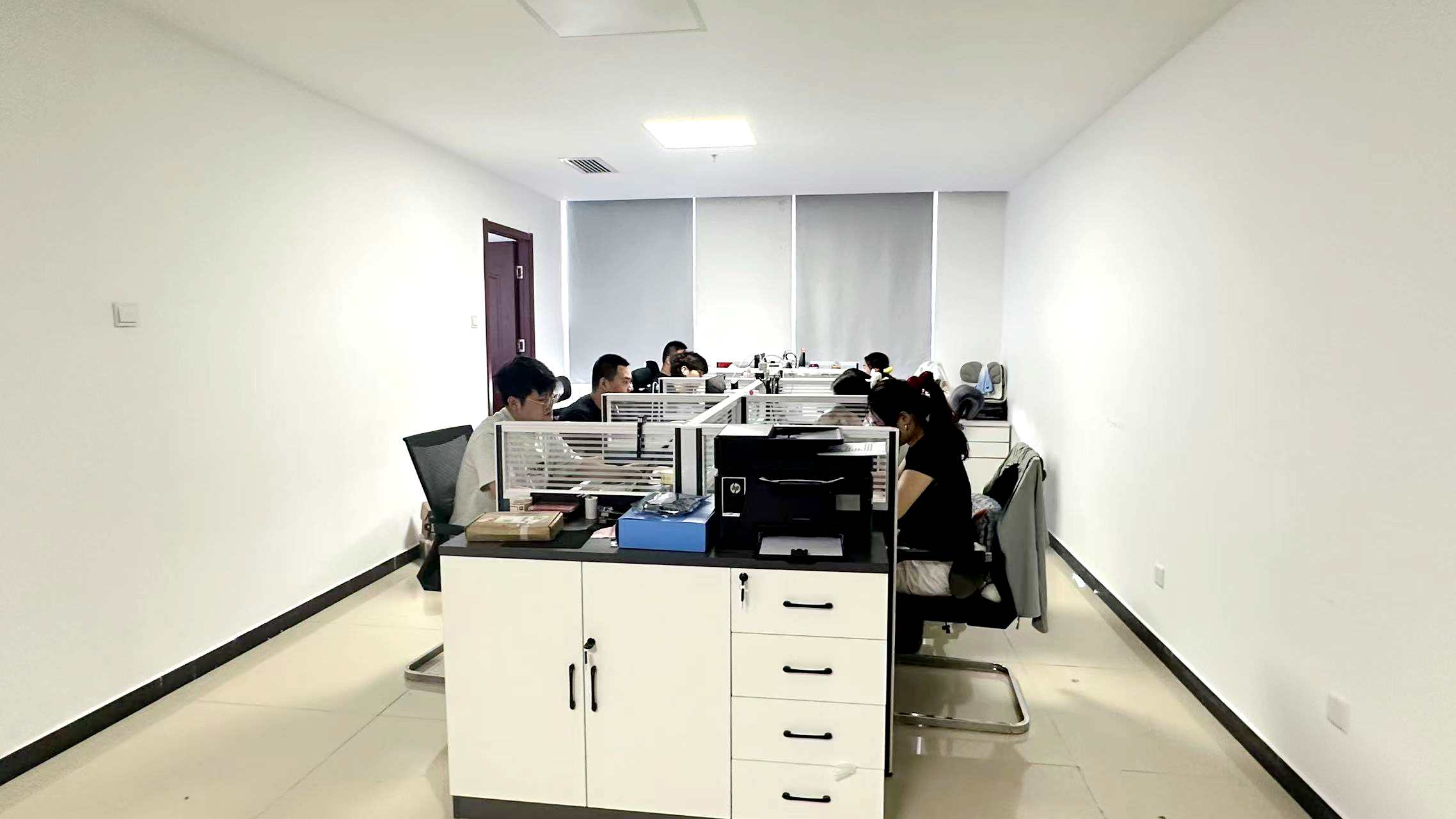
Established in 2021, our operations are built on raw material traceability and 100% inspection methodologies. Every optical transceiver and enterprise component undergoes real-world diagnostic testing before leaving our 160-square-meter distribution hub, ensuring minimal failure rates at the deployment site.
| Operational Metric | Verification / Value |
|---|---|
| Company Registration Date | 2021-08-27 |
| Annual Export Revenue | USD $1,180,000 |
| Key Global Markets | Eastern Europe (20%), Domestic (15%), North America (10%) |
| Quality Assurance Protocols | Raw Material Traceability & 100% Inspection of all units |
| Target Client Profiles | Brand Businesses, Retailers, Wholesalers, System Engineers |
As enterprises transition from 10G/25G architectures to 100G, 400G, and even 800G fabrics, the technological trajectory of Small Form-factor Pluggables continues to innovate. The industry roadmap balances physical scale, power budget limitations, and thermal dissipation challenges.
Modern transceivers are engineered to consume less than 1.5W per port. Lowering power requirements directly translates to reduced operating costs and lower heat generation inside tight chassis spaces like 1U and 2U rack servers.
Integrating laser sources directly onto silicon chips allows manufacturers to produce higher capacity transceivers (such as 100G QSFP28 and 400G QSFP-DD) with improved manufacturing yields and transmission reliability.
Future designs will place optical engines on the same substrate as central switch silicon. This reduces copper trace losses and latency, paving the way for next-generation AI high-performance computing clusters.
For medium-sized enterprises and global service providers, infrastructure planning must align computing power (via systems like AMD EPYC-powered Dell PowerEdge R7625 or Intel-powered R650) with networking hardware. When deploying multiple rack units, choosing compatible SFP modules is key to maintaining consistent throughput. Utilizing tested, vendor-neutral optical solutions ensures flexible networking configurations without OEM price inflation.
Operating across diverse regions—including Eastern Europe, North America, and domestic markets—requires strict adherence to international standardizations. Network reliability is deeply connected to security and environmental safety directives. All exported optical interfaces and components comply with strict standards:
Our products meet key international standards such as CE, FCC Part 15 Class B, and RoHS. This guarantees our network modules use lead-free manufacturing processes and limit electromagnetic interference, which is vital when deployed alongside critical medical or financial servers.
Traceability ensures that internal lasers (such as VCSEL or DFB diodes) and optical sub-assemblies (OSA) originate from verified semiconductor fabs. This reduces the risk of in-field degradation and signal loss, which are common issues with unverified SFP suppliers.
Backed by 4 years of dedicated export experience, our team coordinates with local logistics operators to ensure rapid transit, clean customs clearances, and secure delivery to brand businesses, engineers, and wholesalers worldwide.
Technical support, compatibility insights, and procurement advice for SFP modules and server hardware.
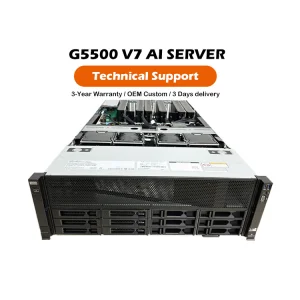
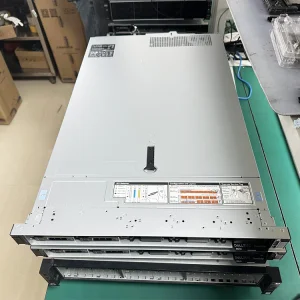
High-capacity servers and storage solutions designed to work with high-speed fiber networks.

 Vertex AI Server