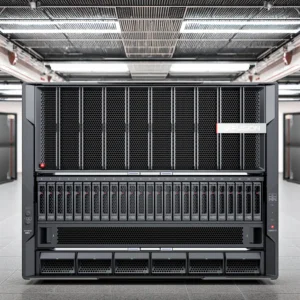
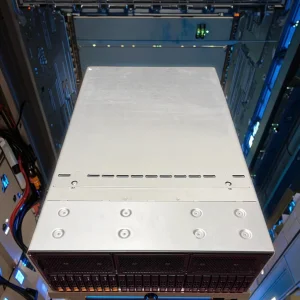
Explore our high-performance rack servers engineered for parallel workload acceleration, intensive deep learning model optimization, and scalable real-time AI inference.
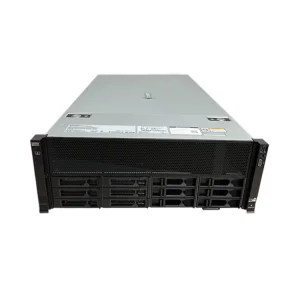
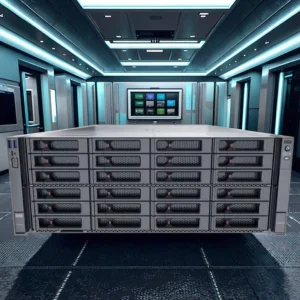
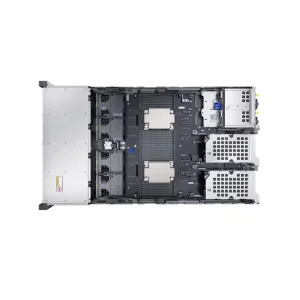
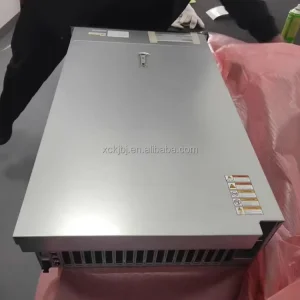
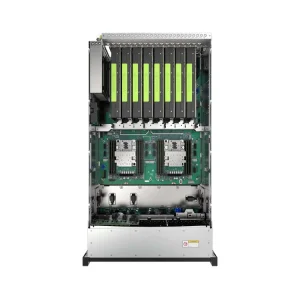
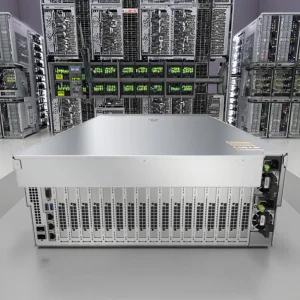
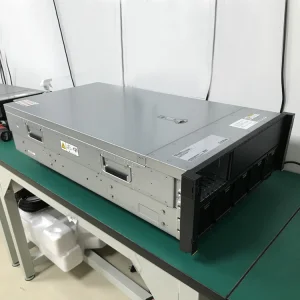
Navigating the computational landscape of Large Language Models, Generative AI, and heterogeneous high-performance computing.
The global computational market is undergoing an unprecedented hardware transformation. With the rise of advanced deep learning algorithms, including the landmark Deepseek open-source model configurations and multi-billion parameter Large Language Models (LLMs), traditional CPU-only architectures have ceased to meet computational requirements. Modern enterprises, hyperscale cloud service providers (CSPs), and specialized AI research institutes now require heterogeneous computing architectures that place specialized accelerator cards (GPUs, TPUs, NPUs) at the heart of their hardware strategy.
As a leading AI server exporter and manufacturing partner, we observe that the demand for high-performance server architectures is shifting from centralized hyperscale data centers to localized, edge-situated inference hubs and hybrid computing infrastructures. Scalable computing power is no longer exclusive to tech conglomerates; industrial automation, high-frequency finance, molecular simulation, and real-time multi-channel video analytics platforms are now actively deploying localized 4U and 8U GPU servers to control data sovereignty, latency, and operational bandwidth costs.
The industrial design of AI servers is defined by a continuous push for higher compute density, thermal dissipation efficiency, and extreme memory bandwidth. Modern configurations showcase several clear development paths:
Delivering high-integrity hardware designs customized to resolve bottlenecks across specialized technological applications.
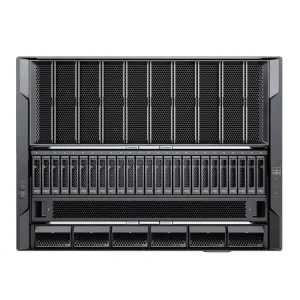
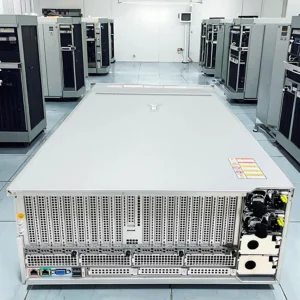
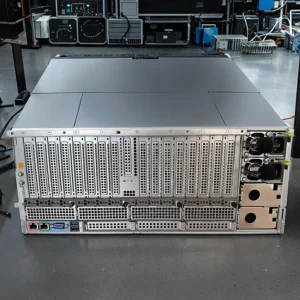
Deploy custom multi-GPU configurations (such as the G8600 V7 8-GPU monster server) designed to handle billions of parameters. Optimized for high-throughput tensor calculations and local model checkpoint storage.
Designed for real-time video stream extraction, facial recognition, traffic flow prediction, and public safety applications. High density single-width GPU configurations enable up to 80+ simultaneous HD streams decoding.
Bridge the gap between scientific research and engineering simulations. Intel Xeon processors paired with low-latency InfiniBand network interfaces ensure high-speed parallel cluster communications.
As computing workloads transition toward multimodal intelligence, xFusion and our hardware integrations continue to push boundaries. The integration of CXL (Compute Express Link) architectures will redefine how systems share memory pools between CPU processors and accelerator cards. Furthermore, our partnership with leading components suppliers guarantees immediate hardware compatibility upgrades for next-generation architecture revisions, ensuring that your capital investment remains competitive for years to come.
Combining legacy Intel processors with PCIe Gen 4 accelerator expansion slots for flexible workload management.
Introduction of the G5500 V7 and G8600 V7 platforms, resolving systemic memory bandwidth limits and slow bus transactions.
Broad deployment of hybrid liquid-to-air cooling options for high-TDP GPU deployments (450W+ per unit).
Future architectural implementations to support non-homogeneous coherent memory pools and sub-nanosecond processing latency.
Operating a rigorous quality management process that enables dependable global logistics, complete compliance tracking, and reliable enterprise deployment.
Addressing the fundamental technical, logistical, and architectural concerns of systems architects and global procurement managers.
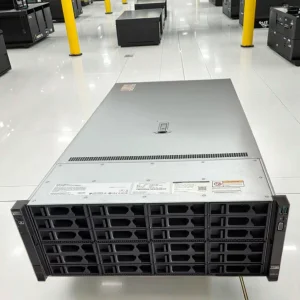
The G5500 series is typically optimized for standard density, balanced performance workloads in a 4U footprint. It supports flexible multi-GPU arrays (such as RTX 4090 configurations). In contrast, the G8600 V7 is an 8U high-density hardware solution designed for training foundational models (like Deepseek) and high-load databases. It features massive cooling systems and advanced interconnect paths designed to sustain maximum GPU power draws over extended periods without thermal throttling.
We implement a strict 100% inspection protocol. Every hardware chassis undergoes component checking, BIOS configuration, thermal testing under high-load benchmarking tools, and PCIe channel integrity validation. Raw material traceability tracking ensures every server's historical components are cataloged prior to shipping.
Yes. Our GPU servers, including the Intel Xeon DDR5 architectures, are fully compatible with mainstream ML frameworks (PyTorch, TensorFlow, vLLM, TensorRT) and optimized containerized environments. The high RAM and PCIe Gen 5 configurations permit rapid deployment of Deepseek LLMs for internal corporate inference.
For high-density platforms like the 8U G8600 V7 or the 4U G5500 V7 configured with multiple accelerator cards, we recommend deploying redundant, high-efficiency power supplies (typically 2000W to 3000W hot-swappable 1+1 or 2+2 setups) connected to 200-240V high-voltage power distribution units (PDUs) to minimize current draw and thermal loss.
Explore the remainder of our specialized lineup optimized for database acceleration, enterprise virtualization, and speech-to-text rendering engines.
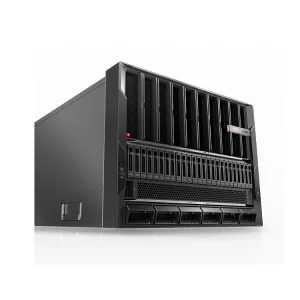
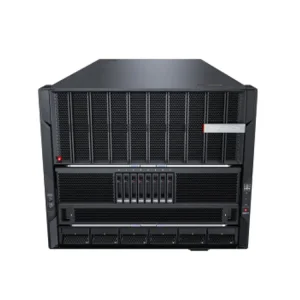
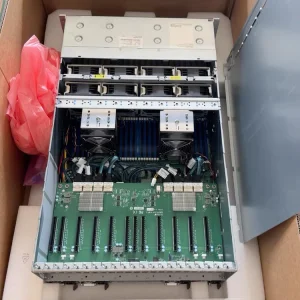
 Vertex AI Server