High-performance graphics processors, server mainboards, and virtualized GPU accelerators optimized for modern computational workloads.
How high-performance coprocessors and parallel execution units are reshaping the landscape of global IT procurement.
The global compute ecosystem is undergoing a generational shift. Traditional Central Processing Units (CPUs), designed for sequential processing, are hitting thermal and physical limits, often referred to as the flattening of Dennard scaling. Conversely, workloads in artificial intelligence (AI), complex graphic rendering, and cryptographic analysis require simultaneous data calculations. Under these requirements, GPU acceleration has transitioned from a niche hardware choice to a foundational requirement of enterprise data infrastructure.
As a leading GPU accessory manufacturer and exporter, we facilitate this transition by providing global markets with the high-reliability graphics processing hardware, server motherboards, chassis, and cooling systems needed to power next-generation clusters. Whether integrating vGPU (Virtual GPU) architectures for enterprise virtualization or deploying massive arrays of inference cards, our components ensure that your processing power is matched with high reliability and thermal efficiency.
Decoupling hardware configurations to optimize workload-to-cost efficiency profiles.
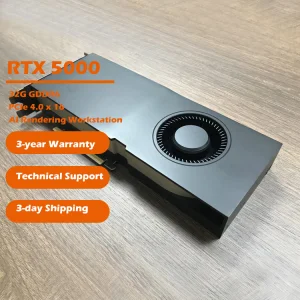
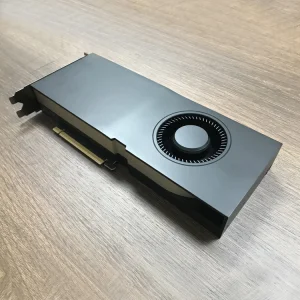
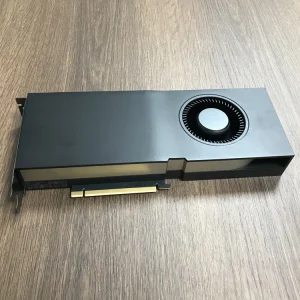
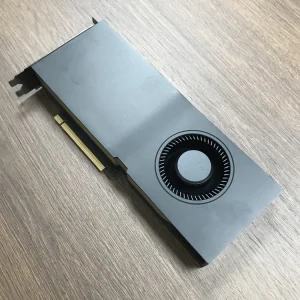
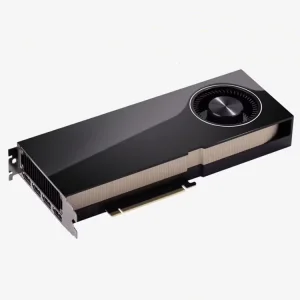
Products such as the RTX 5000 Ada Generation (32GB GDDR6) leverage advancements in RT Cores and Tensor Cores. With a 250W thermal design power (TDP), they achieve high energy efficiency, enabling designers, CAD modelers, and local machine learning engineers to train models without dedicated server room cooling.
Enterprise-grade graphics architectures support vGPU (Virtual GPU) capabilities through software suites. This allows virtualization administrators to partition a single high-performance card into multiple virtual machines, delivering dedicated graphics capabilities to remote workforces without sacrificing security or performance.
In contrast to high-wattage rendering processors, specialized inference cards like the Atlas 300V Pro operate at low power levels (such as 72W) while delivering 140 TOPS of INT8 processing power. This low thermal footprint makes them suitable for edge computing deployments, automated video analysis, and smart city infrastructure.
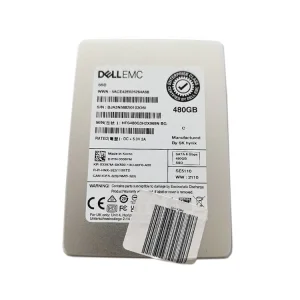
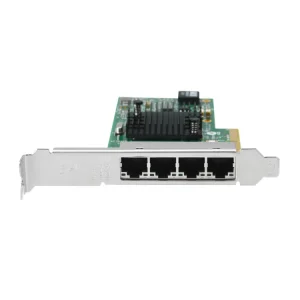
For enterprise purchasing managers, choosing hardware is not just about raw teraflops; it requires analyzing memory interfaces and bandwidth. For instance, the RTX A6000 (48GB GDDR6) features a memory bandwidth of 768 GB/s. This high bandwidth helps reduce bottleneck delays when transferring large datasets into video memory. When paired with network solutions like the Intel 10/25/100GbE network interfaces and NVMe SAS solid-state drives, data transfer speeds align with processing capacity, minimizing system latency.
Optimizing hardware stacks for Mixture of Experts (MoE) topologies and low-latency inference workloads.
The rapid adoption of open-source architectures like DeepSeek has redefined the infrastructure priorities of enterprise data centers. Unlike dense models that process every query through every parameter, modern Mixture of Experts (MoE) architectures dynamically activate specific pathways. This approach places heavy demands on system memory bandwidth and low-latency communications between nodes.
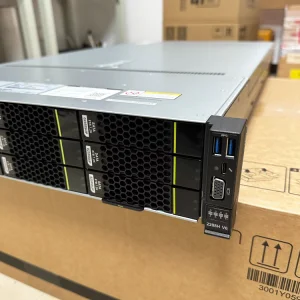
To run these advanced AI models, systems need more than just raw GPU power. Modern server designs like the FusionServer 1288H / 2288H V6 / G5200 V7 provide multi-socket Intel Xeon configurations and DDR5 system memory to manage the routing logic of MoE networks. High-speed networking, such as PCIe Gen 4.0/5.0 interfaces and 100GbE controllers, enables fast communication between different server nodes, helping prevent performance bottlenecks.
Tailoring server and accelerator assemblies to specific vertical market requirements.
Hardware Base: Huawei Atlas 300V Pro, Intel Xeon Scalable Processors, 2U Rack Servers.
Designed for public safety networks, retail intelligence, and automated traffic systems. Optimizes decoding throughput and real-time inference without high power requirements.
Hardware Base: RTX A6000 48G, RTX 5000 Ada, xFusion 2U Rack Servers.
Supports media production teams, architectural visualization bureaus, and virtual desktop infrastructure (VDI). High frame buffers ensure multi-user rendering sessions without system lag.
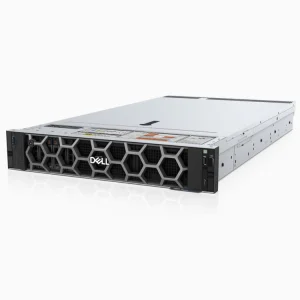
Hardware Base: PowerEdge R840, High-bandwidth PCIe 100Gb Network Interfaces, High-Speed SAS SSDs.
Optimized for financial simulation, oil and gas exploration, and biomedical research. Focuses on high-speed data flow and robust storage reliability.
A look at our manufacturing practices, quality control, and global supply chain integrations.
Preparing enterprise infrastructures for PCIe Gen 6.0 and liquid-cooled data centers.
As computational density increases, our technical roadmap focuses on addressing two main challenges: heat generation and memory bandwidth bottlenecks. Future high-performance systems will require advanced cooling solutions and high-speed bus interfaces to handle rising workloads.
Our roadmap prioritizes several key areas:
Ensuring transparent transactions and component traceability across international borders.
Exporting high-technology components requires strict compliance with international trade regulations and export controls. Our export operations are structured around compliance, featuring verified HS classifications, complete licensing documentation, and clear transaction tracking.
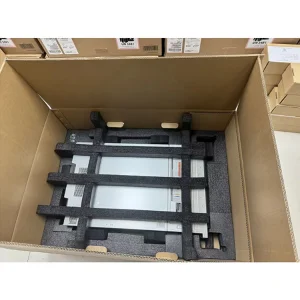
We work closely with logistics partners to ensure safe delivery across North America, Eastern Europe, and Asian markets. Every server card and motherboard undergoes testing and inspection before shipment, ensuring they arrive ready for integration into enterprise systems.
Answers to common technical and logistics questions from our global client base.
Our featured RTX 5000 Ada and related professional workstation series GPUs come with a 3-year factory warranty. This covers components under standard operational conditions within their specified TDP thresholds (e.g., 250W). We handle repair or replacement options directly with enterprise purchasers to minimize hardware downtime.
Virtual GPU (vGPU) technologies allow a single physical graphics card, such as the RTX A6000, to be shared across multiple virtual machines. Using hypervisors, IT managers can allocate specific VRAM profiles (e.g., 4GB or 8GB per user) to match individual workloads. This helps optimize hardware utilization compared to assigning a physical card to a single user.
Deploying models like DeepSeek typically requires high GPU memory bandwidth (GDDR6 or HBM) and sufficient VRAM to hold model weights. Additionally, multi-socket server platforms (like the FusionServer or PowerEdge series) equipped with Intel Xeon Scalable Processors, DDR5 RAM, and high-speed network interfaces (e.g., 100GbE) are recommended to maintain steady data flow and minimize processing delays.
Edge devices often operate in environments with limited cooling and power. The Atlas 300V Pro provides 140 TOPS of INT8 inference processing power while consuming 72W of electricity. This lower power footprint allows for simpler cooling setups and more reliable operation in remote deployments.
Our quality control process includes checking every unit before shipment. Our QA inspector verifies component tracking, performs electrical test routines, and tests stability under workload stress. We also verify that the BIOS and firmware are updated to ensure compatibility with modern servers.
Reliable system components, high-speed storage, and network interfaces designed for intensive enterprise operations.
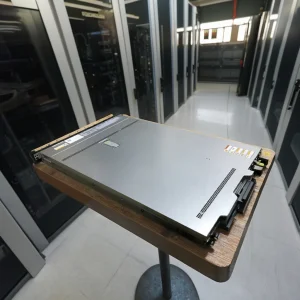
 Vertex AI Server