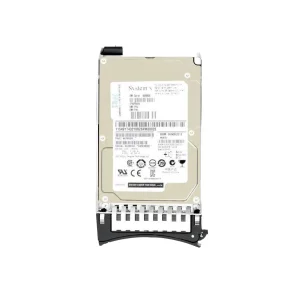
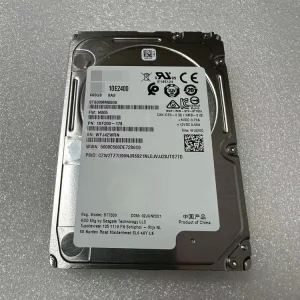
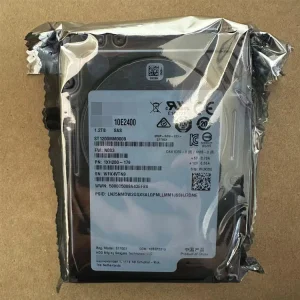
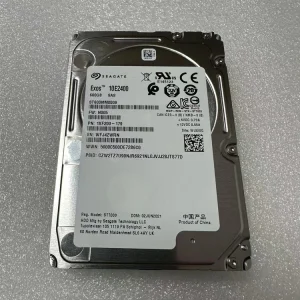
Discover our primary range of highly reliable, factory-certified hard disk drives optimized for high-performance servers, cloud arrays, and mission-critical storage setups.
Analyzing the shift in modern storage architecture, capacity milestones, and the crucial balance between mechanical reliability and solid-state acceleration.
In the era of hyper-scale cloud deployment, large-scale AI modeling, and petabyte-range cold storage databases, the modern hard disk drive (HDD) has transitioned from a basic computing accessory into a highly engineered, specialized piece of infrastructure. The global server environment demands non-stop operation, high densities, and optimized Total Cost of Ownership (TCO). While solid-state drives (SSDs) excel in transactional operations with high IOPS, mechanical enterprise HDDs continue to serve as the baseline physical layer for more than 85% of active exabytes in enterprise data centers today.
Sealing high-capacity drives with Helium instead of air reduces internal turbulence. This allows for thinner recording platters and denser packaging, minimizing power consumption and operating temperatures.
Heat-Assisted (HAMR) and Microwave-Assisted Magnetic Recording (MAMR) bypass the superparamagnetic limit, enabling write densities beyond 2 Terabits per square inch, paving the way for 30TB+ storage drives.
Utilizing separate actuators working in parallel allows the drive to split IO requests. This effectively doubles sequential throughput, solving the capacity-to-performance bottleneck in big data arrays.
The manufacturing ecosystem for enterprise-class accessory HDDs relies on extreme precision. Factors such as spindle speed (10,000 RPM to 7,200 RPM), connection interface parameters (SAS 12Gb/s vs SATA 6Gb/s), and internal cache sizes (like the 256MB buffers found in high-performance Exos drives) determine how data packets are written, queued, and retrieved. By adopting these high-density mechanical designs, modern datacenters maintain physical footprints while expanding storage density without requiring extensive structural or cooling redesigns.
How engineering directors and IT purchasing leads evaluate bulk storage acquisitions beyond face-value pricing.
Procurement departments at Tier-2 Cloud Service Providers (CSPs), system integrators, and industrial manufacturing plants face multi-dimensional challenges when selecting bulk storage assets. High-volume buyers prioritize long-term performance stability, absolute compatibility with existing SAS backplanes, and low annualized failure rates (AFR). In contrast to consumer-grade purchases, enterprise procurement relies on three core variables:
| Storage Parameter | Enterprise SAS HDDs (e.g., Exos, Dell Compellent) | Standard Desktop SATA HDDs | Procurement Impact |
|---|---|---|---|
| Interface Dual-Porting | Supported (Dual-Port SAS 12Gb/s) | Not Supported (Single-Port SATA 6Gb/s) | Ensures hardware failover pathing in high-availability clusters. |
| MTBF Rating | 2.0 to 2.5 Million Hours | Around 800,000 Hours | Reduces annual maintenance costs and drive replacements. |
| Vibration Compensation | Active RV Sensors (Rotational Vibration) | None or Passive Only | Maintains throughput and lifespan in high-density rack enclosures. |
| Sector Formats | 512e / 4Kn Adjustable | 512e Only | Provides backward compatibility with older legacy server kernels. |
A transparent review of our manufacturing facilities, quality control structures, and export distribution networks.
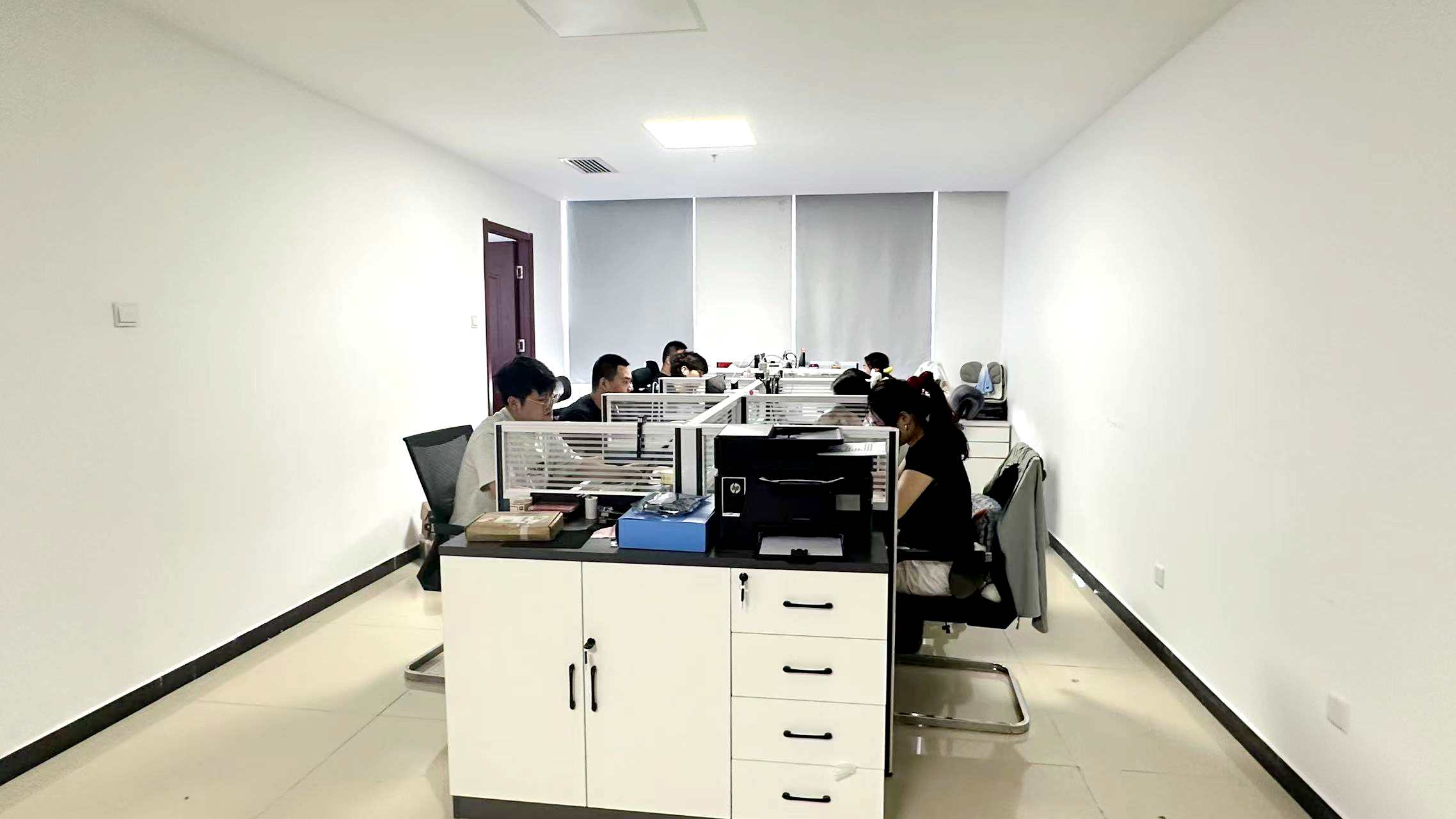
Our facility functions as an essential partner in the IT hardware supply chain, providing system testing, quality checks, packaging, and global distribution of enterprise-level hard drives and servers. With 100% of our products undergoing rigorous functional analysis, bad-sector scans, firmware checks, and interface validations prior to export, we ensure zero-day failures are virtually eliminated.
We work closely with brand businesses, regional retailers, system engineers, wholesale buyers, and custom hardware builders. By sourcing traceable raw components and maintaining certified, dust-controlled testing facilities, we help our clients maintain high operational uptime across their enterprise arrays.
| QA/QC Inspectors | 1 Certified Storage Systems Inspector |
| Facility Floor Space | 160 Square Meters specialized testing facility |
| Primary Export Regions | Eastern Europe (20%), Domestic Market (15%), North America (10%) |
| Accepted Languages | English (Global Procurement Operations) |
Customizing storage layouts for virtualized infrastructure, enterprise SANs, and high-performance computing clusters.
Integrating high-density SAS drives (such as 10TB or 12TB server drives) requires careful planning of rack space, cooling efficiency, and backplane bandwidth. Typical deployment environments fall into three key categories:
Modern data centers utilize a hot/cold layout. High-performance, high-capacity SAS drives are deployed as the warm tier (Tier-1) where large-scale backups, data lakes, and recovery logs reside, providing a balanced cost-to-capacity ratio.
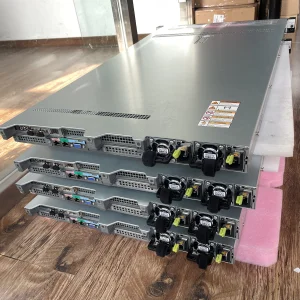
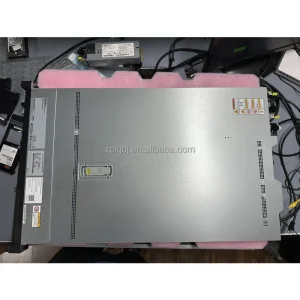
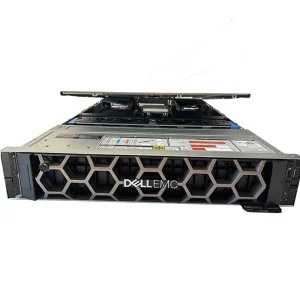
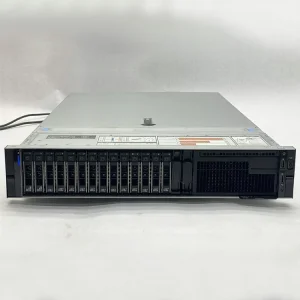
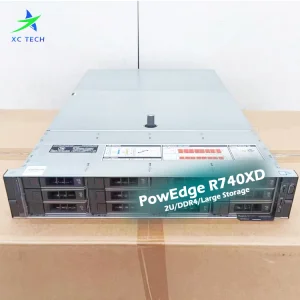
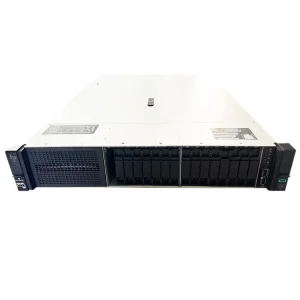
Leveraging high-capacity 1U and 2U rack servers (like the Huawei 1288H V7 or Dell PowerEdge R740 families) ensures balanced computational power alongside multi-terabyte internal storage directly connected to RAID controllers.
Continuous write-intensive video surveillance streams require write-optimized drives. Enterprise-class drives feature firmware optimized for sequential writing, reducing frame drops and ensuring compliance with regulatory data policies.
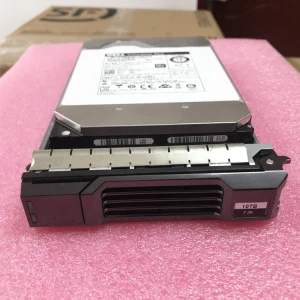
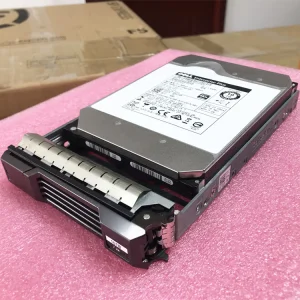
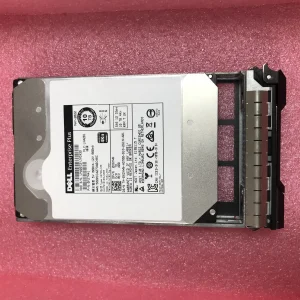
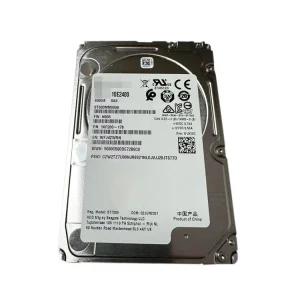
For example, the deployment of Dell Compellent series internal SAS 10TB drives inside legacy SCv2000, SCv2020, SCv3020, and SCv3000 storage controllers allows operators to extend the life of their existing array assets without needing costly controller upgrades. These storage arrays use advanced auto-tiering, automatically moving hot data to SSDs while keeping inactive data on high-density SAS drives. Sourcing direct-fit components with matching firmware is critical to maintaining array health, preventing drive-reject errors, and avoiding data corruption.
Navigating global customs, trade regulations, environmental standards, and quality certifications for seamless bulk delivery.
Enterprise electronics components are subject to strict international regulations. As a global supplier, our logistics and quality control frameworks comply with key regional standards to ensure smooth importing and deployment:
Additionally, we provide detailed serial number tracking for each shipment. This transparency enables buyers to trace manufacturing batches and maintain warranty visibility for all shipped items, including hard disks, memory boards, and entire rack server chassis.
The future of magnetic media: transition pathways, interface evolutions, and sustainability strategies.
As the storage industry targets 40TB+ capacities, magnetic recording technology is undergoing its most significant evolution in two decades. The focus remains on increasing areal density while minimizing power consumption. The key developments shaping the next five years include:
Conventional Perpendicular Magnetic Recording (PMR) has reached its density limits. Future enterprise arrays will shift fully to Heat-Assisted Magnetic Recording (HAMR) drives, requiring updated disk controllers and power profiles.
To simplify server backplanes and eliminate legacy SAS/SATA host bus adapters, next-generation enterprise HDDs are testing native PCIe NVMe interfaces, aligning hard drive connections with modern U.2/U.3 SSD slots.
Data centers are prioritizing green procurement. Future HDD designs will place a strong emphasis on recyclability, enabling simple recovery of rare-earth magnets and aluminum platters at end-of-life.
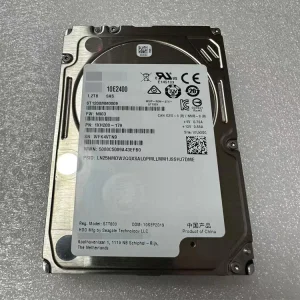
We work to align our supply capabilities with these shifting tech standards, ensuring that when our clients upgrade from legacy 600G and 1.2T SAS drives to high-capacity SAS-3 or NVMe configurations, we have verified, certified stock ready for immediate delivery.
Expert answers to common technical, logistics, and compatibility questions raised by IT architects and purchasing managers.
SAS (Serial Attached SCSI) 12Gb/s offers twice the raw interface speed of SATA 6Gb/s, but the primary operational advantage is its dual-port architecture, support for full-duplex communication, and advanced command queuing. This allows for simultaneous read and write paths, error correction, and robust data pathway failovers. This makes it suitable for multi-initiator setups, clustering, and high-availability enterprise environments.
Yes, provided they undergo rigorous testing. Our QA process includes zero-fill formatting, bad sector remapping, read/write latency testing, and SMART attribute analysis. Refurbished or used drives from top enterprise families (like Dell PowerEdge or HPE ProLiant pullouts) offer a cost-effective storage tier for non-primary data structures, secondary backups, and long-term archiving platforms.
Dell Compellent systems running Storage Center OS (SCOS) utilize strict firmware signature verification. Standard retail hard drives, even if they match in capacity and speed, will typically be flagged as uncertified and rejected by the controller. Specifying part numbers like the 0XGYWN ensures the drive has the correct OEM-signed firmware to integrate with the SCv2000, SCv2020, SCv3020, and SCv3000 storage platforms.
Bulk shipments are packed in heavy-duty anti-static slotted boxes containing 20 or 40 drives per carton, surrounded by shock-absorbent foam. Standard orders typically ship within 3 to 5 business days after payment verification, depending on our inventory. We provide tracking information and handle custom clearance declarations for smooth international delivery.
Explore our selection of enterprise servers, rack assemblies, and specialized high-RPM storage units for performance-driven data centers.
 Vertex AI Server