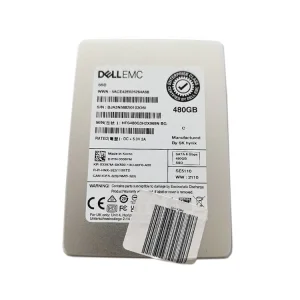
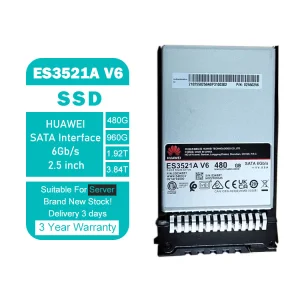
Explore our tier-one enterprise solid-state drives engineered for read-intensive, mixed-use, and write-heavy environments.
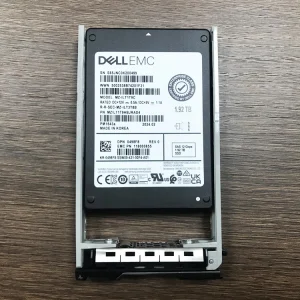
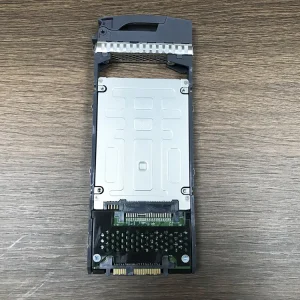
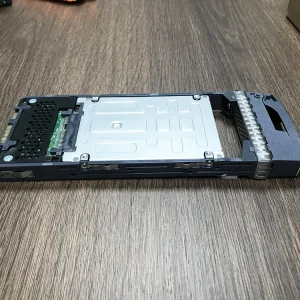
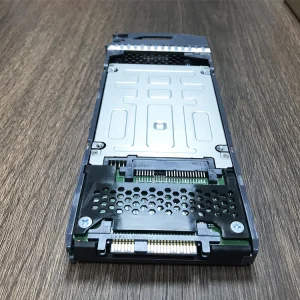
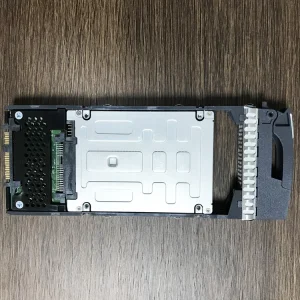
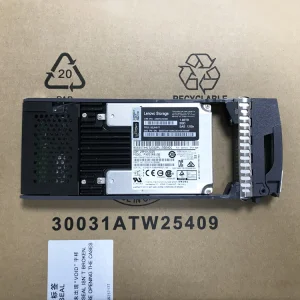
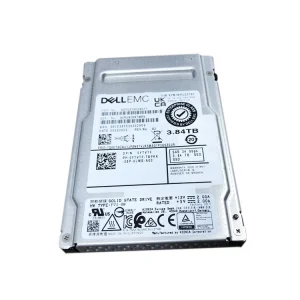
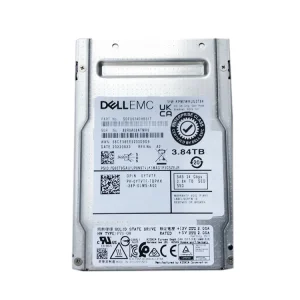
In modern data centers, SSD technology has evolved from simple SATA drives into highly complex NVMe and SAS devices. Enterprise workloads—ranging from transactional databases to distributed virtualization structures—require unparalleled read/write speeds, predictable IOPS profiles, and strict data consistency guarantees. The transition to PCIe Gen 4 and Gen 5, paired with the 24Gbps SAS interfaces found in products like the KPM7WRUG3T84, has redefined server performance limits.
Unlike consumer storage options, accessory enterprise SSDs are designed to function under constant, heavy write conditions (indicated by DWPD ratings). Implementing advanced NAND flash architectures like TLC and QLC allows data centers to maximize space efficiency without compromising durability, ensuring that hardware acquisitions provide sustained performance over years of continuous operation.
Identifying key technical requirements and cost structures analyzed by procurement departments, systems integrators, and CTOs.
Procurement teams closely examine DWPD (Drive Writes Per Day) and TBW (Terabytes Written) values. Read-intensive setups run on 1 DWPD drives, whereas write-heavy database engines require 3 DWPD or higher to prevent premature drive wear.
Selecting between SAS, SATA, and NVMe drives requires aligning with existing server backplanes. SAS (12G/24G) offers robust dual-port failover, SATA offers cost-effective upgrades, and NVMe delivers maximum throughput.
Evaluating storage density per watt, thermal envelopes, and MTBF (Mean Time Between Failures) helps data center operators optimize ongoing energy, cooling, and maintenance costs.
Verifiable performance records, export capacity data, and quality control systems verifying our role as a trusted supply chain partner.
Tailored hardware profiles designed to optimize performance across various demanding enterprise compute environments.
Virtualized environments like VMware vSAN and Nutanix AHV depend on predictable, ultra-low latency write storage. Mixed-use SAS SSDs (such as the Lenovo PX05SRB series) balance the intensive write cycles of virtual machine logs with the high-speed read requirements of guest operating systems.
Utilizing dual-port SAS architecture guarantees continuous path availability, preventing data access interruptions in the event of a controller or host failure.
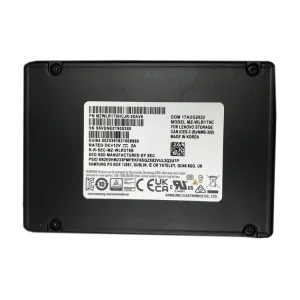
OLTP (Online Transaction Processing) workloads for financial platforms require high storage IOPS and minimal write latency. Implementing enterprise NVMe drives (like the Samsung MZ-WLR1T9C) bypasses legacy SAS/SATA bottlenecks, allowing direct PCIe bus access. This enables rapid write updates and near-instant transaction processing.
Content streaming, software distribution hubs, and static file delivery systems are heavily read-intensive. For these systems, read-optimized SATA drives (such as the Dell 480GB SATA SSD) provide an exceptional balance of storage capacity, thermal efficiency, and budget optimization.
By matching read-intensive drives with read-heavy workloads, data centers can significantly lower acquisition costs while maintaining the throughput required for end-user content delivery.
Our QA/QC team tests every solid-state drive under simulated high-load conditions before packaging. We verify sector integrity, controller firmware alignment, thermal behavior, and SAS/SATA signal stability to ensure immediate compatibility with major OEM server architectures, including Dell PowerEdge, Lenovo ThinkSystem, and Huawei FusionServer.
Analyzing upcoming developments in storage interfaces, physical drive form factors, and firmware-level management.
The solid-state drive landscape is shifting toward the PCIe Gen 5 and Gen 6 interfaces. In NVMe sectors, these updates double bandwidth compared to previous generations, which is critical for handling large datasets in AI and deep learning workloads. In SAS ecosystems, the deployment of 24Gbps SAS interfaces (SAS-4) delivers the data rates needed to support high-density storage shelves.
Additionally, form factors are evolving. Standard 2.5-inch U.2/U.3 interfaces are increasingly complemented by E1.S and E3.S EDSFF (Enterprise and Datacenter Standard Form Factor) alternatives. These designs improve cooling efficiency and system layout density in modern 1U/2U server racks.
On the software side, technologies like ZNS (Zoned Namespaces) and CXL (Compute Express Link) are bridging the gap between host CPUs and raw flash memory. ZNS reduces write amplification and system overhead by allowing the host OS to align write operations directly with the physical media layout, improving both drive performance and lifetime.
This technology reduces write amplification factors, improving drive lifespans and lowering long-term maintenance costs for hyperscale data centers.
Clarifying critical performance, compatibility, and logistics questions for IT managers and enterprise procurement teams.
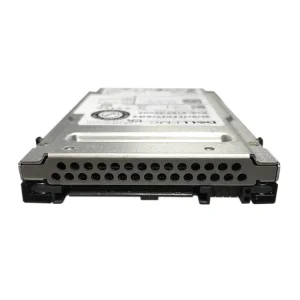
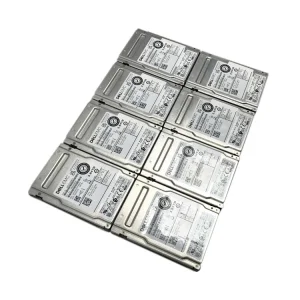
High-capacity SAS, SATA, and NVMe drives designed for deep server bays and demanding enterprise workloads.
 Vertex AI Server