Explore our premium stock of Dell PowerEdge rack servers and critical high-speed networking adapters engineered for modern computational workloads.
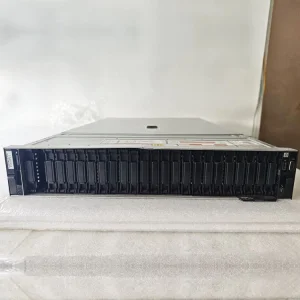
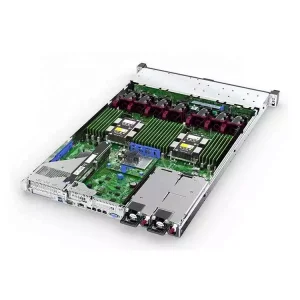
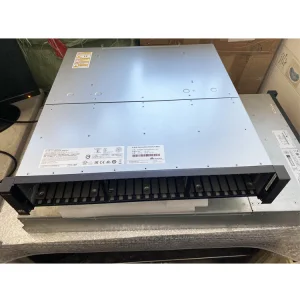
As a dedicated technology hardware supply partner registered in 2021, we have structured a robust global supply chain providing high-capacity, mission-critical server hardware. Backed by rigorous quality control protocols and a 100% inspection policy, we facilitate seamless international integration of computing networks.
Supply Traceability & Guaranteed Authentication
Every server component, CPU block, memory module, and RAID configuration is traceably logged, ensuring optimal uptime in live virtualized, cloud, and edge infrastructures.
Analyzing the strategic positioning of Dell EMC server architectures within the contemporary high-compute global landscape.
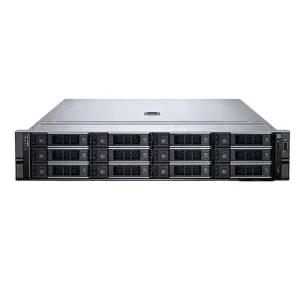
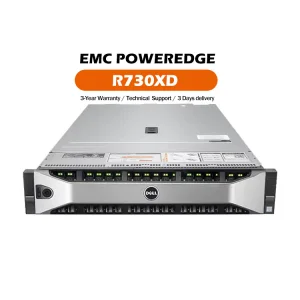
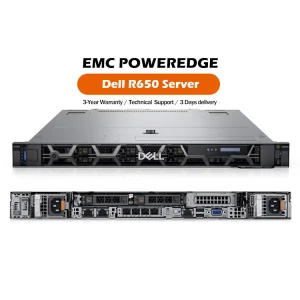
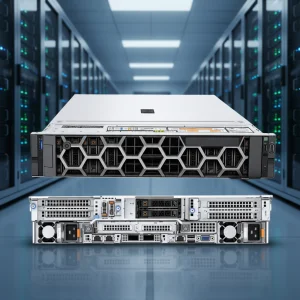
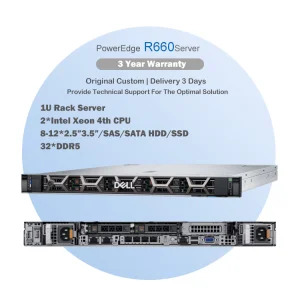
The global enterprise data ecosystem is undergoing rapid evolution, shifting from highly centralized cloud repositories to hybrid frameworks that balance on-premise operations with localized edge infrastructure. In this dynamic context, Dell PowerEdge servers form the digital foundation of modern computation. System architectures such as the dual-socket 2U platforms (Dell R750 and R760 series) and compact 1U servers (Dell R650 and R660 series) have established an industry standard for compute density, thermal adaptation, and operational scalability.
For organizations deploying high-availability databases, private cloud hypervisors, and massive virtualization clusters, the choice of server configuration directly impacts long-term capital and operational efficiency. The integration of PCIe Gen 5 routing, DDR5 ECC memory channels, and smart cooling architectures allows companies to run higher container densities per rack unit. As a leading exporter, our catalog matches these complex engineering demands, supplying configured systems to main international markets, including Eastern Europe, domestic facilities, and North America.
Dell's Multi-Vector Cooling 2.0 system optimizes airflow across memory banks and accelerators, reducing internal fan overhead and lowering overall datacenter PUE (Power Usage Effectiveness).
Featuring Silicon Root of Trust (RoT), secure boot mechanisms, cryptographically signed firmware, and chassis intrusion locks that protect sensitive local enterprise assets.
Equipped with integrated Dell Remote Access Controller (iDRAC9) Enterprise, enabling remote bare-metal provisioning, telemetry data streaming, and power management.
A technical guide contrasting performance, compute limits, and layout improvements across generation levels.
Navigating the transition between server generations requires a detailed analysis of architectural changes. Below, we examine the differences between Dell PowerEdge 14th Gen (e.g., R740/R740xd), 15th Gen (e.g., R750/R650), and 16th Gen (e.g., R760/R660) platforms. These transitions highlight shifts in processor capabilities, memory bandwidth, and I/O efficiency.
| Technical Characteristic | 14th Generation (e.g., R740, R740xd) | 15th Generation (e.g., R750, R650) | 16th Generation (e.g., R760, R660) |
|---|---|---|---|
| CPU Architecture | Intel Xeon Scalable 1st & 2nd Gen (Up to 28 Cores/Socket) | Intel Xeon Scalable 3rd Gen (Up to 40 Cores/Socket) | Intel Xeon Scalable 4th & 5th Gen (Up to 64 Cores/Socket) |
| Memory Support | DDR4 ECC (Up to 2933 MT/s, 24 DIMMs max) | DDR4 ECC (Up to 3200 MT/s, 32 DIMMs max) | DDR5 ECC (Up to 5600 MT/s, 32 DIMMs max) |
| PCIe Bus Standards | PCIe Gen 3.0 (Up to 8 GT/s per Lane) | PCIe Gen 4.0 (Up to 16 GT/s per Lane) | PCIe Gen 5.0 (Up to 32 GT/s per Lane) |
| RAID Control (PERC) | PERC H730P, H740P (12Gbps SAS/SATA) | PERC H755, H755N NVMe (12Gbps / PCIe Gen4) | PERC H965i, Front NVMe RAID (PCIe Gen5) |
| Management Interface | iDRAC9 Basic / Express / Enterprise | iDRAC9 Telemetry Streaming & RESTful APIs | iDRAC9 v6.00+ Advanced Cloud Telemetry & Zero Trust |
1. Intel Xeon 4th & 5th Gen Scalable Processors: Modern 16th Gen systems support advanced workloads with on-chip accelerators like Intel Advanced Matrix Extensions (AMX), built specifically to process deep learning matrix math directly on the CPU. This enables lightweight AI inference without requiring dedicated GPU accelerators.
2. Transition to DDR5 Memory: The jump from DDR4 (3200 MT/s) to DDR5 (up to 5600 MT/s) provides up to an 80% improvement in memory bandwidth. This is critical for data-intensive, memory-bound workloads like in-memory databases, large-scale virtualization hosts, and high-performance computing clusters.
3. PCIe Gen 5 Data Throughput: Bandwidth limits have doubled with PCIe Gen 5.0. This allows NVMe storage arrays, high-speed network interfaces (like 100Gb/200Gb adapters), and GPU accelerators to communicate with the host processor without performance bottlenecks.
Analyzing high-compute hardware builds optimized for artificial intelligence, machine learning, and high-performance computing.
Modern datacenters are increasingly built around artificial intelligence workloads, ranging from traditional machine learning models to large language model (LLM) processing (such as DeepSeek R1 and DeepSeek V3). Executing these processes requires hardware configured for high floating-point operations per second (FLOPS), fast inter-GPU communication, and high-speed data access.
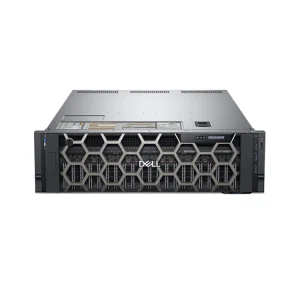
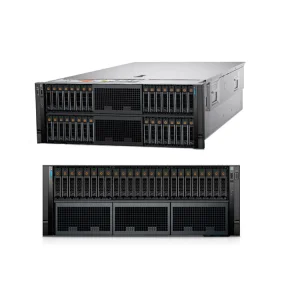
Systems like the Dell PowerEdge R750xa and the high-density PowerEdge R960 are designed specifically for these performance-heavy applications. The R750xa supports up to 4 double-width or 8 single-width GPUs within a 2U layout, utilizing a dedicated front PCIe lane configuration to optimize cooling and minimize latency between the processor and hardware accelerators. The R960, a 4U server powered by 4 Intel Xeon Scalable processors, acts as an ideal database host and analytics engine, capable of running extensive data sets in memory.
GPU Accelerators and LLM (DeepSeek R1/V3) Optimization
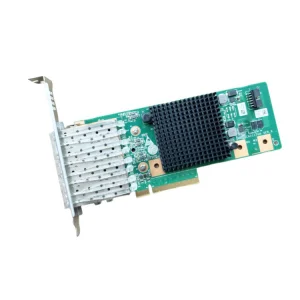
For operations deploying advanced models like DeepSeek, standard network configurations can quickly bottleneck system performance. We recommend pairing your servers with high-speed interface cards, such as the Intel Ethernet Network Adapter X710 series (10/25Gb), to prevent network congestion during distributed node training and live inference operations.
How global clients implement customized Dell PowerEdge configurations across various industries and deployment scales.
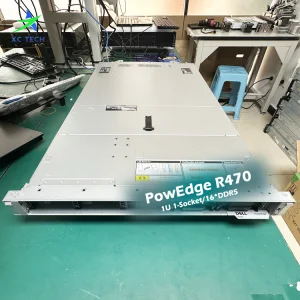
Primary Hardware: Dell PowerEdge R350, R470 1U Server.
Application: Optimized for content delivery networks and edge services, these compact 1U systems feature short-depth frames, energy-efficient performance, and support for high-capacity NVMe storage to minimize latency.
Primary Hardware: Dell PowerEdge R750, R760 2U Server.
Application: Built to host VMware ESXi, Hyper-V, or KVM hypervisors. Supports dual Intel Xeon Scalable processors and 32 DIMM slots to efficiently handle multiple dense virtual machines on a single node.
Primary Hardware: Dell PowerEdge R960, R760xd2.
Application: Designed for high-volume SQL, NoSQL, and SAP HANA databases. Leverages wide backplanes for high disk counts and advanced RAID controllers (PERC H965i) to provide fast data access and protect against drive failures.
Understanding the strict logistics, inspection, and verification stages that every server undergoes prior to global export.
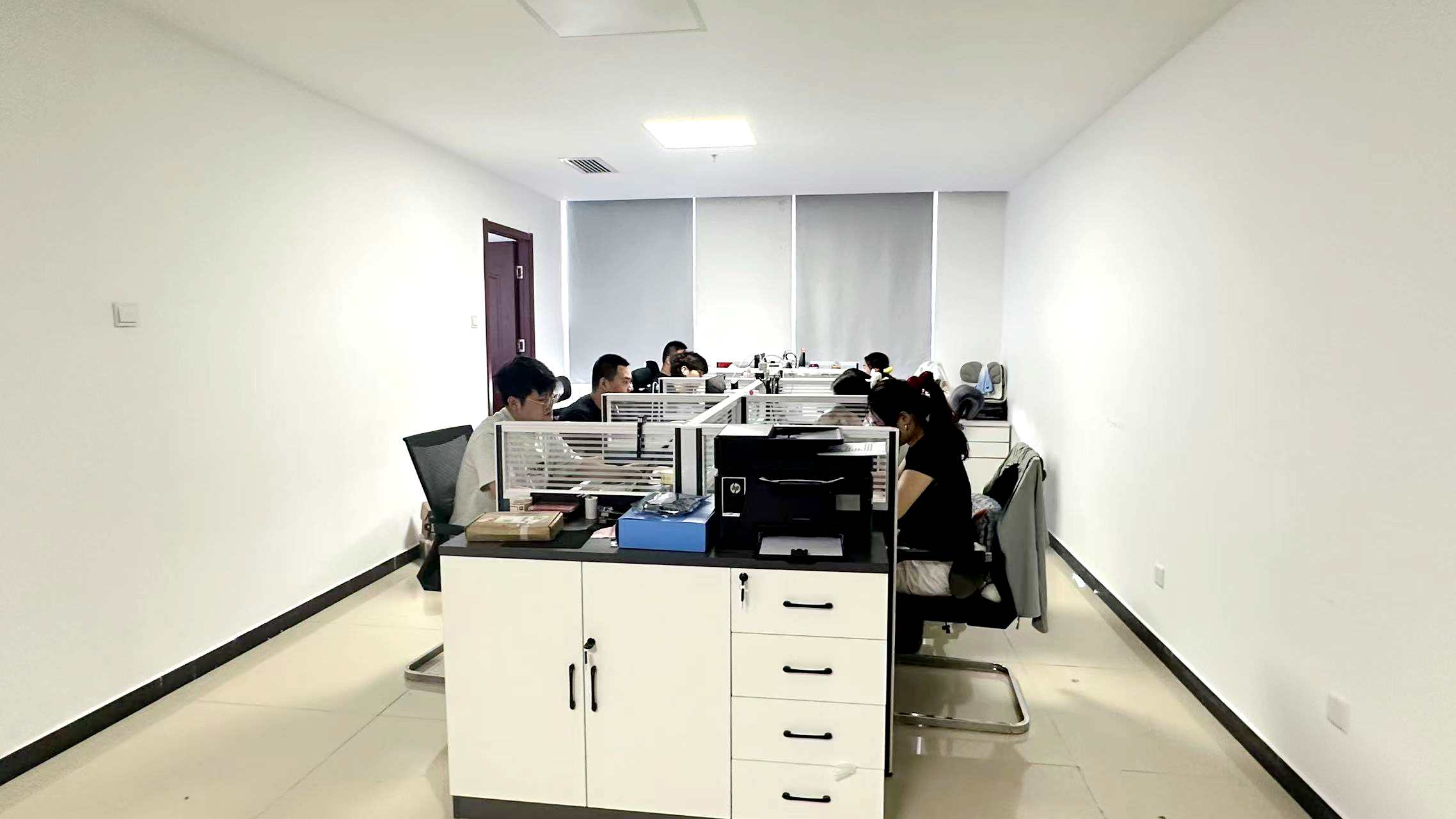
Founded in 2021 and operating from a modern facility, we have established ourselves as a reliable source for custom server hardware. Our business is built around structured quality control, ensuring that all shipped systems meet strict performance and reliability standards.
We perform a 100% inspection on all inventory. Rather than using batch-sampling methods, our dedicated QA/QC inspector tests every individual unit. This hands-on process helps ensure hardware reliability before products are packaged and shipped to our global clients.
| Established | August 27, 2021 |
| Total Facility Space | 160 ㎡ |
| Key Export Markets | Eastern Europe (20%), Domestic (15%), North America (10%) |
| Customer Demographics | Wholesalers, Integrators, Cloud Providers, Retailers |
| Quality Control Standard | 100% Inspection, Traceability Confirmed |
Answers to common technical, logistics, and configuration questions regarding our Dell PowerEdge server inventory.
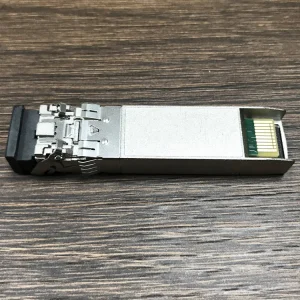
Browse our second selection of high-compute systems, storage-optimized servers, and fiber optic transceivers.
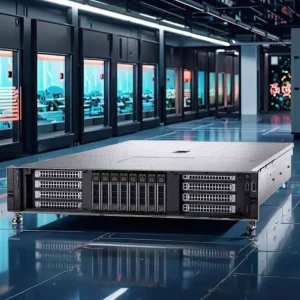
 Vertex AI Server