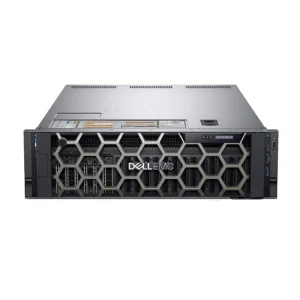
A comprehensive analysis of global procurement trends, technical standards, localization compliance, and industrial production paradigms for server chassis and cabinet enclosures.
In the era of hyper-scale computing, cloud platforms, and Artificial Intelligence (AI) training clusters, physical infrastructure has transcended its traditional role as mere hardware containment. Modern accessory chassis and cabinet systems represent a critical vector for thermal control, computational spatial density, signal integrity, and physical security. As data centers scale horizontally to accommodate next-generation CPUs and GPUs, the engineering specifications of the network cabinets and server chassis must adapt to unprecedented power envelopes and structural loads.
As a premier global supplier and exporter of server chassis and network cabinets, we focus on delivering mechanical integrity, optimal aerodynamic pathways, and compliance-driven designs. This whitepaper details the structural dynamics, global procurement drivers, localized application profiles, and supply chain strategies that dictate performance outcomes in modern mission-critical data environments.
Global IT buyers, data center engineers, and enterprise infrastructure managers operate under strict operational expenditure (OpEx) constraints while demanding maximum uptime. When evaluating server enclosures and rack systems, their selection is guided by several critical engineering requirements:
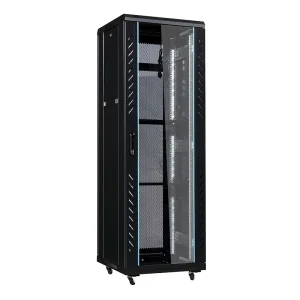
Modern server deployments, particularly those involving multi-GPU servers for AI workloads, represent immense concentrated weight. A standard 42U cabinet might be required to house multiple 2U or 4U high-performance servers, stackable storage arrays, and high-capacity uninterruptible power supplies (UPS). Enterprise procurement teams require cabinets engineered with high-yield strength steel profiles (such as cold-rolled SPCC steel) capable of supporting static loads exceeding 1,500 kg and dynamic load ratings that ensure safe transit of fully populated racks.
High thermal density per rack is the defining challenge of modern computing. Front-to-back cooling paths must remain unobstructed. Cabinets must feature high-perforation mesh doors (often targeting 75% to 80% open-area ratios) to minimize air resistance and prevent the formation of localized hot spots. Procurement departments seek structural options such as integrated air baffles, blanking panels, and specialized brush strip cable ports to maintain strict hot-cold aisle containment integrity.
High-density network switches, patch panels, and dual-source power distribution units (rPDUs) demand structured and spacious cable management pathways. Enclosures must facilitate clean bend-radii for copper and fiber optic lines, reducing signal loss and structural fatigue. Toolless cable management accessories, overhead cable exits, and dedicated rear vertical PDU mounting trays are standard requirements for enterprise-grade network cabinets.
"Thermal dynamics and structural load limits are the core indicators of a cabinet's viability. A failure in structural integrity or airflow management directly translates to degraded processor life cycles and increased Power Usage Effectiveness (PUE) ratios."
China remains the global nucleus for sheet metal fabrication, precision machining, and electronic hardware components. Operating within this localized ecosystem allows us to achieve exceptional efficiency, cost optimization, and quality control:
Deploying infrastructure worldwide requires strict adherence to localized engineering and environmental regulations. As an established exporter, we align our engineering designs with global technical standards to facilitate seamless import, installation, and operation.
Seismic and Environmental Resilience: Data centers located in active seismic zones (such as western North America or parts of Southern Europe) demand racks structurally reinforced to meet specific Seismic Zone requirements. Furthermore, industrial settings require ingress protection ratings (IP20 to IP54 and above) to safeguard electronic assets from particulate and moisture ingress.
Regulatory Compliance Certifications: Our supply chains maintain adherence to environmental initiatives, including RoHS (Restriction of Hazardous Substances) and REACH protocols, ensuring all coatings, plastics, and metals are free from harmful elements. We guarantee raw material traceability across all batches, verified by our dedicated QA/QC inspector, ensuring that every product exported is fully documented and auditable.
Chassis and cabinets are deployed across a wide range of operational environments, each presenting unique physical constraints:
In centralized cloud and enterprise multi-tenant facilities, standardization is paramount. Standardized 42U and 48U cabinets, featuring standard 19-inch mounting systems, are deployed in unified rows. These racks utilize advanced airflow containment systems (hot/cold aisle containment) and connect with overhead busways and fiber trays.
In manufacturing plants, logistics hubs, and processing facilities, environmental conditions are often harsh. Here, shorter 12U to 24U industrial cabinets are deployed. These systems feature reinforced steel casings, dust filtration elements, and secure physical key locks to prevent unauthorized tampering.
Telecom racks focus heavily on network termination and low-latency switching. Standard 2-post and 4-post open frame racks or specialized shallow-depth cabinets are commonly deployed to house optical transmitters, fiber patch panels, and dense cabling bundles.
The rapid expansion of high-density AI architectures and deep learning frameworks is shifting cabinet engineering trends. Traditional air cooling is reaching its physical limits as power densities exceed 30 kW per rack. The industry is moving towards:
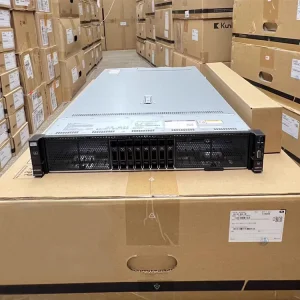
 Vertex AI Server