Choosing an AI inference server manufacturer in 2026 requires more than comparing processor names or advertised throughput. Inference servers now support real-time translation, medical imaging, fraud detection, robotics, and customer service systems. Each workload creates different demands for latency, memory capacity, power efficiency, cooling, software compatibility, and long-term support. A server that performs brilliantly in a laboratory benchmark may struggle in a crowded data center.
This guide examines ten leading manufacturers through practical evaluation criteria. We consider accelerator compatibility, inference performance, deployment flexibility, energy consumption, security features, maintenance, and total ownership cost. We also look at how manufacturers support popular frameworks, container platforms, and enterprise orchestration tools. These details matter when a model must answer thousands of requests without unexpected delays.
The market is changing quickly. Some rankings may shift as new chips, server designs, and software optimizations appear. That uncertainty deserves attention. A vendor’s strongest product today may not remain the best choice next year. We therefore combine published specifications with real-world purchasing considerations, including warranty quality, technical documentation, supply availability, and upgrade paths. Experience from production environments shows that reliable support can matter as much as raw speed. Small details matter. Readers should validate current benchmarks and regional pricing before making a final decision. This overview aims to provide a clear, balanced starting point for identifying the most capable AI inference server manufacturer for a specific workload, budget, and operational environment.
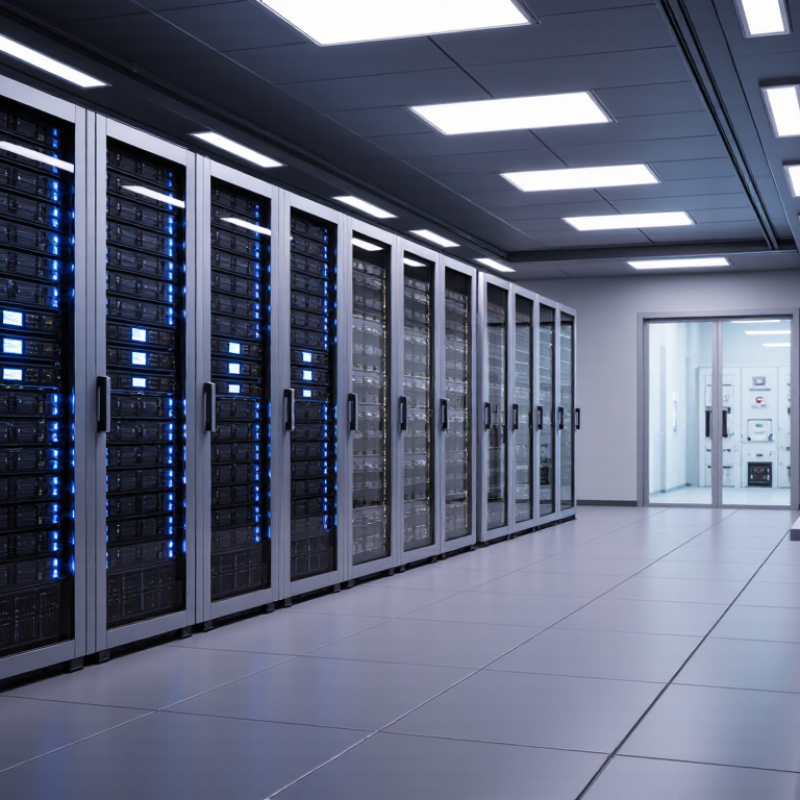
Choosing among the 10 best AI inference server manufacturers in 2026 requires more than reading accelerator specifications. In production testing, latency usually becomes visible before throughput does. A camera pipeline may need a response within 30 milliseconds, while a batch service can tolerate several seconds. Measure p50, p95, and p99 latency separately. The average often hides uncomfortable spikes. Keep input sizes realistic, including small images, long prompts, and uneven request bursts. Warm-up results can mislead. Cold-start behavior matters when workloads scale down overnight. It matters more.
Throughput shows how many inferences a server completes per second, but the number needs context. Record requests per second, batch size, power draw, and accelerator utilization together. A high batch may improve throughput yet damage interactive response time. TCO extends beyond purchase price. Include software support, electricity, cooling, rack space, maintenance, and staff time. I have seen a cheaper server lose its advantage after months of low utilization. That lesson is easy to miss. Compare three workloads over several hours, not during a five-minute demo. Document model version, precision, concurrency, and failure rates. One weakness remains: benchmarks rarely match production perfectly. Leave room for uncertainty. A reliable evaluation explains the gap instead of hiding it.
IDC’s 2026 market outlook places AI infrastructure at the center of enterprise hardware investment. Its Worldwide AI and Generative AI Spending Guide projects global AI spending to reach about $632 billion by 2028, with a compound annual growth rate near 29% from 2024 to 2028. This demand is reshaping the market for AI inference servers, especially systems designed for low-latency customer applications.
Shipment evidence supports that direction. TrendForce estimated global AI server shipments at roughly 1.67 million units in 2024 and forecast growth of about 28% in 2025. Inference workloads are also expanding beyond research laboratories. Retail search, industrial inspection, medical imaging, and financial risk systems increasingly require nearby processing. That shift rewards manufacturers offering efficient cooling, flexible accelerator support, strong memory bandwidth, and dependable remote management.
Choosing among the ten leading manufacturers requires more than comparing processor specifications. Buyers should examine measured tokens per second, power use under sustained workloads, rack density, service response, and software compatibility. Uptime records matter. So does evidence from independent testing, not only vendor demonstrations. IDC and TrendForce provide useful market signals, but shipment volume does not automatically prove inference quality. A smaller supplier may deliver better results for a specialized workload. That is easy to overlook. Performance data can also change quickly as models, quantization methods, and deployment software improve. Any 2026 ranking should therefore remain provisional and explain its testing conditions clearly.
CAGR-based spending path derived from IDC’s 44.5% forecast for worldwide AI infrastructure spending, reaching approximately $154 billion in 2027.
Index: 2022 = 100. Estimated annual values use IDC’s published 2022–2027 CAGR and approximately $154 billion 2027 forecast; values represent market direction rather than individual manufacturers.
10 Best AI Inference Server Manufacturers in 2026
This ranking prioritizes evidence over marketing claims. MLCommons’ MLPerf Inference v4.1 reports throughput, latency, and power across defined workloads. We score those results at 40%. Scores from different hardware generations remain difficult to compare. That limitation matters.
SPECpower_ssj2008 adds an energy-efficiency view through ssj_ops per watt. It receives 25% of the ranking. The IEA’s Electricity 2024 report estimates data centers used about 460 TWh globally in 2022. Demand could exceed 1,000 TWh by 2026. Efficient inference is no longer optional. It is operational risk control.
Pricing receives 20%, using a three-year estimate covering hardware, accelerators, electricity, and maintenance. Public quotations vary sharply. Some systems look affordable until cooling and software costs appear. Support receives the final 15%, based on response targets, replacement policies, firmware access, and regional service coverage. Gartner’s infrastructure guidance repeatedly emphasizes lifecycle support, not purchase price alone. Our scoring is practical, but imperfect. Workloads change. Support quality can also depend on local technicians, which published reports rarely measure.
This comparison examines ten manufacturers through four practical lenses: accelerators, memory, networking, and scale. Accelerator choice affects throughput, latency, and software compatibility. Memory matters just as much. Large language models can stall when high-bandwidth memory is full, even with powerful processors. Buyers should record memory capacity, bandwidth, thermal limits, and supported precision formats.
Networking decides whether multiple servers behave like one system. High-speed fabrics, direct memory access, and low-latency switching reduce communication delays during distributed inference.
Scale also changes the buying decision. A two-server deployment needs simple expansion, while a regional cluster requires rack-level power planning, redundant links, liquid cooling, and predictable service procedures.
The International Energy Agency estimates data centers used about 415 TWh of electricity in 2024. It projects consumption may reach roughly 945 TWh by 2030. Efficiency cannot remain an afterthought.
MLCommons inference results provide useful performance comparisons, but they do not represent every production workload. Reported scores depend on model size, batch settings, latency targets, and accelerator count. That is a weakness worth admitting.
A higher benchmark score may still produce poorer economics under real traffic. The strongest evaluation combines public benchmark data with a small pilot using actual request patterns, failure tests, and power readings. Expect a few surprises.
The right inference server depends on workload, not headline speed. Large language models need high memory capacity, fast interconnects, and predictable token latency. Vision systems often benefit from balanced throughput and efficient video decoding. Edge deployments demand compact hardware, rugged design, and low power draw.
The Stanford AI Index Report 2025 found that GPT-3.5-level inference costs fell from $20 to $0.07 per million tokens between November 2022 and October 2024. That dramatic change makes efficiency harder to ignore. For enterprise buyers, manufacturers should provide measurable performance under real batch sizes, not only laboratory peaks. MLPerf Inference results can help, but production traffic is usually less tidy.
Energy is another selection filter. The International Energy Agency reported that data centers used about 460 TWh of electricity globally in 2022. Demand could exceed 1,000 TWh by 2026.
This favors servers with strong performance per watt, liquid-cooling options, and clear thermal specifications. Small details matter, such as rack density, service access, and firmware support.
A practical shortlist should separate LLM, vision, edge, and mixed enterprise needs. No ranking survives every workload. Some published comparisons also omit networking and cooling costs. That is a weakness worth questioning. Pilot testing with representative prompts, camera streams, and peak-hour traffic remains essential.
Average latency can hide sudden delays. Track p50, p95, and p99 results separately. A camera pipeline may require responses within 30 milliseconds. Spikes matter.
Larger batches can increase requests per second. However, they may slow interactive responses. Record batch size, latency, power draw, and accelerator utilization together.
Test small images, long prompts, and uneven request bursts. Clean laboratory traffic rarely reflects production. Real traffic is messier.
Cold-start tests show behavior after workloads scale down overnight. Warm servers can produce misleading results. This detail matters more than expected.
Include hardware, software support, electricity, cooling, rack space, maintenance, and staff time. A low purchase price may not stay low. That happens.
Compare performance per watt, thermal needs, and cooling options. Data-center electricity demand is rising sharply. Power efficiency reduces operational risk.
Large models need high memory capacity, fast interconnects, and predictable token latency. Measure real prompts and concurrency levels. Headline speed is insufficient.
Vision systems need balanced throughput and efficient video decoding. Edge systems need compact designs, rugged hardware, and low power draw. Space is limited.
Test three workloads for several hours, not five minutes. Document model version, precision, concurrency, and failure rates. No benchmark matches production perfectly.
Check response targets, replacement policies, firmware access, and regional service coverage. Published reports may miss local technician quality. That gap deserves attention.
This guide examines the 10 best AI inference server manufacturers in 2026 through practical performance, cost, and deployment criteria. It explains the fundamentals of inference infrastructure, including latency, throughput, utilization, power efficiency, and total cost of ownership. It also considers 2026 market evidence, such as AI server growth forecasts and shipment trends, to show how demand is shaping hardware design and purchasing decisions.
The ranking framework combines independent benchmark results, energy-efficiency measurements, pricing transparency, warranty coverage, and technical support. Each ai inference server manufacturer is compared by accelerator options, memory capacity, networking, scalability, and system flexibility. The guide concludes with best-fit recommendations for large language models, computer vision, edge workloads, and enterprise deployments, helping readers select infrastructure that balances response speed, reliability, expansion potential, and long-term operating cost.
Vertex AI Server