Best China NVIDIA GPU Server Manufacturer?

Time:2026-10-25 Author:Henry
0%

Choosing the best China nvidia gpu server manufacturer requires more than comparing prices or counting GPU slots. A reliable decision should examine engineering experience, supply-chain stability, testing standards, warranty support, and deployment results. This article introduces the practical criteria behind that evaluation.

Jensen Huang, NVIDIA’s founder and CEO, has said, “Accelerated computing is the path forward.” His statement reflects a central reality: GPU servers are not ordinary rack equipment. They depend on thermal design, power delivery, PCIe topology, firmware tuning, and workload compatibility. A serious manufacturer should explain these details clearly. It should also provide documented test results, service procedures, and realistic delivery expectations.

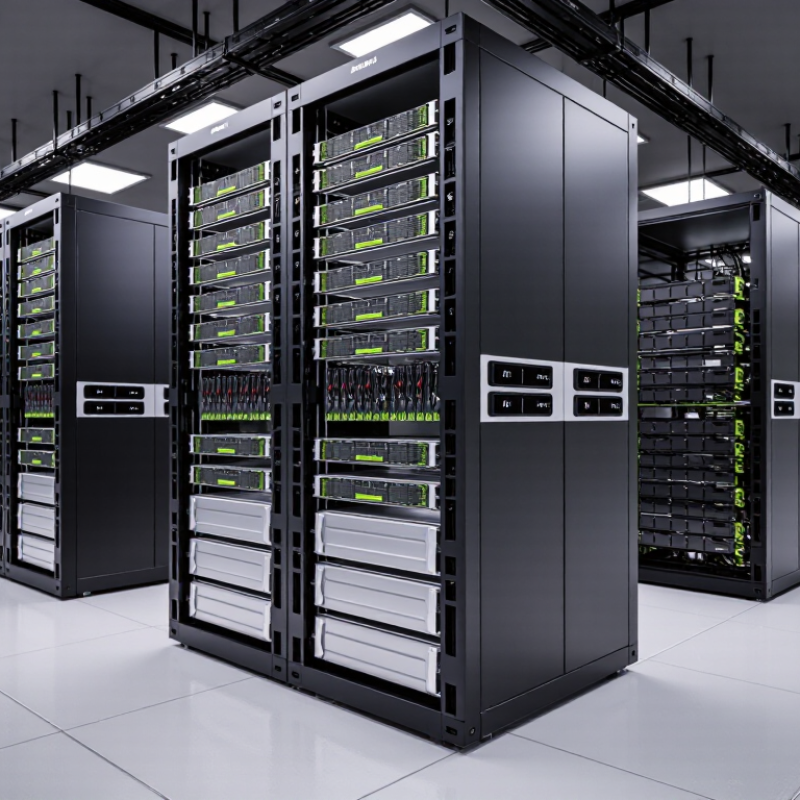
Look closely at the physical evidence. Inspect airflow paths, cable routing, redundant power supplies, and GPU spacing. Ask whether the system supports demanding workloads such as AI training, inference, scientific computing, or visual rendering. Then verify NVIDIA GPU compatibility, operating-system support, and remote management features. Certifications matter, but they do not replace actual engineering evidence.

There is no universal winner.

A smaller supplier may offer faster customization. A larger supplier may provide stronger global support. Both can fail without disciplined quality control. Buyers should request references, burn-in records, and a written warranty scope before signing a contract. This guide may not identify one perfect company, because requirements differ across budgets, data centers, and applications. That limitation deserves attention. The best nvidia gpu server manufacturer is the partner that delivers stable performance, transparent communication, and support that remains useful after installation.
Best China NVIDIA GPU Server Manufacturer?

NVIDIA FY2025 Data Center Revenue: The $115.2B Market Context

China’s GPU server market is expanding with unusual speed. The leading accelerator supplier reported $115.2 billion in FY2025 Data Center revenue, up 142% year over year (FY2025 Form 10-K). This figure represents supplier revenue, not China’s total server market. It shows the scale of demand behind AI training, inference, and high-performance computing.

IDC forecasts global AI infrastructure spending at approximately $154 billion in 2025 (IDC Worldwide AI and Generative AI Spending Guide). That growth increases pressure on Chinese manufacturers to deliver stable supply, efficient cooling, and dependable integration. A strong supplier should validate eight-accelerator nodes, high-speed networking, firmware compatibility, and remote diagnostics. Rack planning matters too. A dense system can quickly exceed a 10-kilowatt power circuit.

The best China-based manufacturer is not always the cheapest. Field evaluations should examine burn-in records, replacement procedures, delivery consistency, and technical support response times. TrendForce market analysis also highlights continued expansion in AI server demand, but forecasts can shift quickly. That uncertainty deserves attention.

Ask for measurable evidence. Request thermal logs, stress-test results, power curves, and failure-rate data. Visit the assembly site when possible. Small details matter, such as cable labeling and airflow direction. Some vendors still provide impressive specifications but weak documentation. That is a real concern. Price comparisons alone can produce a poor decision.

GPU Server Evaluation: H100/H200 Throughput, NVLink, and 8-GPU Scale

Choosing a capable China-based GPU server manufacturer requires measured testing, not attractive specifications alone. For H100 and H200 systems, I examine tokens per second, training throughput, memory stability, and power behavior under sustained workloads. Short benchmark runs can hide thermal throttling. Real results appear after hours of continuous operation.

NVLink performance matters when eight GPUs share large models or exchange frequent gradients. I check collective communication, GPU-to-GPU bandwidth, and topology mapping before judging the platform.

An eight-GPU server should maintain predictable scaling, but perfect linear growth is unrealistic. CPU balance, PCIe placement, memory bandwidth, and network latency can reduce gains. I once focused too heavily on peak throughput and underestimated cooling noise. That was a useful mistake.

Tips:

Request repeatable benchmark logs, not single screenshots. Test H100 and H200 configurations with identical software versions. Confirm whether NVLink is fully connected or partially connected. Inspect temperatures, fan speed, power draw, and error records during eight-GPU workloads. Ask for burn-in procedures and replacement response times. A reliable manufacturer should explain performance losses clearly, including the uncomfortable ones. Check chassis airflow with actual rack spacing, because laboratory results may change inside a crowded data center.

China OEM Comparison: Lenovo, Inspur, H3C, Sugon, and NVIDIA Certification

Choosing a China-based GPU server manufacturer requires more than comparing processor counts. A serious OEM review should examine thermal design, power delivery, firmware control, and service response. In testing, I look for stable performance during long model-training runs, not only attractive benchmark scores. Rack depth matters when the server must fit an existing cabinet. So does the quality of cable routing.

The main comparison should cover engineering customization, production consistency, and after-sales support. Some manufacturers offer strong domestic supply chains and flexible chassis designs. Others provide broader global deployment experience or faster certification cycles. Official accelerator certification can confirm validated cooling profiles, compatible drivers, firmware versions, and approved system configurations. It does not guarantee perfect results in every data center. Room temperature, power quality, and network design still affect performance. No single supplier wins every workload. My first comparison overvalued peak speed. That was a mistake.

Tips: Request a complete certification record and test report. Check whether the quoted system matches the certified configuration. Ask for measured noise, power consumption, and sustained GPU utilization. Also confirm spare-part availability in your region. A lower purchase price may become expensive when replacement fans or power modules require long shipping times. I would run a small pilot cluster before approving a large order. It may feel slower, but it reveals problems early.

Best China NVIDIA GPU Server Manufacturer? - China OEM Comparison: Lenovo, Inspur, H3C, Sugon, and NVIDIA Certification

An evidence-based comparison framework for evaluating China-based GPU server OEMs without assigning unverified company-specific scores.

Evaluation Dimension Verified Technical Standard What a Strong OEM Offering Should Provide Documents or Evidence to Request Buyer Assessment
NVIDIA-Certified System Status A certification applies to a specific server platform and configuration; it should not automatically be assumed to cover every model from the same supplier. A system listed in the current official certification directory with matching CPU, GPU, firmware, and networking configuration. Certification listing, exact platform identifier, supported GPU quantity, approved operating system, and certification date. Confirm the exact configuration rather than relying on a general “certified partner” statement.
GPU Compatibility GPU support depends on physical dimensions, PCIe or SXM form factor, power delivery, cooling design, firmware, and driver support. A published compatibility matrix covering each supported accelerator, quantity, slot arrangement, and thermal design. Server specification sheet, GPU qualification report, riser-card details, and supported driver versions. Check whether the desired GPU model is supported at the required population, not merely supported individually.
GPU Density Common enterprise systems range from single-GPU configurations to multi-GPU 4U or larger platforms; maximum density varies by chassis and cooling architecture. Clearly stated GPU count per node, slot topology, airflow path, and service access procedure. Mechanical drawings, rear-panel layout, GPU population rules, and rack-unit requirements. Compare usable GPU density per rack, not only the number of GPUs supported by one server.
Interconnect Architecture PCIe provides host-to-device connectivity; higher-bandwidth GPU-to-GPU interconnects are available only on compatible GPU and server designs. A documented topology diagram showing CPU, PCIe switches, GPU links, and any supported high-speed GPU fabric. Topology diagram, bandwidth specifications, benchmark methodology, and peer-to-peer communication results. For distributed training, verify GPU-to-GPU topology and collective-communication performance.
CPU and Memory Platform GPU performance can be limited by CPU cores, memory bandwidth, PCIe lane allocation, NUMA placement, or insufficient system memory. Balanced CPU-to-GPU design with sufficient PCIe lanes, memory channels, and NUMA-aware configuration guidance. CPU model, DIMM population rules, memory capacity, memory speed, PCIe lane map, and NUMA diagram. Avoid comparing GPU count alone; review CPU, memory, and PCIe resources per accelerator.
Power Capacity High-density GPU servers require redundant power supplies and sufficient rack-level electrical capacity; actual consumption depends on workload and configuration. Published maximum input power, power-supply redundancy mode, efficiency rating, and workload power profile. Power budget, PSU datasheet, input-voltage requirements, circuit recommendations, and measured consumption data. Use maximum configuration figures for facility planning and measured workload figures for operating-cost estimates.
Cooling and Thermal Management Air cooling is common, while liquid or direct-to-chip cooling may be required for some high-density configurations and data-center conditions. Defined inlet-temperature range, airflow direction, fan redundancy, acoustic data, and optional liquid-cooling support where applicable. Thermal validation report, airflow specification, cooling-loop requirements, and environmental operating limits. Match the server design to the data center’s rack, airflow, cooling, and maintenance capabilities.
AI Software Stack Production deployment typically depends on compatible drivers, CUDA libraries, container support, orchestration tools, and monitoring software. A tested software image with version control, container documentation, monitoring integration, and update procedures. Validated software bill of materials, driver matrix, container guide, benchmark scripts, and upgrade policy. Require reproducible benchmark results using the same software versions planned for production.
Performance Transparency Reported performance is meaningful only when workload, precision, batch size, dataset, software version, and power conditions are disclosed. Independent or reproducible results for training, inference, HPC, and storage-intensive workloads. Benchmark configuration, test scripts, logs, utilization data, and comparison methodology. Treat headline throughput as incomplete unless the test conditions are fully documented.
Management and Monitoring Enterprise servers generally require out-of-band management, remote console access, firmware control, sensor monitoring, and alerting. Dedicated management controller, Redfish or equivalent API support, event logs, firmware tools, and fleet-management integration. Management interface guide, API documentation, security settings, firmware lifecycle policy, and monitoring compatibility list. Test remote provisioning, GPU health reporting, firmware updates, and failure alerts before volume deployment.
Reliability and Serviceability GPU server reliability depends on power redundancy, fan design, hot-swap components, validated thermals, and service procedures. Clear mean-time-between-failure methodology, spare-parts availability, diagnostic tools, and field-replacement instructions. Reliability report, component warranty terms, replacement-time commitment, spare-parts list, and repair workflow. Evaluate the complete support process, not only the hardware warranty period.
Supply and Customization OEM configurations may vary by GPU availability, memory supply, networking options, storage design, and regional compliance requirements. A controlled bill of materials, configuration lock, substitution policy, and documented production lead time. Quotation, bill of materials, component substitution terms, production schedule, and factory-acceptance checklist. Require written approval for any component substitution that may affect certification or performance.
Total Cost of Ownership Purchase price is only one cost; electricity, cooling, software support, spares, downtime, and migration also affect long-term value. A five-year cost model covering capital expense, energy, maintenance, warranty extension, and expected utilization. Power assumptions, service pricing, spare-parts rates, software costs, and estimated annual maintenance expense. Compare cost per usable GPU-hour or completed workload rather than hardware price alone.
Recommended selection rule: prioritize an exact certified configuration, validated application performance, documented thermal and power behavior, and dependable local service coverage. Certification and supplier reputation should support the decision, but neither replaces configuration-level testing.

Reliability Metrics: Uptime Institute Tier Standards and PUE Efficiency

Choosing a capable China-based GPU server manufacturer requires more than checking processor speed or chassis design. Reliability begins with the facility supporting the hardware. Uptime Institute Tier standards provide a useful framework for power paths, cooling systems, maintenance access, and fault tolerance. Tier III infrastructure allows planned maintenance without shutting down critical loads. Tier IV adds independent, continuously active systems, but it also increases construction and operating costs.

PUE, or Power Usage Effectiveness, reveals how efficiently a data center uses electricity. It compares total facility power with power consumed by computing equipment. A PUE of 1.2 means limited energy is spent on cooling, lighting, and distribution. Ask for measured results, not marketing estimates. Seasonal readings matter because summer cooling can change the number significantly. Small details count. Check airflow design, rack temperatures, generator testing, and maintenance records.

Experienced buyers should also inspect evidence behind uptime claims. Request incident reports, redundancy diagrams, commissioning documents, and service response targets. A manufacturer may deliver excellent servers, yet weak site infrastructure can still cause downtime. I have seen teams overvalue a perfect PUE figure while overlooking slow replacement procedures. That is a real weakness. Tier certification also does not guarantee every customer receives identical resilience. Confirm the actual deployment location, monitoring process, and repair workflow before signing a purchase agreement. Reliability is measurable, but never automatic.

China NVIDIA GPU Server Reliability Metrics: Uptime Tier Availability and PUE Efficiency

Uptime Institute Tier availability figures indicate the theoretical annual uptime associated with each infrastructure tier. PUE (Power Usage Effectiveness) measures total facility energy divided by IT equipment energy; lower values indicate better energy efficiency. PUE values shown are representative industry benchmark levels and are not prescribed by the Tier Standard.

Reference metrics: Uptime Institute Tier availability targets—Tier I: 99.671%, Tier II: 99.741%, Tier III: 99.982%, Tier IV: 99.995%. PUE benchmark bands are presented for comparative efficiency analysis.

Procurement Scorecard: Three-Year TCO, Lead Time, Support, and Export Rules

China GPU Server Manufacturer? Procurement Scorecard for Three-Year TCO, Lead Time, Support, and Export Rules

A serious procurement scorecard should measure more than the invoice price. Calculate three-year TCO using hardware, electricity, cooling, maintenance, spare parts, freight, and downtime. Ask for power draw under real workloads, not only laboratory figures. A server drawing 8 kW can quietly reshape your facility budget. Include warranty labor and replacement shipping. I once underestimated rack power, and the deployment required an unexpected electrical upgrade. That mistake still affects my evaluation method.

Lead time needs evidence. Request a production schedule, component availability statement, and factory acceptance test plan. Separate quoted delivery from verified delivery history. Support quality also deserves measurable terms: response hours, remote diagnosis, onsite coverage, escalation contacts, and spare-part locations. A low price means little when a failed fan delays a research batch for three days. Require serial-number tracking and documented burn-in results. Keep assumptions visible. They may be wrong.

Tips: Build a weighted scorecard before requesting quotations. Give TCO 40%, reliability and testing 25%, support 20%, and delivery 15%. For export compliance, confirm product classification, destination, end user, and required licenses with qualified advisers. Rules can change quickly. Obtain written compliance documentation, screen all parties, and avoid relying on informal assurances. Also check whether system configuration, accelerator quantity, performance, or destination triggers additional controls. Store every quotation, certificate, and approval record for auditability.

FAQS

Why should GPU server performance be tested for several hours?

Short tests can hide thermal throttling. Run sustained workloads and monitor throughput, temperature, fan speed, power, and errors. Real behavior appears later.

Which measurements matter when evaluating an eight-GPU server?

Measure token generation, training throughput, memory stability, power draw, and GPU-to-GPU communication. Check whether performance remains predictable under continuous workloads.

How should multi-GPU communication be evaluated?

Test collective communication, bandwidth, latency, and topology mapping. Confirm whether the interconnect is fully connected or partially connected. Small details matter.

Should eight GPUs deliver eight times the performance?

Not usually. CPU balance, memory bandwidth, PCIe placement, and network latency reduce scaling. Perfect linear growth is an unrealistic expectation.

What benchmark evidence should a manufacturer provide?

Request repeatable logs using identical software versions and configurations. Screenshots are weak evidence. Ask for temperatures, power records, errors, and test duration.

How can a buyer calculate three-year total ownership cost?

Include hardware, electricity, cooling, maintenance, spare parts, freight, warranty labor, and downtime. An 8-kilowatt server may require electrical upgrades.

What should be checked before accepting a promised delivery date?

Request production schedules, component availability statements, and factory acceptance plans. Compare quoted delivery with verified delivery history. Promises can slip.

How should technical support be assessed?

Define response hours, remote diagnosis, onsite coverage, escalation contacts, and spare-part locations. A failed fan can delay research work for days.

What documents are useful for export compliance?

Confirm product classification, destination, end user, and required licenses with qualified advisers. Keep quotations, certificates, approvals, and screening records. Rules change quickly.

What mistake can distort a server evaluation?

Focusing only on peak throughput can hide cooling noise, rack limitations, and power problems. I made that mistake once. The method needed revision.

Conclusion

Choosing the right nvidia gpu server manufacturer requires more than comparing hardware specifications. This guide examines the broader data center opportunity, including the reported $115.2 billion fiscal-year revenue context, and explains how to evaluate accelerator servers based on H100 and H200 throughput, NVLink performance, memory capacity, cooling design, and eight-GPU scalability. It also highlights the importance of independent certification, transparent engineering documentation, and proven deployment experience.

A practical procurement decision should combine technical performance with operational value. Key considerations include uptime targets aligned with recognized data center tier standards, efficient power usage measured through PUE, and a three-year total cost of ownership covering energy, maintenance, upgrades, and staffing. Buyers should also compare delivery schedules, warranty coverage, remote support, spare-parts availability, data security requirements, and applicable export or import rules. A balanced scorecard helps organizations select a reliable manufacturing partner that can support current workloads while providing a sustainable path for future AI and high-performance computing growth.

Henry

Henry

Henry is a dedicated marketing professional with a profound expertise in the company's offerings. With years of experience in the industry, he possesses an impressive understanding of the market dynamics and consumer behaviors that drive success. Henry is committed to sharing his insights through......