Choosing a data center AI server manufacturer is not simply a price comparison. It is a decision about performance, uptime, security, and future expansion. A suitable partner must match your workloads, facility limits, and operational skills.
Jensen Huang, NVIDIA’s founder and CEO, once said, “The more you buy, the more you save.” That statement reflects scale, but it should not control the entire decision. A cheaper server may create higher costs through power usage, cooling demands, delayed repairs, or difficult software integration. Buyers should examine GPU architecture, memory capacity, networking speed, storage design, and support response times. Ask for measured performance, not attractive claims.
The physical details matter. Can the rack support the server’s weight? Does the room provide enough airflow and electrical capacity? Can engineers replace a failed power supply without disrupting nearby systems? These questions reveal a manufacturer’s practical experience. Request deployment references, warranty terms, firmware policies, and clear service-level commitments. Also check compatibility with virtualization platforms, container tools, and common AI frameworks.
No checklist is perfect. That is worth admitting. A respected data center AI server manufacturer can still be wrong for a specific environment. A small research lab may need flexibility, while a public cloud operator may prioritize standardized scale. The best choice comes from testing representative workloads, reviewing total ownership costs, and speaking with current customers. Look beyond impressive brochures. Reliable evidence is usually quieter.
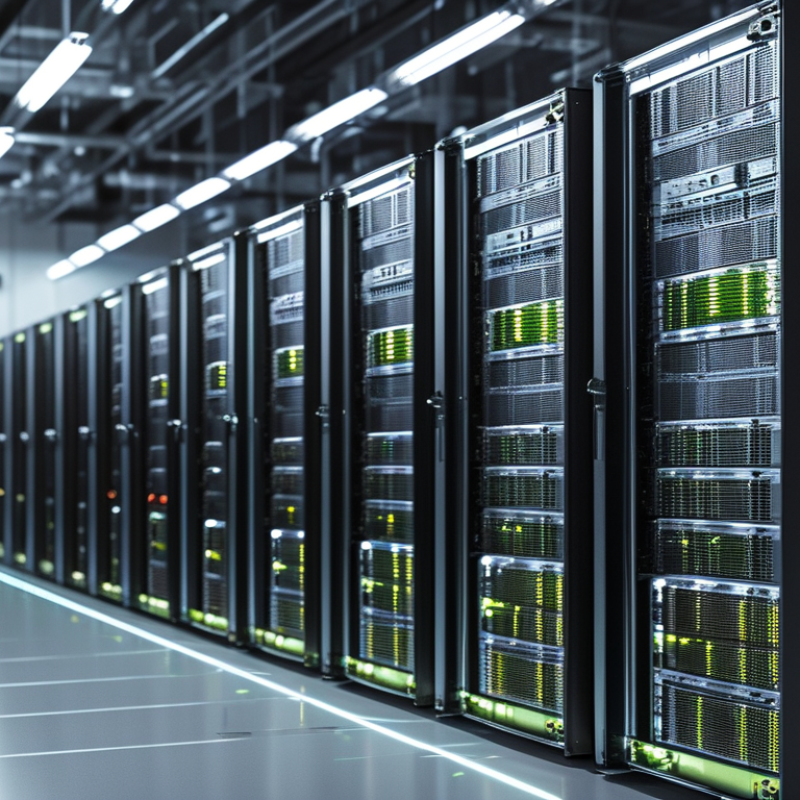
A data center AI server manufacturer is more than a company assembling powerful hardware. It designs, validates, and supports complete computing platforms for demanding environments. Its expertise should cover GPUs, CPUs, high-speed networking, storage, firmware, rack integration, and liquid or advanced air cooling.
Performance claims need evidence. The International Energy Agency reported that data centers consumed about 460 TWh of electricity worldwide in 2022. It expects demand could exceed 1,000 TWh by 2026. This makes power efficiency a manufacturing responsibility, not a marketing detail. Ask for measured performance per watt, thermal results, noise levels, and workload benchmarks. Testing should reflect real AI training and inference conditions.
The Uptime Institute’s Global Data Center Survey consistently identifies power problems, cooling failures, and human error among major outage causes. A credible manufacturer therefore provides burn-in testing, component traceability, failure analysis, and documented service procedures. It should also explain spare-part availability and firmware security throughout the system’s lifecycle. Superficial support is not enough.
A specification sheet can still mislead. Manufacturers should disclose limitations, including reduced performance under sustained heat or high rack density. Independent certifications and customer deployment evidence strengthen credibility, but neither replaces technical questioning. I would examine response times, field-service coverage, upgrade paths, and the manufacturer’s experience with comparable workloads. No checklist is perfect. Yet transparent evidence usually separates an AI server manufacturer from a reseller with an attractive configuration.
Choosing an AI server manufacturer requires more than comparing advertised FLOPS. Assess measured throughput, response latency, memory bandwidth, and energy use under your workload. The MLPerf Inference reports evaluate these conditions through performance and latency scenarios, offering more useful evidence than peak specifications. Request reproducible results for your model, batch size, precision, and operating temperature.
Hardware compatibility deserves equal attention. Confirm accelerator support, CPU architecture, PCIe lane allocation, memory capacity, network bandwidth, storage speed, and driver versions. Check whether the chassis supports your rack’s power and cooling limits. The International Energy Agency estimates that data centers consumed about 460 TWh of electricity in 2022. Poor thermal design can therefore increase both operating costs and throttling risk. A high benchmark score may still disappoint in production.
Tips: Test a complete server, not a single component. Compare 99th-percentile latency, sustained throughput, and performance per watt. Review firmware updates, spare-part availability, validation documents, and service response times. The Stanford AI Index 2024 reported a roughly 280-fold reduction in GPT-3.5-level inference costs between late 2022 and late 2023. This shows why efficiency matters, although the figure may not match your workload. I would also keep a small pilot cluster. It exposes driver conflicts and cooling weaknesses before a larger purchase.
Choosing a data center AI server manufacturer requires more than comparing processor counts. Manufacturing discipline often determines uptime. Ask how boards are inspected, tested, serialized, and tracked. Reliable producers use documented quality gates, thermal testing, power validation, and burn-in cycles. They should explain failure rates without hiding behind averages. A factory tour, even virtual, can reveal crowded staging areas, weak labeling, or careful process control. Small details become expensive at scale.
Tips: Request a sample production record. Check whether every critical component has traceable lot data. Confirm backup suppliers for memory, storage, power modules, and cooling parts. Ask how shortages change delivery dates. Test a pilot batch under your real workload, not a showroom demo. Measure rack density, noise, heat, and service time. Also review firmware update controls and spare-parts availability. A polished presentation is not proof. Capable teams can still underestimate regional customs delays and replacement logistics. That mistake deserves attention.
Supply chain maturity also means honest capacity planning. Can the manufacturer reserve components during demand spikes? Can it add assembly shifts without weakening inspection? Ask for realistic lead times, escalation contacts, and recovery plans. Certifications matter, but current evidence matters more. Request recent test reports and independent audit results. No supplier is perfect. A manufacturer willing to discuss defects, corrective actions, and lessons learned is often more dependable than one promising zero problems. Test that openness before signing a large order.
Manufacturing and supply chain capability scores based on common enterprise AI infrastructure procurement criteria. The index is illustrative and contains no company or brand data.
The most important capabilities include GPU and server validation, component traceability, production scalability, delivery reliability, multi-site manufacturing resilience, and after-sales service readiness. A higher score indicates stronger suitability for enterprise data center deployments.
Choosing an AI server manufacturer requires more than comparing GPU speed or purchase price. Security, technical support, and service reliability often decide whether a data center remains productive during pressure. The IBM Cost of a Data Breach Report 2024 placed the global average breach cost at $4.88 million. Therefore, examine secure firmware updates, signed drivers, vulnerability disclosure procedures, and role-based support access. Ask whether administrators can audit every remote session. Vague answers are warning signs.
Reliability needs evidence, not polished promises. The Uptime Institute’s 2024 Global Data Center Survey reported that 53% of respondents experienced an outage during the previous three years. About 20% described their latest outage as serious or severe. Compare the manufacturer’s replacement-part inventory, escalation process, and guaranteed response times. A 24-hour hotline means little if a failed power module waits five days for shipment. Request anonymized incident records and service-level reports.
Support quality appears during ordinary maintenance, too. Check firmware testing, compatibility guidance, documentation quality, and technician coverage across your operating regions. The manufacturer should explain how it handles unsupported software, thermal alarms, and repeated hardware failures. Verify whether spare servers, components, and on-site engineers are available locally. Test the support channel before signing. Send a technical question. Measure the response.
One practical weakness remains: published reliability figures are rarely comparable. Vendors may calculate uptime differently. Your team must challenge the method, not only the number.
How to Choose a Data Center AI Server Manufacturer: Evaluating Costs, Scalability, and Long-Term Value
The lowest purchase price rarely represents the real cost. I compare power draw, cooling requirements, warranty coverage, and replacement timelines. The International Energy Agency reports that data centers used about 460 TWh of electricity in 2022. This figure could exceed 1,000 TWh by 2026. A server drawing 1,000 watts continuously uses roughly 8,760 kWh yearly. Multiply that by hundreds of units. Energy efficiency becomes a financial decision, not a technical detail. Ask manufacturers for measured performance under realistic AI workloads, not only laboratory peaks.
Scalability deserves equal attention. IDC projects worldwide AI spending will exceed 632 billion dollars by 2028, with a 29% compound annual growth rate. Your supplier should support faster interconnects, expanded memory, compatible accelerators, and modular power systems. Uptime Institute research also shows that outages can create serious operational and financial pressure. Request service-level terms, spare-parts locations, firmware policies, and technician response times. A spreadsheet can still lie. Test a small cluster before approving a large deployment.
Tips: Calculate five-year ownership costs, including electricity, cooling, support, and downtime. Review independent test data. Ask for three customer references with similar workloads. Check whether future upgrades require replacing the whole chassis. Leave budget for training and infrastructure changes; these are often underestimated. Value is not simply performance per dollar. It is dependable performance per dollar over time.
| Evaluation Dimension | What to Measure | Entry-Level AI Server | Enterprise AI Server | Recommended Evaluation Standard | Long-Term Value Indicator |
|---|---|---|---|---|---|
| Initial Hardware Cost | Server purchase price excluding software, facility, and support | Approximately US$4,000–15,000 per server | Approximately US$20,000–250,000+ per server | Compare equivalent accelerator capacity, memory, networking, and warranty terms | Lower purchase price is valuable only when performance, reliability, and support are comparable |
| Accelerator Capacity | Number of GPUs or other AI accelerators and available memory | Typically 1–4 accelerators; suitable for inference and smaller workloads | Typically 4–8 or more accelerators; suitable for training and large-scale inference | Match accelerator memory and interconnect bandwidth to model size and batch requirements | Modular configurations allow capacity to expand without replacing the entire platform |
| System Memory | RAM capacity, memory speed, and maximum supported configuration | Approximately 64–256 GB RAM | Approximately 256 GB–4 TB RAM, depending on platform design | Confirm support for required datasets, preprocessing, virtualization, and future workloads | Higher memory headroom reduces the need for early server replacement |
| Power Consumption | Typical server power draw during sustained AI workloads | Approximately 0.8–2.0 kW per server | Approximately 2.5–10 kW or more per server | Use measured workload power rather than maximum rated power when calculating operating cost | Performance per watt directly affects electricity and cooling expenditure |
| Cooling Requirements | Air-cooling or liquid-cooling compatibility and facility requirements | Usually compatible with conventional data-center air cooling | May require high-density air cooling, direct-to-chip liquid cooling, or rear-door heat exchangers | Verify rack density, coolant distribution, facility modifications, and maintenance procedures | A cooling design that fits existing facilities reduces deployment delays and capital expense |
| Performance per Dollar | Useful training throughput or inference throughput divided by total cost | Best suited to low utilization, development, and inference workloads | Can deliver better economics at high utilization and large model sizes | Use workload-specific benchmarks such as tokens per second, images per second, or training time | The lowest cost per completed workload is more meaningful than the lowest purchase price |
| Scalability | Expansion options for accelerators, storage, networking, and racks | Limited expansion; often requires additional independent servers | Designed for multi-server clusters and high-speed fabric expansion | Assess rack compatibility, cluster management, network topology, and supply availability | A standardized architecture simplifies future procurement and operations |
| Networking | Network speed, latency, fabric support, and available ports | Commonly 10–100 GbE, depending on configuration | Often 100–800 Gb/s per accelerator or node in high-performance clusters | Test east-west traffic, collective communication, latency, and oversubscription | Adequate networking prevents expensive accelerators from waiting for data |
| Storage Performance | Local NVMe capacity, sequential throughput, IOPS, and shared-storage access | Approximately 1–8 TB local NVMe storage | Approximately 8–64 TB or more, with shared parallel storage options | Validate dataset loading time, checkpoint speed, and concurrent-user performance | Fast storage reduces idle accelerator time and improves operational productivity |
| Reliability and Availability | Component quality, redundant power, error monitoring, and service history | Basic redundancy and standard monitoring | Redundant power, hot-swappable components, remote management, and cluster-level monitoring | Request failure-rate data, burn-in procedures, diagnostic tools, and replacement processes | Reduced downtime protects model-development schedules and revenue-generating services |
| Warranty and Support | Warranty duration, response time, spare parts, and technical coverage | Usually 1–3 years; optional extended support may be available | Commonly 3–5 years with on-site or 24/7 support options | Compare service-level agreements, parts logistics, escalation paths, and local coverage | Fast parts replacement and specialist support reduce the cost of outages |
| Deployment Lead Time | Time from purchase order to delivery, installation, and acceptance testing | Often several weeks for standard configurations | Often several weeks to several months for customized or high-density systems | Confirm component availability, production capacity, shipping terms, and installation resources | Predictable delivery supports project schedules and reduces idle facility costs |
| Software Compatibility | Operating systems, drivers, container tools, orchestration, and monitoring support | Suitable for common operating systems and mainstream AI frameworks | Requires validated cluster software, driver management, and workload orchestration | Run a proof of concept using the organization’s actual models and deployment tools | Open standards and documented interfaces reduce migration and integration risk |
| Three-Year Total Cost of Ownership | Hardware, electricity, cooling, support, software, facility upgrades, and downtime | Lower entry cost, but potentially higher cost per workload at sustained utilization | Higher capital cost, but potentially lower unit cost for intensive workloads | Calculate cost per training hour, million tokens, inference request, or completed project | Select the configuration with the best lifecycle economics, not simply the lowest quotation |
Note: Cost, power, capacity, and lead-time figures are indicative industry ranges for planning purposes. Actual results vary by accelerator configuration, workload, region, energy price, cooling design, support level, and facility requirements.
Measure sustained throughput, response latency, memory bandwidth, and performance per watt. Peak FLOPS can mislead. Test your actual model, batch size, precision, and operating temperature.
Reproducible results reveal how the server behaves under matching conditions. Ask for test settings, software versions, workload details, and temperature records. A single impressive number proves little.
Confirm accelerator support, CPU architecture, PCIe lane allocation, memory capacity, and network bandwidth. Also check storage speed and driver versions. Small mismatches can cause large delays.
Confirm that the chassis fits your rack’s power and cooling limits. Poor thermal design may cause throttling and higher operating costs. Heat is not a minor detail.
Test the complete server with your intended workload. Measure 99th-percentile latency, sustained throughput, rack heat, noise, and power use. Components may perform differently together.
Ask how boards are inspected, tested, serialized, and tracked. Request thermal tests, power validation, burn-in records, and sample production documents. Labels matter. Traceable component lots can simplify future repairs.
Ask about backup suppliers for memory, storage, power modules, and cooling parts. Confirm realistic lead times, escalation contacts, and recovery plans. Regional customs delays may still be underestimated.
A small pilot cluster can expose driver conflicts and cooling weaknesses early. Run it under real workloads, not a showroom demonstration. The method is imperfect, but it reveals expensive surprises.
Choosing the right data center ai server manufacturer requires more than comparing processor specifications or purchase prices. A capable manufacturer should demonstrate expertise in designing AI systems for demanding data center environments, with strong performance, efficient thermal management, reliable power delivery, and compatibility with current networking, storage, and software platforms. Its manufacturing processes, quality controls, testing procedures, component sourcing, and supply chain resilience are equally important for ensuring consistent delivery and dependable operation.
Buyers should also evaluate security practices, technical support, warranty coverage, maintenance response, and service availability across the server’s full lifecycle. Cost analysis should include energy consumption, deployment requirements, upgrade options, integration expenses, and potential downtime rather than focusing only on the initial investment. The best long-term choice is a manufacturer that can scale with changing workloads, provide flexible configurations, maintain stable product availability, and offer transparent guidance. By balancing performance, reliability, security, service, and total ownership value, organizations can select an AI server partner that supports sustainable data center growth.

Vertex AI Server