China has become a major force in the global artificial intelligence infrastructure market. Its manufacturers serve research laboratories, cloud platforms, universities, and industrial enterprises. Yet identifying the “top” companies requires more than comparing shipment numbers. Buyers must examine computing performance, supply stability, energy efficiency, technical support, and long-term compatibility.
This article introduces leading Chinese manufacturers, including Inspur, Lenovo, H3C, Sugon, and Huawei. Each company approaches AI hardware differently. Some focus on large-scale data centers. Others build flexible systems for hospitals, factories, and academic institutions. Their products may combine GPU servers, high-speed networking, liquid cooling, and intelligent management software. These details matter when a server rack operates continuously under heavy workloads.
A reliable ai computing server manufacturer should provide more than powerful specifications. It should explain thermal limits, maintenance procedures, warranty conditions, and realistic performance expectations. Independent testing and customer experience also deserve attention. Marketing claims can sound impressive. Real deployment is harder.
The comparison will consider product portfolios, customization capabilities, computing platforms, service networks, and industry reputation. It will also discuss challenges, including component availability, software adaptation, energy consumption, and international supply-chain pressure. No manufacturer is perfect. Some strengths may hide practical weaknesses, especially for smaller buyers with limited technical teams.
The goal is a balanced introduction for decision-makers. It should support careful evaluation, not encourage rushed purchasing. Hardware changes quickly. A strong choice today may require review tomorrow.
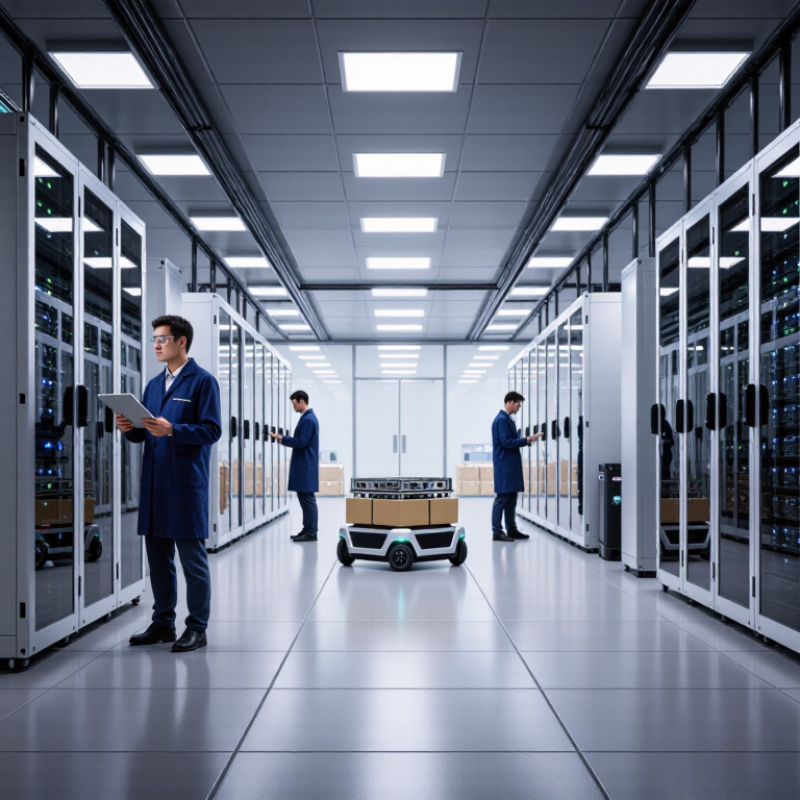
China’s AI Server Manufacturing Landscape
China’s AI server manufacturing landscape is expanding from basic rack assembly into a deeper hardware ecosystem. IDC reported that China’s AI infrastructure market reached approximately US$19.4 billion in 2023, with accelerated computing accounting for most spending. The figure reflects strong demand from cloud platforms, research institutes, and industrial users.
Manufacturers compete through more than processor supply. They integrate high-speed networking, liquid cooling, storage, and server management software. TrendForce estimated that global AI server shipments would grow sharply in 2024, while Chinese suppliers faced tighter access to advanced computing components. This pressure has encouraged local design, domestic testing, and more flexible system configurations.
The machines are becoming denser.
A typical training rack may contain eight or more accelerator cards, heavy copper cabling, and cooling equipment built for continuous operation. Omdia’s server market research also highlights rising demand for efficient data-center infrastructure, especially where electricity and floor space are limited. In practice, reliability often matters more than impressive specifications. A system that overheats during a long training cycle creates operational losses.
Yet the market remains uneven. Some manufacturers have strong production capacity but limited software compatibility. Others provide excellent integration but depend heavily on imported components. These gaps deserve closer attention. Public sales figures are also difficult to compare because companies use different definitions of “AI server.” The landscape is growing quickly, but its real maturity should be judged by uptime, service response, and verified deployment results.
Who Are the Top AI Server Manufacturers in China?
China’s AI server manufacturing landscape is expanding rapidly as demand grows for accelerated computing, large-scale model training, and AI infrastructure deployment.
The China AI server market was valued at approximately US$16.4 billion in 2023 and is forecast to reach US$50.6 billion by 2028. The figures represent the overall market and do not identify individual companies or brands.
Source: IDC China AI Server Market Forecast, 2023–2028. Market definitions and estimates may vary by research provider.
Key Criteria for Comparing AI Server Manufacturers
When comparing top AI server manufacturers in China, look beyond processor counts. A credible manufacturer should explain its design choices, testing methods, and supply capabilities. Check support for modern accelerators, high-speed networking, and scalable storage. Cooling design matters too, especially in dense racks operating around the clock. Ask for measured power use, thermal data, and performance results from workloads similar to yours. Published specifications can look impressive, but they may not reflect your actual model training environment.
Experience becomes visible during deployment. Reliable manufacturers provide clear documentation, firmware updates, spare-part planning, and trained technical support. Review independent test results when available, and request customer references from comparable industries. Security controls, manufacturing quality systems, and compliance records also deserve careful review. Total cost includes electricity, maintenance, integration, and downtime. A lower purchase price may become expensive after eighteen months. No supplier is perfect, and a single benchmark rarely tells the whole story.
Tips: Compare complete rack configurations, not isolated components. Ask how quickly failed parts can be replaced in your region. Test a small pilot with your own datasets before signing a large order. Record noise, heat, power draw, and training speed during testing. I would also question unclear claims; cautious answers often reveal more than polished sales language.
Leading Chinese AI Server Manufacturers and Their Strengths
China’s leading AI server manufacturers typically fall into three groups: large system builders, specialist computing firms, and flexible contract manufacturers. Their strengths differ. Large builders offer stable supply, nationwide service teams, and tested rack designs. Specialist firms often move faster on GPU integration, high-speed networking, and liquid-cooling systems. Contract manufacturers provide customization for research centers, cloud platforms, and industrial users.
A strong Chinese AI server maker can design dense systems with multiple accelerators, fast memory, and low-latency interconnects. Some facilities now use cold plates or rear-door heat exchangers to manage intense workloads. This matters when a rack runs continuously for training or inference. Experienced engineers also tune airflow, power distribution, firmware, and monitoring software together. Small details matter. A loose cable can reduce uptime.
Manufacturers with mature domestic supply chains may shorten delivery times and simplify maintenance. Their local teams can inspect failed components, replace cooling parts, and adjust configurations on site. However, no supplier is ideal. Public performance figures are not always measured under identical conditions, so buyers should request workload tests, power data, and service records. A server that performs well in a laboratory may struggle in a crowded data center. Careful evaluation remains essential.
AI Server Technologies and Product Categories in China
China’s AI server market covers several product categories, each designed for a different workload. Training servers usually combine multiple accelerators, high-speed memory, and fast interconnects. They support large model development but often consume substantial power. Inference servers use optimized accelerator cards for repeated predictions, such as image inspection or language processing. These systems usually value response time, stability, and operating cost more than maximum training capacity.
General-purpose servers remain important for data preparation, model management, and enterprise applications. Many Chinese manufacturers also offer high-density rack systems, edge servers, and liquid-cooled platforms. Edge models place computing near factories, hospitals, or transport sites. This reduces network delay. Liquid cooling helps control heat in tightly packed racks, although maintenance procedures require trained technicians. Storage products also matter. AI workloads need fast solid-state storage for datasets, checkpoints, and frequent read operations.
A reliable purchasing review should examine accelerator compatibility, power efficiency, thermal design, warranty response, and software support. Published performance numbers are useful, but they rarely show the full operating experience. I would test sustained workloads, not only short benchmark runs. That approach may reveal throttling, fan noise, or unstable drivers. No category is perfect. Smaller systems can simplify deployment, yet they may limit future expansion. Large platforms offer stronger capacity, but their electricity and cooling demands can surprise inexperienced buyers. Practical validation remains essential.
Market Trends Shaping China’s AI Server Industry
China’s AI server industry is shifting from basic computing capacity toward dense, accelerator-driven systems. TrendForce estimates global AI server shipments reached about 1.67 million units in 2024, rising roughly 41% year on year. Chinese manufacturers are responding with eight-accelerator nodes, liquid cooling, and high-speed networking. These systems serve model training, industrial vision, autonomous logistics, and public-sector workloads.
Global AI server shipments
1.67 million
Estimated in 2024
Year-on-year growth
~41%
Shipment growth in 2024
The strongest manufacturers usually combine local assembly with motherboard design, thermal engineering, and long-term maintenance. IDC’s China server research shows continued demand for accelerated computing, especially from cloud platforms and large enterprises. However, procurement is becoming more careful. Electricity costs, supply-chain resilience, and software compatibility now influence purchasing decisions as much as raw performance. That is a major change.
What buyers weigh alongside performance:
Electricity costs, supply-chain resilience, and software compatibility.
Cooling is visible on the factory floor. Technicians inspect cold plates, cable paths, and airflow gaps before testing racks. Yet efficiency claims need closer verification. A higher benchmark score may hide heavier power consumption or difficult maintenance. This is where manufacturers with domestic integration teams gain practical value. China’s market may reward dependable deployment more than impressive demonstrations, although the balance remains unsettled.
FAQS
Compare complete rack designs, not isolated processors. Check accelerators, networking, storage, cooling, power use, and support.
Dense racks generate intense heat during continuous training. Cold plates and rear-door heat exchangers can improve thermal control.
Request workload tests using models similar to yours. Ask for training speed, power draw, thermal data, and network results.
Review documentation, firmware updates, spare-parts planning, and technical support. Ask for references from comparable users.
No. Electricity, maintenance, integration, and downtime may cost more later. A cheap server can become expensive within eighteen months.
A small pilot exposes real problems before a large purchase. Measure noise, heat, power draw, and training speed.
Domestic teams may shorten delivery times and simplify repairs. They can inspect failed parts and adjust systems onsite.
No. Test conditions often differ. A strong laboratory result may weaken inside a crowded data center.
Inspect cable paths, airflow gaps, monitoring tools, and power distribution. One loose cable can reduce uptime.
Ask direct questions and request measured evidence. Polished answers sound reassuring, but cautious answers may reveal more.
Conclusion
China’s AI server manufacturing landscape is developing rapidly, supported by strong demand for artificial intelligence, cloud computing, big data, and high-performance computing. This overview explains how to compare an ai computing server manufacturer by examining processing performance, accelerator compatibility, energy efficiency, system scalability, cooling design, reliability, software support, customization capability, and after-sales service. It also highlights the different strengths that leading Chinese manufacturers may offer, from large-scale production and integrated solutions to specialized systems for training, inference, and enterprise workloads.
The article further introduces major AI server technologies and product categories, including GPU-based platforms, accelerator servers, edge computing systems, liquid-cooled solutions, and modular data center equipment. It also examines market trends shaping the industry, such as growing demand for domestic supply chains, improved energy efficiency, faster deployment, intelligent infrastructure management, and broader adoption across research, finance, manufacturing, healthcare, and public services. Together, these factors help buyers understand China’s competitive AI server ecosystem and select solutions according to performance, budget, deployment environment, and long-term business requirements.

 Vertex AI Server