The demand for AI-driven solutions is surging. A recent report indicates that the global AI server market is projected to reach $30 billion by 2025. Many organizations rely on AI servers to enhance performance and efficiency. This growth has sparked intense competition among AI server manufacturing companies.
Investing in the right AI server manufacturing company can significantly impact business outcomes. Companies aim to provide powerful solutions tailored for diverse applications. Industry leaders must balance innovation with reliability. The technology landscape is ever-changing, and not all manufacturers can keep pace.
Customers face a plethora of choices. Some AI server manufacturers excel in specific areas, while others provide comprehensive solutions. Identifying a suitable partner can seem daunting. Assessing each company's unique offerings and limitations is crucial for informed decisions.
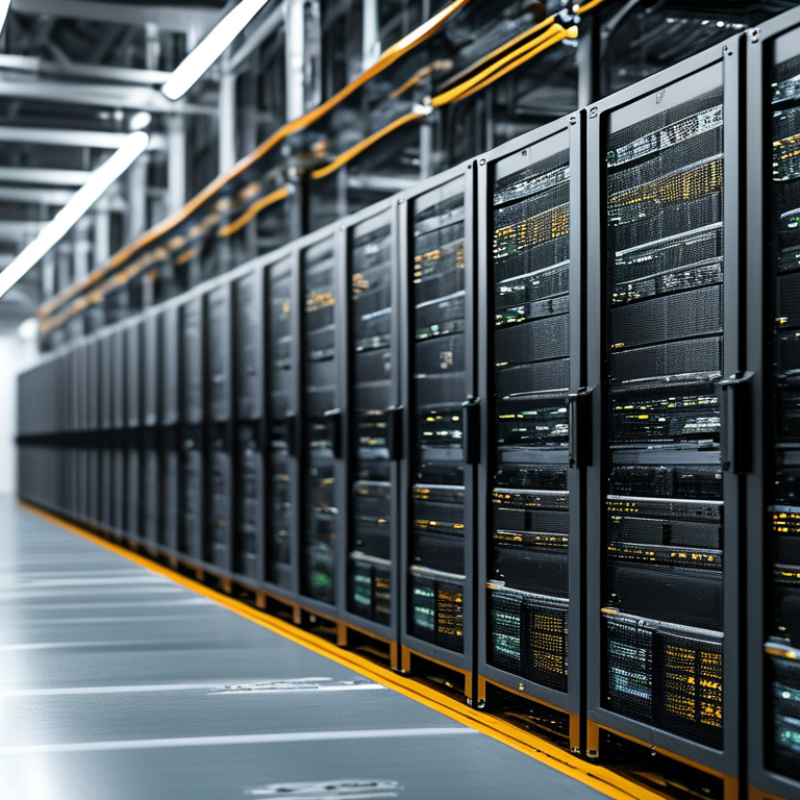
The AI server manufacturing industry is rapidly evolving. Companies leading this field demonstrate advanced knowledge in hardware design, cloud computing, and data processing. They specialize in creating servers optimized for artificial intelligence tasks. This includes machine learning, data analytics, and real-time processing.
Key players in the market focus on energy efficiency and high performance. They utilize cutting-edge technology to enhance processing capabilities. However, not every approach works seamlessly. Some manufacturers struggle with balancing performance and cost. This highlights the challenges faced within this dynamic sector. Continuous innovation is essential, yet it comes with uncertainties.
Understanding the landscape is crucial for businesses investing in AI infrastructure. Evaluating various companies reveals a spectrum of solutions, each with its strengths and weaknesses. The commitment to reliability and support is vital for users. As companies aim for leadership, the need for adaptability grows. This creates a need for ongoing evaluation of strategies, products, and partnerships.
In 2023, the landscape of AI server manufacturing showcases significant shifts in market shares. Major players are increasingly investing in specialized designs that cater to the rising demand for AI capabilities. These innovations are not just about speed; efficiency and power consumption are also critical. Companies are exploring new architectures, aiming for better performance metrics while staying mindful of energy needs.
The market share analysis reveals interesting patterns. Some manufacturers dominate the high-end segment, where performance is non-negotiable. Others focus on entry-level and mid-range solutions, making technology accessible to a broader audience. However, one area that requires reflection is the balance between cost and capability. Not all solutions meet the diverse needs of their clients. Some companies struggle to offer the right product at the right price point.
Investors must also assess long-term sustainability strategies. As AI technologies evolve, manufacturers must adapt quickly. Tracking emerging trends and customer feedback will be crucial. In this dynamic environment, the ability to pivot could define the next successful player in the AI server market.
The landscape of AI server technology is transforming rapidly. Innovative technologies are at the forefront of this change. Increased demand for performance and efficiency is pushing manufacturers to adopt advanced solutions. Many organizations are now prioritizing energy-efficient designs and high-performance computing capabilities. This focus on sustainability is crucial in a world that requires greener solutions.
Emerging trends like edge computing and GPU accelerators are reshaping server architectures. These technologies enhance processing speed and reduce latency, allowing for seamless AI applications. Companies are exploring the potential of quantum computing, which promises unprecedented processing power. However, there remain challenges in integration and practical implementation.
Despite these advancements, not all solutions are perfect. Scalability issues can hinder growth for some organizations. Additionally, the rapid evolution of technology can lead to obsolescence of existing hardware. As companies strive to innovate, some may overlook essential aspects of cybersecurity. This oversight can create vulnerabilities in their systems. Balancing innovation with reliability remains a key concern for the future of AI servers.
In the ever-evolving AI landscape, performance metrics are crucial for assessing server capabilities. Recent industry reports highlight that processing speed, power efficiency, and scalability are essential attributes for top AI server brands. For instance, the average processing speed of high-end AI servers is measured in teraflops. This metric quantifies a server's ability to perform massive computations.
Power efficiency also plays a vital role. Leading servers boast a performance-per-watt rating, indicating how much computing power they deliver for each watt consumed. Some reports suggest that the most efficient systems can achieve up to 10 teraflops per watt. This efficiency can significantly impact operational costs over time. Scalability is another critical area. Many organizations seek servers that can grow with their needs, ensuring they remain competitive without frequent hardware upgrades.
However, not all established brands excel in these areas. Some may offer high processing speeds but lag in power efficiency. This discrepancy often leads to higher operational costs. As companies evaluate their options, it is essential to examine these metrics closely. Balancing performance with cost-efficiency and future scalability remains a challenge. Each organization must reflect on its unique needs and future goals while considering these performance metrics.
The field of AI server manufacturing is evolving rapidly. By 2025, the global market for AI servers is expected to reach $40 billion, growing at a compound annual growth rate (CAGR) of 30%. This growth will be driven by the increased demand for machine learning and data processing. The trend indicates a shift towards more specialized, efficient servers optimized for AI workloads.
Among the emerging technologies, edge computing is gaining traction. It reduces latency and enhances data processing speed by bringing computation closer to data sources. According to a report by Statista, the edge computing market will grow from $4.68 billion in 2022 to $43.4 billion by 2027. This indicates significant investment opportunities for manufacturers who can innovate in this space.
Sustainability remains a crucial issue. Energy consumption in data centers is skyrocketing. A typical AI server consumes substantial power, leading to increased operational costs. Companies are exploring energy-efficient designs and renewable energy sources. However, the challenge lies in balancing performance and energy efficiency. Many manufacturers have yet to fully address these concerns. The focus on sustainable practices must intensify in the coming years. This transitional phase raises questions about long-term viability and energy management strategies.
| Rank | Company Type | Market Share (%) | AI Server Features | Expected Growth Rate (%) |
|---|---|---|---|---|
| 1 | Established Manufacturer | 25 | High-performance Computing, Energy-efficient | 15 |
| 2 | Cloud Service Provider | 20 | Scalable Solutions, Integrated AI Tools | 20 |
| 3 | Tech Startup | 15 | Customizable Hardware, Innovative Software | 30 |
| 4 | Mass Market Vendor | 10 | Cost-effective Solutions, User-friendly | 10 |
| 5 | Hardware Innovator | 8 | Advanced AI Acceleration, High Scalability | 25 |
| 6 | Research Institution | 7 | Custom Research Servers, High Compute Power | 12 |
| 7 | System Integrator | 6 | Tailored Solutions, Cross-platform Compatibility | 18 |
| 8 | Networking Specialist | 5 | High-bandwidth Networks, Low-latency Performance | 14 |
| 9 | Edge Computing Provider | 4 | Distributed Architecture, Real-time Processing | 17 |
| 10 | Multinational Corporation | 3 | Comprehensive Support, Global Reach | 8 |
I server manufacturers?
Technologies like edge computing and GPU accelerators enhance processing speed and reduce latency for AI applications.
Processing speed, power efficiency, and scalability are essential metrics for evaluating server capabilities.
Balancing performance with cost efficiency can be difficult, leading to potential operational cost increases.
Higher power efficiency lowers operational costs by maximizing computing power for each watt consumed.
It drives advancements but also introduces uncertainties and the risk of hardware obsolescence.
Neglecting cybersecurity can create vulnerabilities, risking the integrity of the systems over time.
Scalability challenges can hinder growth, prompting businesses to reevaluate their server choices regularly.
Assess performance metrics against unique needs and future goals for optimal decision-making.
No, some may excel in processing speed but lack in power efficiency, affecting overall costs.
The article "Top 10 AI Server Manufacturing Companies You Should Know" provides a comprehensive overview of the leading players in the AI server manufacturing industry. It delves into the current market dynamics, highlighting how market share is distributed among these key manufacturers in 2023. Additionally, the piece explores innovative technologies that are actively shaping the AI server landscape, including advancements that enhance performance and efficiency.
Furthermore, the article compares various performance metrics among the top AI server brands, offering insights into their capabilities and strengths. As the industry evolves, it also addresses future trends in AI server manufacturing, outlining what can be expected beyond 2023. This forward-looking perspective emphasizes the ongoing innovations and competition in the sector, making it essential for stakeholders to stay informed about the latest developments in AI server manufacturing companies.

Vertex AI Server