Choosing the top custom gpu server builder in China requires more than comparing prices or GPU counts. A dependable partner must understand workload design, thermal engineering, supply continuity, and long-term support. These factors matter for artificial intelligence training, inference, scientific computing, and high-performance rendering.
A strong builder should explain its platform clearly. Ask about GPU compatibility, PCIe lane allocation, CPU balance, memory capacity, network adapters, and storage performance. Request evidence from realistic testing, not only laboratory specifications. Details matter: a four-GPU server may need reinforced power delivery, high-static-pressure fans, and carefully designed airflow. Rack density also affects noise, maintenance access, and operating costs.
Experience should be visible in the process. Look for documented burn-in testing, firmware management, remote monitoring, component traceability, and a written warranty. The builder should provide accurate lead times and transparent export documentation where required. Independent certifications and references can strengthen confidence, but they should be verified rather than accepted casually.
No supplier is perfect.
The “top” choice depends on your deployment. A research lab may value flexible configurations and rapid prototyping. A cloud provider may prioritize standardized production nodes, replacement inventory, and predictable support. Some manufacturers communicate well before payment, then respond slowly after delivery. That risk deserves attention. A careful evaluation should compare engineering consultation, sample validation, power measurements, delivery records, and after-sales service.
This article examines how to identify a capable custom gpu server builder in China. It focuses on practical evidence, technical fit, and dependable cooperation. The goal is not to promote the loudest company. It is to find the partner that can build, test, document, and support the system your workload genuinely requires.
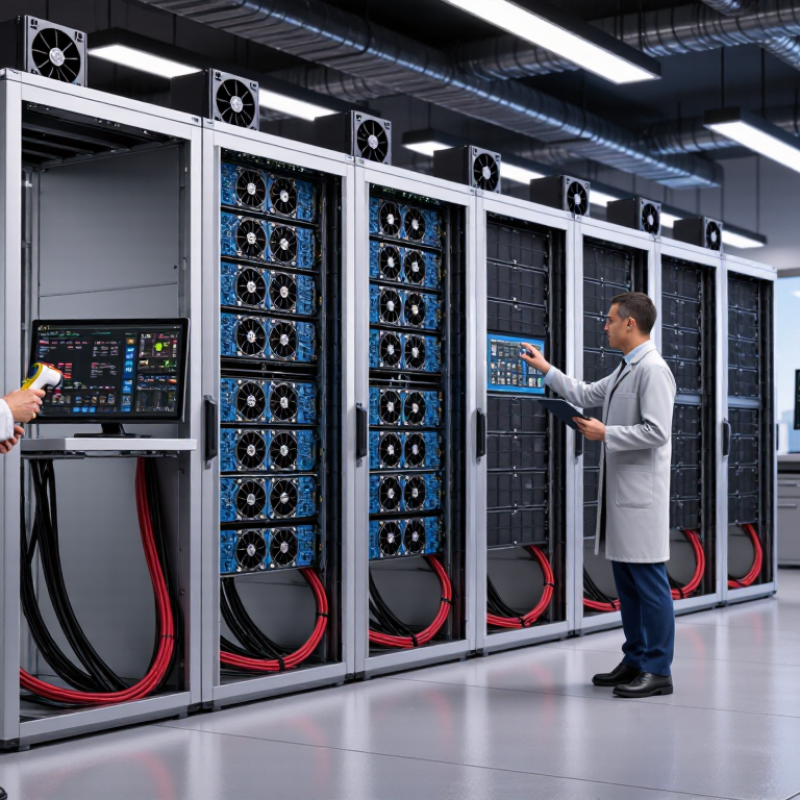
A custom GPU server builder designs systems around a customer’s actual computing workload. It does more than install graphics processors in a standard chassis. The builder selects compatible processors, memory, storage, networking, power supplies, and cooling components. Every choice should match the expected training, simulation, rendering, or inference workload.
In China, a capable builder often combines engineering experience with local manufacturing access. Its team may review software frameworks, rack dimensions, electricity limits, and data center temperatures before suggesting a configuration. Practical testing should include load performance, thermal behavior, noise levels, power stability, and long-duration operation. Small details matter. Poor airflow can reduce performance within minutes.
A reliable builder provides clear specifications and documented validation results. It should explain component availability, firmware support, delivery schedules, warranty terms, and maintenance procedures. Safety certifications and regulatory compliance also deserve careful review. Transparent communication is more valuable than impressive promises.
No design is perfect for every environment. A high-density server may deliver strong performance but require costly cooling upgrades. A quieter system may sacrifice some speed. I have found that early testing prevents expensive changes later. Still, test results can vary after deployment. Dust, network delays, and uneven workloads sometimes reveal weaknesses that laboratory checks miss. An honest builder acknowledges these limits and offers practical adjustment plans.
China has become a major hub for custom GPU servers because it combines dense manufacturing networks, skilled engineers, and fast component sourcing. A strong builder should offer more than attractive specifications. It should provide thermal testing, power validation, firmware control, and documented burn-in results. Gartner forecast global artificial intelligence spending at about 154 billion dollars in 2024, increasing demand for reliable computing infrastructure. This growth also raises pressure on delivery time and energy efficiency.
China’s advantage is practical and visible. A custom system can be assembled for eight or more accelerators, liquid cooling, high-speed networking, and local rack standards. Engineers can adjust airflow after testing a real rack, not only a design file. The IEA reported that data centers consumed about 460 terawatt-hours globally in 2022. It also expects consumption to rise sharply by 2026. Therefore, a capable Chinese builder should measure power draw, heat density, and performance per watt before shipment. Lower purchase cost alone is not enough.
Tips: Ask for a thermal test report, component traceability, warranty terms, and remote support coverage. Request a pilot server before ordering a full cluster. That small step can expose unstable memory, noisy fans, or weak cable routing. No builder is perfect. Even a well-engineered platform may need firmware tuning after installation. The best choice is the supplier that explains these limits clearly and supports measurable improvements.
A top custom GPU server builder in China should be judged by engineering evidence, not attractive specifications. Ask for a complete bill of materials, thermal design, firmware version, and tested power limits. The IEA’s Energy and AI report estimates that data centers consumed about 415 TWh globally in 2024. It projects demand could reach nearly 945 TWh by 2030. Cooling efficiency matters.
Request a witnessed burn-in test with your intended workloads. Check GPU temperature stability, error logs, network throughput, storage latency, and recovery after power cycling. Uptime Institute’s 2024 Global Data Center Survey places average data-center PUE near 1.6. A builder should disclose expected PUE, fan profiles, inlet temperature limits, and rack-level power behavior. Vague cooling claims deserve caution.
Ask whether the builder can integrate high-speed interconnects, redundant power supplies, remote management, and secure firmware updates. Require serial-number traceability and documented component substitutions. Local assembly is useful only when quality control is measurable. The best evaluation includes sample units, acceptance criteria, and service response times in writing. Factory visits help, but they can mislead. I once treated a clean demonstration room as proof of reliability; it was not. Independent stress testing remains necessary.
A top custom GPU server builder in China should offer more than assembled hardware. The strongest providers begin with workload analysis, covering AI training, inference, scientific computing, or visual rendering. They review model size, batch volume, expected users, and power limits before recommending parts. This prevents an expensive mismatch between the server and its real purpose.
Typical configurations include 1U, 2U, and 4U chassis with different GPU densities. Builders may provide single-GPU systems or multi-GPU platforms with high-speed interconnects. They also select suitable CPUs, memory capacity, NVMe storage, network cards, and redundant power supplies. Air cooling works for moderate loads. Liquid cooling may suit dense deployments, but it increases maintenance requirements. Cooling matters.
Reliable services should include BIOS tuning, operating system installation, driver validation, burn-in testing, and performance reports. Experienced engineers can test thermal stability under sustained workloads, not just short benchmark bursts. They may also provide rack installation, remote monitoring, firmware updates, spare-part planning, and technical support after delivery. Warranty terms should clearly define response times and replacement procedures.
No configuration is perfect. A server designed for training may waste resources during light inference workloads. I often find that buyers underestimate electricity, noise, and rack space. Builders should explain these trade-offs honestly, document every component, and leave room for future upgrades. That practical transparency is often more valuable than a higher peak benchmark score.
| Evaluation Dimension | Entry-Level AI Server | Professional Training Server | Multi-GPU Compute Server | Recommended Builder Services |
|---|---|---|---|---|
| Primary Workload | Computer vision, inference, development, and small-scale model fine-tuning | Natural language processing, recommendation systems, simulation, and medium-scale model training | Large-model training, scientific computing, rendering, and high-throughput inference | Workload analysis, performance estimation, compatibility review, and configuration consultation |
| GPU Quantity | 1–2 accelerator cards | 2–4 accelerator cards | 4–8 accelerator cards, subject to chassis, power, and thermal limits | GPU topology planning, PCIe lane allocation, airflow validation, and expansion planning |
| GPU Memory Range | Typically 16–32 GB per accelerator | Typically 24–48 GB per accelerator | Typically 40–80 GB or more per accelerator for memory-intensive workloads | Memory-capacity matching, inter-GPU communication planning, and workload benchmarking |
| CPU Platform | Single-socket workstation or server processor with 8–24 cores | Single- or dual-socket server platform with approximately 16–64 total cores | Dual-socket platform with approximately 32–128 total cores, depending on workload | CPU-GPU balance assessment, NUMA configuration, BIOS tuning, and thermal design review |
| System Memory | 64–256 GB ECC memory | 128–512 GB ECC memory | 256 GB–2 TB ECC memory for large datasets and distributed workloads | Memory-capacity calculation, ECC selection, upgrade-path design, and memory compatibility testing |
| Storage Configuration | 1–2 TB NVMe solid-state storage with optional data drive | 2–8 TB NVMe storage with separate operating-system and dataset volumes | 4–16 TB or more using NVMe storage, enterprise solid-state drives, or attached storage | RAID planning, boot-drive separation, dataset optimization, storage burn-in, and throughput testing |
| Network Connectivity | 1–10 GbE for local development and inference | 10–25 GbE for shared datasets and multi-server workflows | 25–100 GbE or higher for distributed training and high-speed storage access | Network-interface selection, switch compatibility review, remote management setup, and throughput testing |
| Power Supply | Approximately 1,000–1,600 W, depending on accelerator selection | Approximately 1,600–3,000 W for higher-density configurations | Approximately 2,500–5,000 W or more, with appropriate electrical infrastructure | Power-budget calculation, redundant power design, power-cable planning, and load testing |
| Cooling Design | High-airflow tower or short-depth rack chassis | High-airflow rack chassis with multiple replaceable system fans | High-density airflow design, liquid-cooling option, or data-center cooling compatibility | Thermal simulation, fan-curve tuning, acoustic evaluation, dust-filter planning, and temperature monitoring |
| Operating System and Software | Linux or Windows with accelerator drivers and container support | Linux-based environment with container runtime, machine-learning libraries, and monitoring tools | Linux-based cluster environment with distributed-training, scheduling, and resource-monitoring software | Operating-system installation, driver validation, container images, framework setup, and software compatibility testing |
| Validation and Testing | POST check, memory test, storage test, and basic accelerator stress test | Extended CPU/GPU stress testing, memory validation, storage benchmark, and thermal verification | Full-load endurance testing, multi-GPU communication testing, power-load testing, and network benchmarking | Pre-shipment burn-in report, configuration checklist, benchmark results, and defect screening |
| Deployment Services | Rack or workstation installation with basic remote-access configuration | Rack integration, operating-system imaging, network setup, and user-access configuration | Cluster deployment, rack-level cabling, remote management, scheduler integration, and data-center commissioning | On-site or remote installation, asset labeling, documentation, acceptance testing, and deployment support |
| After-Sales Support | Remote troubleshooting, parts replacement, and configuration guidance | Technical support, firmware updates, diagnostic assistance, and upgrade recommendations | Priority technical support, spare-parts planning, preventive maintenance, and fleet-level monitoring | Warranty handling, replacement-part coordination, remote diagnostics, maintenance contracts, and lifecycle support |
| Best Selection Criteria | Low acquisition cost, compact design, moderate power use, and easy expansion | Balanced training performance, memory capacity, storage speed, and serviceability | GPU density, interconnect performance, cooling capacity, power availability, and cluster scalability | Transparent specifications, documented testing, customization capability, delivery reliability, and technical support quality |
Choosing the right custom GPU server builder in China requires more than comparing prices. A capable builder should understand your workload, cooling needs, and deployment environment. Ask whether the team has experience with AI training, inference, rendering, or scientific computing. Request detailed configuration sheets. These should show GPU models, power limits, memory, storage, networking, and rack dimensions.
Look for engineering evidence, not polished promises. A reliable builder can explain airflow design, redundant power options, firmware testing, and thermal performance under sustained load. Ask for burn-in test records and sample delivery timelines. If possible, inspect a working system or request a remote demonstration. Clear communication matters too. Technical questions should receive specific answers, not vague sales language.
Support after delivery can decide the real value. Confirm warranty terms, spare-part availability, remote diagnostics, and on-site service coverage. Discuss how the builder handles failed GPUs, noisy fans, or unstable drivers. I have found that small details often expose large risks. Still, no checklist is perfect. A documented test may not match your software stack or data-center conditions. Run your own workload before placing a large order. Measure performance, temperature, power draw, and recovery time. A builder that accepts practical testing shows confidence, while one avoiding measurable results deserves closer review.
It designs a server around your workload, not a standard parts list. It matches processors, memory, storage, networking, power, and cooling. Small mismatches can create expensive problems.
Common workloads include model training, simulation, rendering, and inference. The builder should review software frameworks and expected workload patterns. A design for training may not suit inference.
Poor airflow can reduce performance within minutes. Testing should measure temperatures, fan behavior, noise, and long-term stability. A cool laboratory may hide rack problems.
Request a complete parts list, firmware versions, power limits, and validation reports. Ask about component availability, delivery schedules, warranties, and maintenance. Clear documents matter.
Request a pilot server before buying a full cluster. Run your actual workloads and record temperatures, errors, network speed, and storage latency. A short demonstration is not enough.
Ask for expected power draw, heat density, inlet temperature limits, and rack-level behavior. High-density systems may require stronger cooling infrastructure. Energy efficiency affects operating costs.
No. Local assembly can improve sourcing and customization, but quality must be measurable. Check serial-number traceability, substitution records, burn-in results, and acceptance criteria. Factory appearances can mislead.
Confirm remote support coverage, firmware updates, service response times, and replacement procedures. Get these terms in writing before shipment. Support gaps appear later.
No design works perfectly in every environment. Dust, network delays, uneven workloads, and firmware issues may appear after installation. I once trusted laboratory results too much. Independent stress testing remains necessary.
A custom GPU server builder designs and assembles server systems around a customer’s specific computing, storage, networking, and cooling requirements. China has become a major hub for this industry because of its broad electronics manufacturing capabilities, flexible supply chains, engineering expertise, and ability to support both standard and highly customized configurations. These builders may serve AI development, scientific research, cloud computing, visualization, and other legitimate high-performance workloads.
When evaluating the top Chinese GPU server builder, customers should consider technical experience, component compatibility, product quality, testing procedures, delivery reliability, warranty coverage, and after-sales support. Builders may provide different GPU combinations, CPU and memory options, storage layouts, chassis designs, power systems, networking features, and cooling solutions. The right choice depends on workload intensity, software compatibility, budget, deployment environment, scalability, and long-term maintenance needs. A detailed consultation and clear performance requirements can help buyers select a dependable custom gpu server builder that delivers efficient, secure, and practical infrastructure.

Vertex AI Server