Engineered to meet the demand for microsecond latency and high compute workloads in South Africa's evolving financial, telecom, and public sectors.
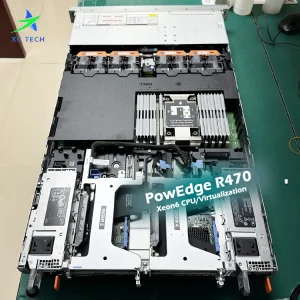
South Africa is currently experiencing an unprecedented technological expansion, positioning itself as the primary digital and cloud gateway for the entire African continent. With major metropolitan hubs like Johannesburg (Midrand), Cape Town, and Durban establishing hyperscale data centers, the demand for enterprise-grade rack servers has surged exponentially. The region's unique challenges, such as power grid fluctuations (load shedding) and the necessity for robust thermal designs, dictate that standard hardware is no longer sufficient. Local enterprises, telecom operators, and service providers require specialized rack servers that combine high thermal tolerance, intelligent power management, and optimized processing efficiency.
To address these demands, modern rack server configurations must support dual redundant Titanium-grade power supplies and leverage intelligent virtualization layouts. The transition to cloud native infrastructures, virtualized storage networks, and real-time data analytical frameworks has transformed local datacenters from storage units into processing units. As a premium manufacturer serving South Africa, we address local power environments directly by configuring servers that maintain dynamic power scaling and support automated state savings, ensuring hardware integrity under all load scenarios.
The most critical operational challenge for South African digital enterprises is power continuity. Our rack servers are designed to interface seamlessly with modern uninterruptible power supplies (UPS), localized diesel generator sets, and industrial solar microgrids. By integrating advanced Power Management Bus (PMBus 1.2/1.3) protocols, our server firmware allows system administrators to set strict power-capping policies. During grid transitions, servers can dynamically throttle non-critical CPU threads to minimize instantaneous load spikes, protecting the overall energy infrastructure while keeping core database and network services fully operational.
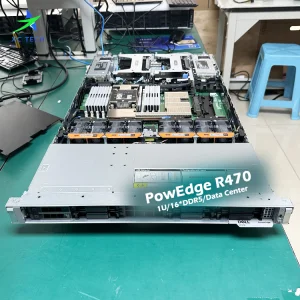
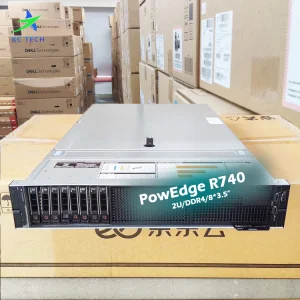
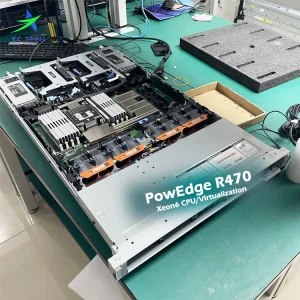
On a global scale, enterprise computing is moving rapidly towards high-density architectural modules, artificial intelligence (AI) inference acceleration, and DDR5 memory integrations. These transitions are crucial for processing advanced algorithms such as the DeepSeek models, modern AI large language networks, and hyper-scalable cloud database applications. Hardware efficiency is measured not just in clock speeds, but in compute density per rack unit (U) and performance-per-watt metrics. Our latest R470 and R740 server lines reflect this paradigm shift, offering configurations engineered with high-efficiency Intel Xeon Scalable and Intel Xeon 6 processors combined with PCIe Gen 5 routing pathways for uninterrupted system throughput.
These technologies ensure that organizations in South Africa remain competitive globally. Whether deploying deep learning models locally, executing complex simulations, or maintaining multi-tenant database clusters, our manufacturing standards ensure that every motherboard, backplane, and riser card matches the absolute pinnacle of current global hardware engineering protocols.
Transparency, compliance, and strict quality control protocols form the foundation of our manufacturing processes. Every server exported to the South African market undergoes comprehensive validation.
| Company Registration Date | 2021-08-27 |
| Annual Export Revenue (USD) | $1,180,000 USD |
| Years in Industry | 4 Years of Dedicated Infrastructure Excellence |
| Quality Control Protocol | 100% Inspection of All Products (Full Diagnostic Pass) |
| QA/QC Inspectors | 1 Dedicated Certified Hardware Engineer |
| Traceability of Raw Materials | Yes (Fully verified Component Traceability) |
| Accepted Languages | English (Comprehensive technical support) |
| Primary Markets Serviced | Eastern Europe (20%), Domestic (15%), North America (10%), with specialized focus expansion in South Africa. |
The requirements for server configurations differ vastly across vertical markets in South Africa. To optimize operational expenditure (OPEX) and capital expenditure (CAPEX), hardware procurement managers must match server architectures with specific local environment requirements.
Financial institutions and high-frequency fintech systems require sub-millisecond database queries, massive memory pools, and advanced data encryption features. High-density servers like the Dell EMC PowerEdge R470, configured with 10SFF configurations and ultra-fast DDR5 RAM modules, allow localized database engines to perform critical financial ledger calculations without network delay. By utilizing hardware-level cryptographic chips (TPM 2.0) on the server board, transactional structures remain completely secure, complying with global financial directives.
Mining automation, IoT telemetry, and worker safety management require edge computing architectures that are highly resistant to physical elements. These remote deployments are often located far from traditional server environments, utilizing localized containers or rugged cabinets. Our 1U space-saving cloud servers provide optimal processing power for local sensor arrays, telemetry inputs, and autonomous haulage calculations, transferring only processed metadata summaries back to central databases in Johannesburg.
With South Africa's 5G network expansion led by major telecom providers, there is a massive push to place computing infrastructure closer to cell tower nodes. High-density, shallow-depth server platforms allow operators to deploy localized media processing, virtualized RAN configurations, and real-time network slicing engines without expanding physical footprint sizes.
The Protection of Personal Information Act (POPIA) enforces strict compliance guidelines regarding how data is captured, processed, and stored within South African borders. Under POPIA regulations, organizations processing customer records, financial histories, or personal identities must keep key processing components isolated and secure. Deployed physical servers must feature robust hardware security, including boot-level validation, encrypted silicon trust-roots, and immediate physical drive configuration capabilities (SEDs).
By cooperating with an experienced factory partner like us, South African system integrators and enterprises can purchase servers that are built from the ground up to support secure VM partitioning, secure container configurations, and modern hardware-isolated enclaves. This ensures complete data control, mitigating the regulatory risks associated with purely off-shore, public cloud alternatives.
The next decade of processing infrastructure in South Africa will be shaped by two major technological trends: AI acceleration integration and sustainable thermal design. As local businesses begin to run customized internal Large Language Models (LLMs) and advanced regression systems, the demand for servers that can support modern high-speed PCIe graphics cards and acceleration units will grow.
Additionally, the rising costs of industrial cooling systems in warm South African climates are driving a transition toward direct-to-chip liquid cooling and advanced airflow management systems. Our factory's R&D path is focused on designing high-thermal-limit server backplanes capable of stable operations at elevated ambient temperatures, reducing the dependence on continuous air conditioning, thereby lowering Power Usage Effectiveness (PUE) ratios and reducing overall electricity overhead.
Select from our highly optimized 1U and 2U rack mount servers, configured with certified components for high-reliability data management and virtualization tasks.
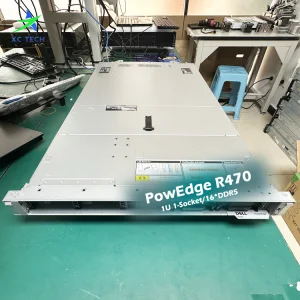
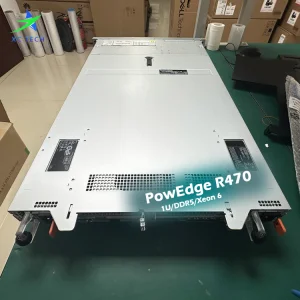
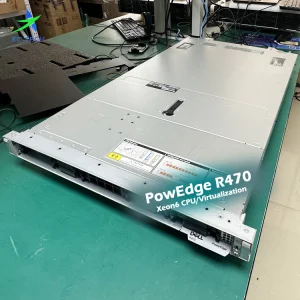
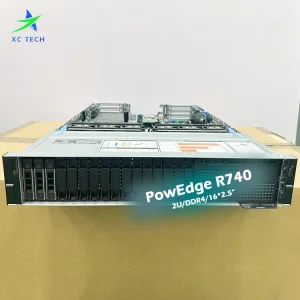
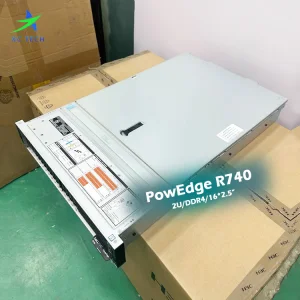
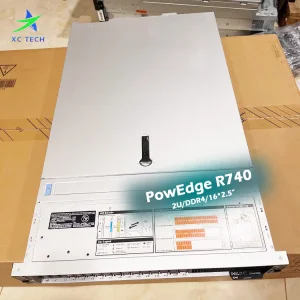
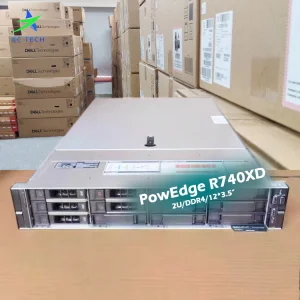
Sourcing directly from a dedicated manufacturer offers South African enterprises, system integrators, and IT consultants significant cost advantages. Instead of being locked into standard retail packages, direct manufacturing access allows custom tailoring of components. Whether your systems require high SSD capacities for intense virtualization, high CPU core counts for multithreaded operations, or specialized network interface cards (NICs) to align with existing infrastructure, our factory configurations are optimized to deliver.
By eliminating intermediaries, we pass on cost efficiencies directly, supporting the technical expansion of organizations across Southern Africa. Our professional export capabilities ensure your server hardware arrives safely, undergoes complete testing, and is immediately ready to power your enterprise applications.
 Vertex AI Server