SSD Manufacturers & Serving the Uruguay Enterprise Market

High-End Solid State Storage Solutions Tailored for Uruguay's Emerging Cloud Infrastructure, Fintech Clusters, and Industrial Server Configurations.

Send Inquiry Now

1. The Rise of Uruguayan Digital Infrastructure & Enterprise Storage Demand

Uruguay has positioned itself as the leading digital innovation and software development hub in the Southern Cone of Latin America. Facilitated by exceptional connectivity—highlighted by submarine fiber optic installations linking Montevideo directly to North American internet exchange points—the country hosts highly advanced technological infrastructure. Key development centers like the Antel Datacenter in Pando (certified as Tier III by the Uptime Institute) and major free-trade zones such as Zonamerica and Aguada Park have attracted multinational enterprises, financial technology (Fintech) firms, and software companies.

This massive digitization requires a foundational upgrade in raw storage hardware. Standard legacy mechanical hard drives (HDDs) no longer support the high-input/output operations per second (IOPS) demanded by modern cloud architectures, ERP databases, virtual desktop infrastructures (VDIs), and real-time agricultural analytics systems. Modern enterprises and system integrators serving Uruguay are rapidly migrating to high-capacity Solid-State Drives (SSDs). These enterprise-grade SSDs are crucial for stabilizing read/write latencies, reducing physical footprint in server racks, and significantly lowering cooling and power expenses in specialized local facilities.

2. Technical Breakdown: Selecting the Correct SSD Interface and Performance Tier

Server architects deploying hardware in Uruguayan locations must evaluate the technical differences between SATA, SAS, and NVMe interfaces to balance capacity, cost, and input/output throughput.

SATA (Serial ATA) - 6Gbps Interface

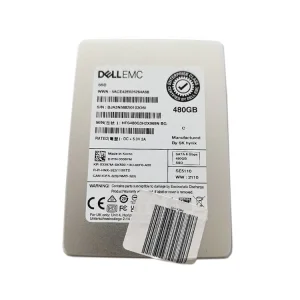
SATA enterprise SSDs (such as the Dell 480GB SATA Read Intensive SSD) operate on a proven, backward-compatible interface. Limiting bandwidth to roughly 600MB/s, SATA serves as an economical replacement for enterprise HDDs. It is highly suitable for boot drives, static web hosting server arrays, and read-heavy application caching where budget-friendly scaling is prioritized over maximum throughput.

SAS (Serial Attached SCSI) - 12Gbps & 24Gbps Interface

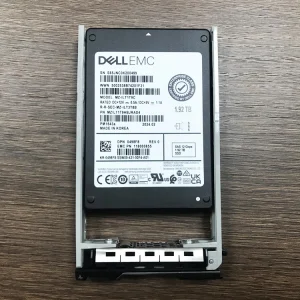
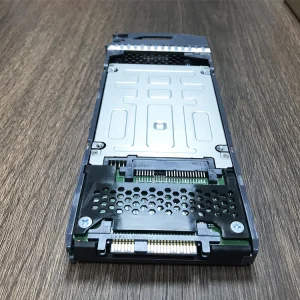
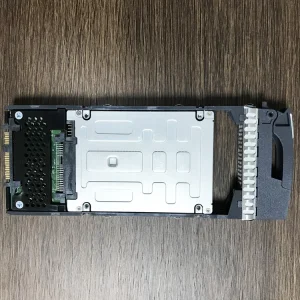
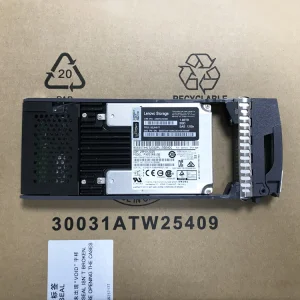
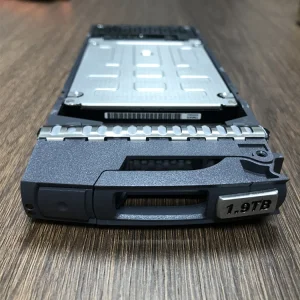
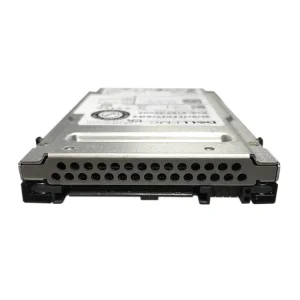
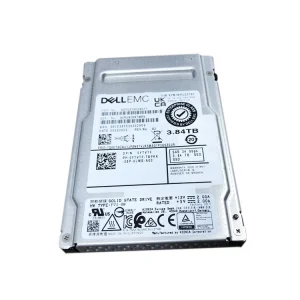
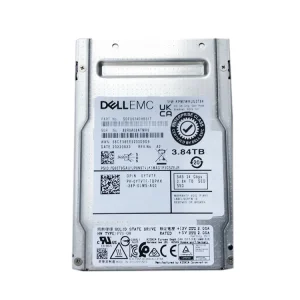
Dual-port SAS SSDs (such as the Lenovo PX05SRB Series 12Gbps SAS SSDs and the high-speed Dell EMC KPM7WRUG3T84 24Gbps SAS SSDs) offer dual-controller redundancy to eliminate single points of failure within a server SAN environment. By utilizing SAS-3 (12Gbps) and SAS-4 (24Gbps) specifications, enterprise platforms double the bandwidth of SATA and leverage advanced command queuing. SAS is the standard for mission-critical corporate applications, cloud virtualization platforms, and high-availability database nodes.

NVMe (Non-Volatile Memory Express) - PCIe Interface

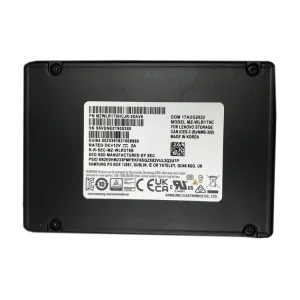
By connecting directly to the CPU via the PCI Express bus (Gen4/Gen5), NVMe drives (such as the Samsung MZ-WLR1T9C 1.92TB NVMe SSD) eliminate the latency penalties inherent in SCSI and ATA protocols. Delivering read/write rates measured in thousands of megabytes per second (up to 7000+ MB/s) and millions of IOPS, NVMe SSDs are the standard for high-frequency algorithmic trading systems, complex AI inference engines, and intensive multi-tenant virtualization clusters.

Understanding Endurance Parameters: DWPD and TBW

When purchasing SSDs for enterprise arrays, the workload profile determines the drive's lifespan. Read Intensive (RI) drives offer lower write endurance (typically <1 Drive Write Per Day, or DWPD) but higher capacities at a lower price point, ideal for read-only databases, media streaming, and web hosting.

Conversely, Mixed-Use (MU) and Write Intensive (WI) models (such as the Lenovo PX05SRB series with 3 to 10 DWPD) utilize superior NAND flash technology to survive write-heavy logging environments, transactional database storage, and virtual desktop infrastructure swap disks without premature silicon wear.
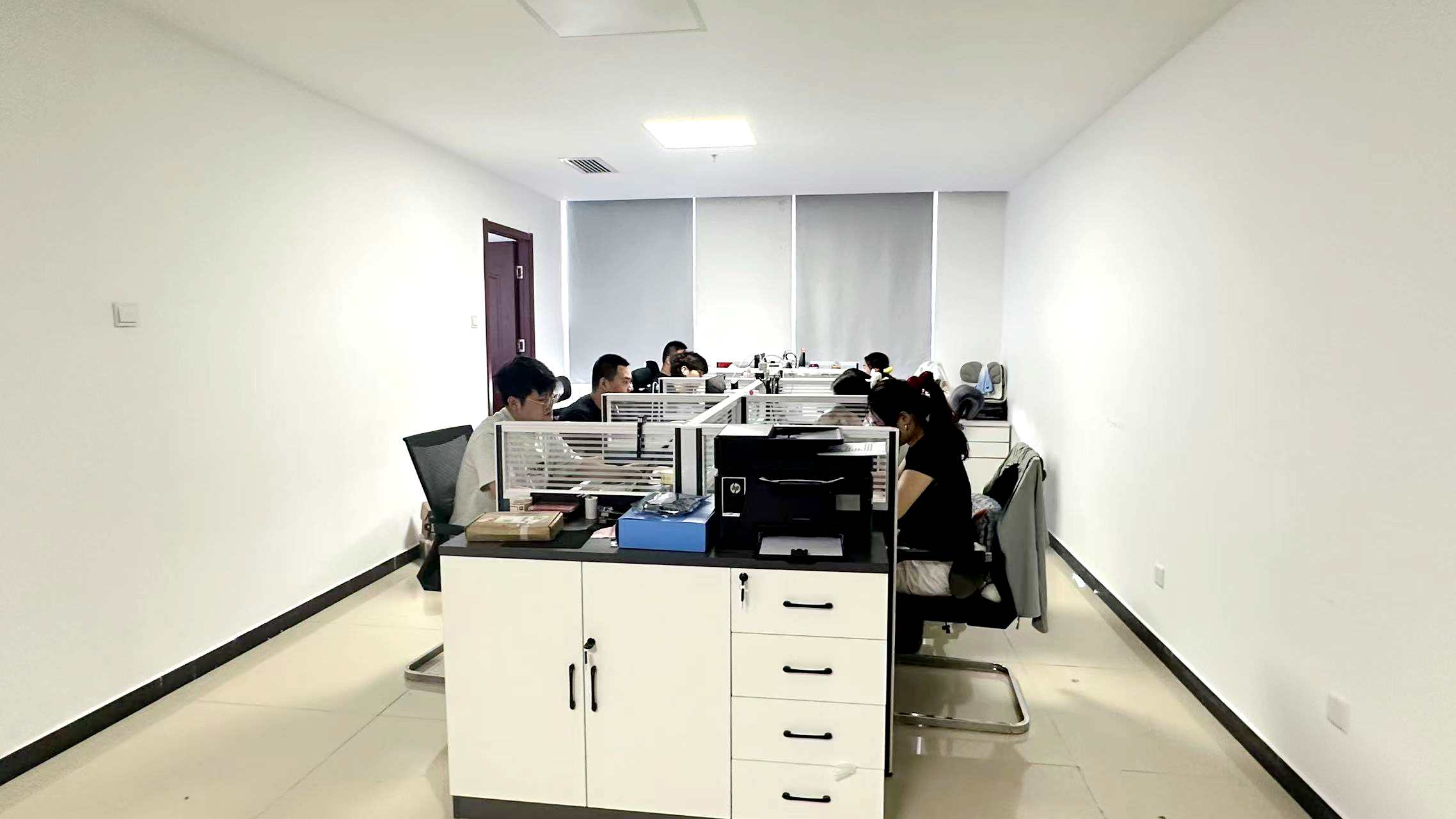
Advanced SSD Testing Facility and Manufacturing Quality Control

3. Localized Application Scenarios for SSDs in Uruguay

Modern computing environments in Montevideo and adjacent business zones demand specialized drive profiles based on vertical-market application scenarios:

  • Financial & Fintech Sectors: With Montevideo emerging as a sandbox for regional digital banking and payment processing, local transactional databases require NVMe SSDs featuring high-end controller chips and low-latency parameters. These drives prevent processing delays during peak transaction periods and ensure sub-millisecond response times.
  • Agro-Industrial Big Data: Uruguay's extensive agricultural sector employs digital monitoring, grain silo telemetry, and cattle tracking. Enterprise-grade SSDs hosted in edge-computing servers must withstand wider operating temperatures while providing stable read/write capabilities to log sensor telemetry and feed machine learning optimization algorithms.
  • Government & E-Governance Infrastructure: Through AGESIC (Agency for Electronic Government and Information and Knowledge Society), Uruguay leads in e-government applications. These high-volume portals rely on enterprise SAS and SATA SSDs configured in RAID layouts to guarantee uninterrupted public database access and rapid, concurrent query processing.

4. Supply Chain Excellence: Sourcing SSDs from Chinese Smart Factories

For enterprise companies, hardware integrators, and telecom agencies in Uruguay, procurement efficiency requires an optimized supply chain. Partnering with a Chinese OEM/ODM factory offers key business advantages:

  1. Direct Tier-1 Silicon Sourcing: Chinese manufacturing facilities maintain direct partnerships with flash memory chip manufacturers (Samsung, Kioxia, Micron, SK Hynix). This ensures access to grade-A NAND wafers, bypassing downstream markups and ensuring consistent technical quality.
  2. Customized Firmware Engineering: Hardware compatibility issues can result in servers flagging third-party SSDs as unsupported. Our engineers flash OEM-equivalent firmware (configured for Dell PowerEdge, Lenovo ThinkSystem, HPE ProLiant, and Huawei FusionServer systems), ensuring correct drive recognition, health diagnostics integration, and optimal thermal performance.
  3. Scalability and Lead-Time Control: By utilizing automated surface-mount technology (SMT) assembly lines and climate-controlled clean rooms, we maintain steady production schedules. This protects buyers from component bottlenecks and simplifies bulk procurement for large-scale datacenter builds.

5. Quality Assurance Framework & Production Traceability

Operational failure is not an option in data storage. We implement rigorous QA protocols to guarantee the long-term reliability of every solid-state drive shipped to the Uruguayan market.

2021
Established Since
100%
QC Inspection Rate
$1.18M+
Annual Export Volume
160 ㎡
Testing Facility Area

Every SSD undergoes a multi-phase testing procedure before export:

  • Raw Material Traceability: All controller boards, NAND chips, and power-loss protection (PLP) capacitors are logged to track their component origins.
  • Thermal Stress Testing: Drives are subjected to high-temperature burn-in chambers to identify and eliminate early-life chip failures (infant mortality).
  • Data Integrity Validation: Verification software runs continuous write/read/compare cycles to check for sector errors, bit rot, and firmware bugs under load.
  • Firmware Verification: Validation protocols ensure compatibility with target server backplanes, SAS host bus adapters (HBAs), and hardware RAID controllers.

Manufacturer Technical Profile

Overview & Global Operations
Registration Date: 2021-08-27
Floor Space (㎡): 160
Annual Export Revenue (USD): $1,180,000
Accepted Languages: English
Years Exporting: 4 Years
Years in Industry: 4 Years
Quality Management & Testing
Material Traceability: Yes (Product Support Traceability)
Inspection Method: Inspection of all products (100% Rate)
QA/QC Inspectors: 1 Specialist
Trade Demographics
Main Target Markets: Eastern Europe (20%), Domestic (15%), North America (10%)
Main Client Types: Brand Businesses, Retailers, Engineers, Wholesalers, Manufacturers

6. Uruguay Import Compliance, Logistics, and Mercosur Operations

Importing enterprise electronics into Uruguay requires navigating customs regulations, tariff codes, and logistical pathways. High-value data storage components are typically routed via two primary methods:

  • Free Trade Zone Clearance (Zonas Francas): Under Uruguay's Free Zone Law (Ley de Zonas Francas No. 15.921), hardware shipped directly to free trade hubs like Zonamerica or the Pando Science Park is exempt from import duties, VAT, and internal taxes. This environment is highly beneficial for multinational data hosting operations and offshore software hubs.
  • Standard Territory Importation: Shipments entering the local domestic market are subject to the Mercosur Common External Tariff (AEC - Arancel Externo Común) and require customs documentation (DUA - Documento Único Aduanero). Our logistics team supports buyers by providing accurate HS Codes (typically 8523.51 for Solid-State Drives), certificate of origin documents, and export documentation to prevent custom clearance delays in Montevideo.

Additionally, compliance with energy efficiency specifications and electronic product waste regulations is managed through structured factory labeling and verification sheets. This ensures smooth regulatory clearance and legal compliance.

Enterprise Storage Portfolio

Explore our full inventory of brand new and factory-certified server SSDs, featuring high-end controller architectures and custom OEM firmware integration.

Frequently Asked Questions: Enterprise SSD Logistics & Deployment

Answers to critical integration, hardware compatibility, and import logistics questions commonly asked by procurement managers in the LATAM region.

How do you ensure these SSDs are compatible with OEM servers from Dell, Lenovo, and Huawei?
Our engineering team flashes drive controllers with firmware optimized for major server brands, including Dell PowerEdge, Lenovo ThinkSystem, and Huawei FusionServer. This ensures that when the drive is hot-swapped into a server backplane, it registers without warnings, supports native SMART health diagnostics, and interfaces correctly with hardware RAID controllers (such as Dell PERC or Lenovo ThinkSystem RAID adapters).
What is the standard warranty and post-purchase replacement process for Uruguay?
We provide a 3-year warranty on all enterprise-grade hardware. If a drive reports performance degradation or controller failure within the warranty period, we ship replacements directly to Montevideo or local free zones. Detailed diagnostics logs from server managers are analyzed by our engineering team to trace any potential wear or configuration issues.
Can you ship directly to Zonamerica and other Free Zones in Uruguay?
Yes. We routinely manage shipments directed to Free Zones (Zonas Francas) like Zonamerica, Aguada Park, and the Pando Science and Technology Park. Under this framework, shipments bypass standard domestic import VAT and tariffs, saving transit time and costs.
What is the difference between SAS 12Gbs and SAS 24Gbs drives for server setups?
SAS 24Gbs (SAS-4) doubles the theoretical interface bandwidth compared to SAS 12Gbs (SAS-3), improving overall data throughput for high-demand database applications. While 24Gbps drives are backward-compatible with 12Gbps backplanes, they require a 24Gbps controller and compatible SAS-4 backplane architecture to run at their maximum speeds.
How does raw material traceability ensure the reliability of these SSDs?
Our raw material traceability system records the manufacturing details, wafer batch numbers, and controller revisions for all subcomponents. If a performance anomaly is detected during production testing or deployment, this tracking allows our quality inspectors to pinpoint the affected component batches and prevent issues from reaching customers.