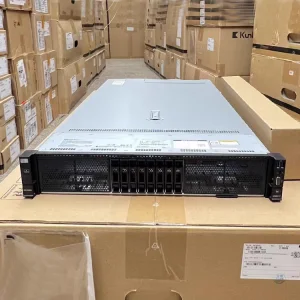
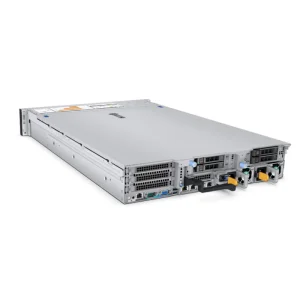
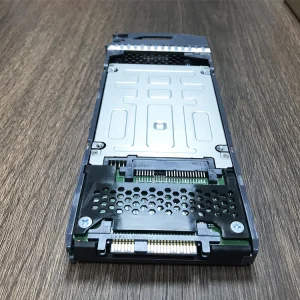
Explore our elite selection of hardware RAID servers and high-speed SSDs designed for maximum fault tolerance, ultra-low latency, and massive data throughput.
An authoritative analysis of Redundant Array of Independent Disks (RAID) architecture, evolution, and global deployment strategies in modern data centers.
In the era of hyper-scale computing, artificial intelligence (AI) workloads, and real-time big data analytics, storage sub-systems form the foundational bedrock of global IT infrastructures. The demand for speed, redundancy, and zero-downtime operations has elevated Redundant Array of Independent Disks (RAID) technologies from simple host adapters to sophisticated hardware-accelerated nodes. Today's global enterprise landscape requires storage arrays that not only secure sensitive data against physical disk failures but also deliver millions of IOPS (Input/Output Operations Per Second) to support intensive processes like DeepSeek LLM training, large-scale virtualization, and distributed databases.
The transition from legacy SAS/SATA mechanical disk arrays to modern NVMe (Non-Volatile Memory Express) RAID architectures has altered server topologies. Modern PCIe Gen 4.0 and Gen 5.0 protocols allow NVMe SSDs to bypass the traditional bottleneck of SATA buses. However, this shift places extraordinary processing demands on RAID controller chips. Modern hardware RAID solutions utilize dedicated ASICs (Application-Specific Integrated Circuits) with embedded DDR4/DDR5 cache and flash-backed write protection (supercapacitors) to manage XOR and Reed-Solomon parity calculations. This guarantees data integrity without degrading the host server's CPU performance.
Utilizes dedicated RAID controller microprocessors to offload complex mathematical parity calculations from the primary Intel Xeon or AMD EPYC hosts, protecting server workloads from I/O penalties.
Engineered with hot-plug backplanes allowing seamless drive replacements during live operations. Paired with automatic rebuild schedules to quickly restore full redundancy levels.
Incorporates onboard flash memory modules and supercapacitors. During unexpected power interruptions, dirty cache contents are safely written to non-volatile flash to prevent corruption.
A technical evaluation of different RAID levels, storage efficiency, read/write profiles, and optimal deployment targets.
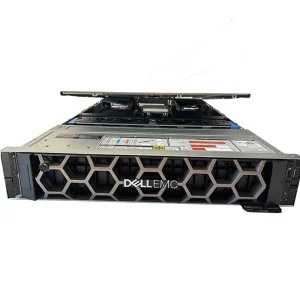
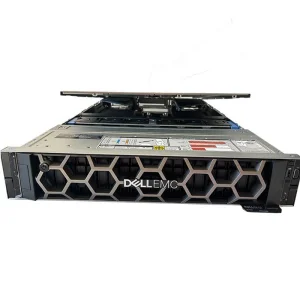
Deciding on a RAID level requires balancing performance, raw capacity overhead, and risk tolerance. For instance, in database servers utilizing the Dell PowerEdge R740 or R750 chassis, engineers frequently select RAID 10 to sustain transactional processing speeds. Conversely, for large archive arrays or content delivery platforms built on Kunpeng or FusionServer architectures, RAID 6 offers the best safeguard against multi-drive hardware degradation.
| RAID Level | Minimum Drives | Fault Tolerance (Drive Failures) | Storage Efficiency | Typical Applications |
|---|---|---|---|---|
| RAID 0 (Striping) | 2 | 0 | 100% | Non-critical high-speed scratch space, temporary rendering blocks |
| RAID 1 (Mirroring) | 2 | 1 | 50% | Operating System boot drives, firmware platforms, metadata logs |
| RAID 5 (Distributed Parity) | 3 | 1 | (N-1) / N | Web servers, read-heavy standard application servers, media streaming |
| RAID 6 (Dual Parity) | 4 | 2 | (N-2) / N | Large capacity enterprise arrays, long-term archival databases |
| RAID 10 (1+0 Nested) | 4 (Even number) | Up to 1 per mirror set | 50% | High-transaction OLTP databases, virtualized hypervisors, VM storage |
| RAID 50 / 60 (Complex) | 6 / 8 | 2 / 4 (Specific config dependent) | High performance + balance | Enterprise-grade ERP storage, multi-tenant cloud storage pools |
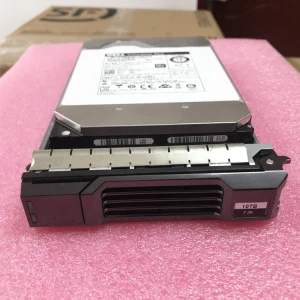
Historically, RAID was designed to overcome the low reliability and mechanical limits of spinning hard disks. Rebuilding a 10TB enterprise SAS drive (such as the Dell Compellent 10TB Server HDD) under a RAID 5 setup can take days due to interface limits and mechanical arm latency. During this rebuild window, the system is exposed to total data loss if a second drive experiences read errors.
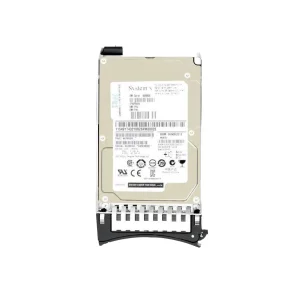
Modern data centers address this through NVMe arrays paired with software-defined systems or specialized chips (e.g., Intel VROC). Rebuild speeds for enterprise SAS SSDs (like the Lenovo PX05SRB series) drop from days to minutes. This minimizes the vulnerability window and enables cloud architectures to maintain strict service level agreements (SLAs).
Transparent corporate data reflecting manufacturing standards, market distribution, and quality assurance processes.
Operating out of strategic industrial parks in China, our facilities employ strict quality control protocols for every unit exported. From raw component procurement (ASICs, controllers, SAS backplanes) to final server burn-in tests, we ensure total hardware stability before dispatch.
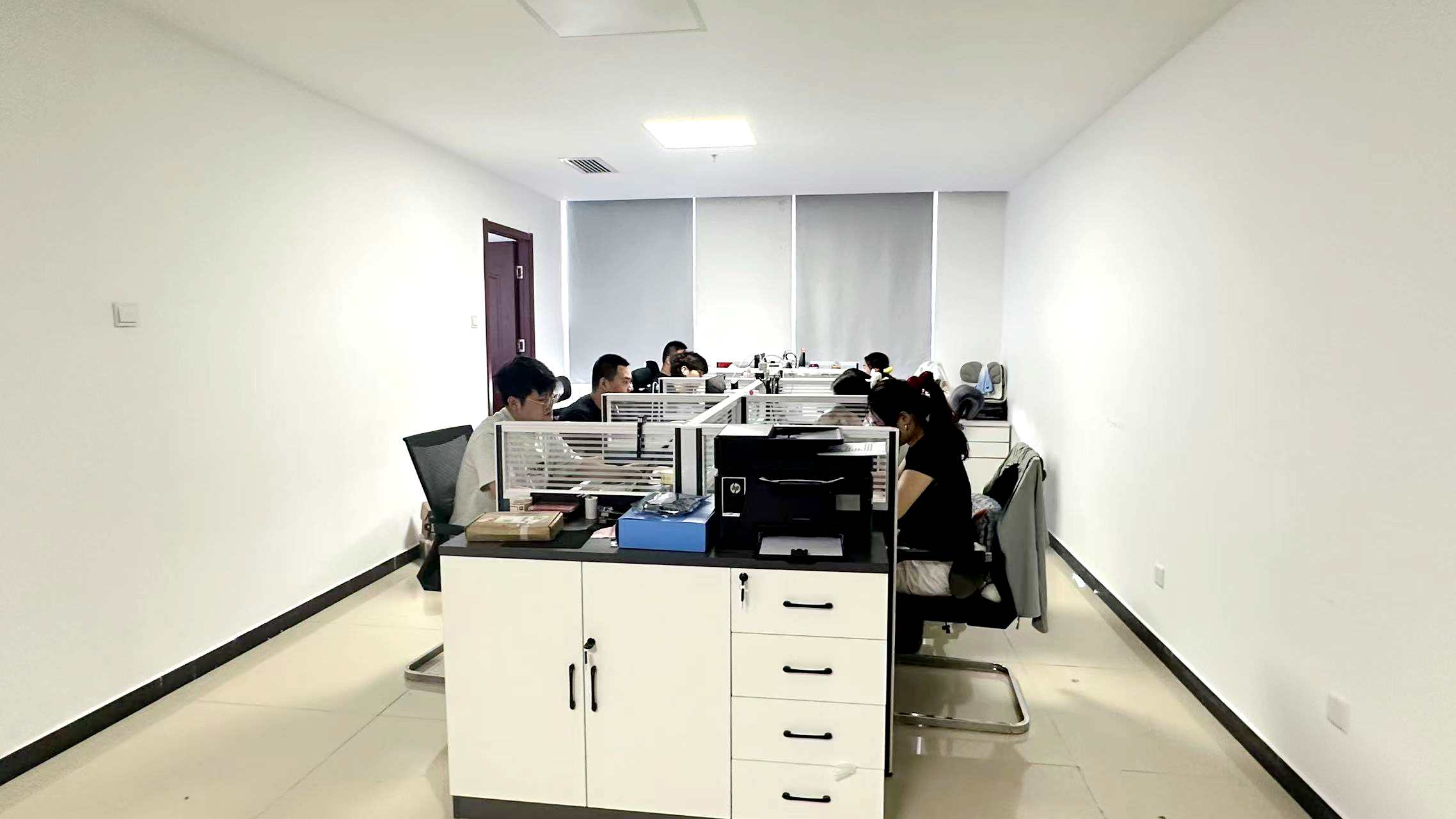
Understanding how vertical integration, material access, and testing systems deliver value to global buyers.
Sourcing hardware from China offers significant advantages beyond manufacturing costs. The primary advantage is the **complete integration of the supply chain ecosystem**. From the silicon fabrication of server components to the stamping of chassis sheet metals and the design of high-density backplanes, the proximity of suppliers reduces turnaround times. A custom 2U or 4U rack server order, which might require months to source elsewhere, can be assembled, configured, and tested in weeks.
Key drivers of China's dominance in the server exporting market include:
Modern servers are deployed across diverse and demanding scenarios. Understanding these contexts helps in selecting the correct configuration:
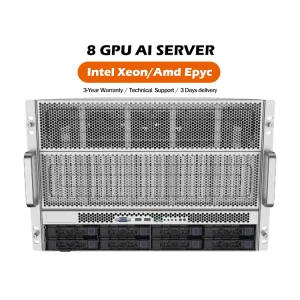
Deployments involving platforms like the *OEM DeepSeek AI High-Performance Server (supporting multiple 4090/3090 GPUs)* require massive data throughput. These environments utilize NVMe RAID arrays (RAID 0 or RAID 10 configurations) to stream dataset files to GPU memory, ensuring the accelerators are not left waiting for storage I/O.
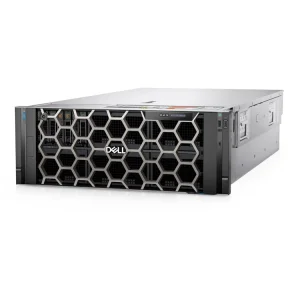
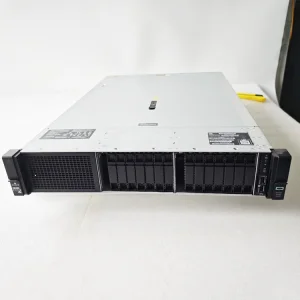
Hypervisors running VMware ESXi or KVM support hundreds of virtual machines simultaneously. A single hardware failure cannot be allowed to bring down client operations. Enterprise servers like the *Dell PowerEdge R750* are configured with redundant RAID 6 SAS SSD arrays to provide dual-drive fault tolerance alongside high-speed random read operations.
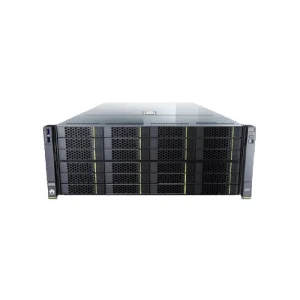
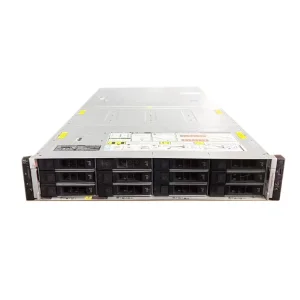
For operations requiring petabytes of capacity rather than maximum speed, 4U systems like the *Taishan Kunpeng 5280 storage server* are paired with high-capacity enterprise SATA or SAS HDDs. These arrays use RAID 60 to provide reliable long-term data security at a lower cost per gigabyte.
Technical and procurement answers to guide buyers through selection, configuration, and shipping processes.
Hardware RAID relies on a dedicated controller card (with onboard processor and cache memory) to manage the storage drives. This offloads all parity and compression work from the server's main CPUs. Software RAID uses the host server's CPU to run the calculations. For NVMe systems, software-based engines like Intel VROC can handle high speeds directly through the CPU lanes, but hardware controllers with flash-backed protection are still preferred for critical databases and workloads where CPU overhead must be minimized.
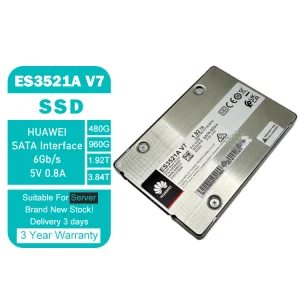
Enterprise servers (such as Dell PowerEdge and Huawei FusionServer) use proprietary drive sleds and firmware verification. If you install standard desktop drives, the RAID controller may report error codes or fail to read the disk's thermal sensors. Enterprise-grade SSDs (like the Lenovo PX05SRB SAS SSD or ES3521A) feature enterprise-level firmware designed to respond quickly to controller commands, preventing false "drive offline" alerts.
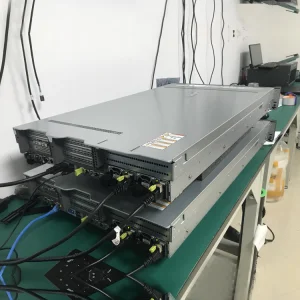
Our quality control process includes 100% inspection and raw material traceability. All systems undergo standard hardware diagnostics, checking memory buses, drive channels, and RAID controller cache. We perform stress tests simulating peak workloads before the product is packed and shipped.
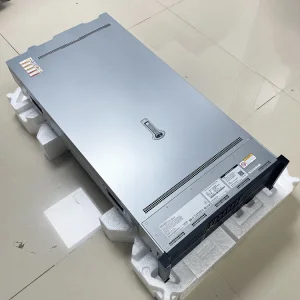
Standard configurations are processed and shipped within 3 to 7 business days, depending on inventory. For customized hardware setups, the timeline is determined by component availability. We use heavy-duty foam inserts and static-shielding bags to protect the servers from shock and vibration during international transit.
We offer comprehensive hardware warranties (with standard 3-year options for major configurations). Replacement parts or modules are dispatched via express courier to minimize system downtime. Additionally, our engineering team provides remote setup assistance for RAID controller configuration and operating system deployment.
Optimize your existing data centers with our enterprise-grade SAS/SATA drives, high-capacity servers, and GPU platforms.
 Vertex AI Server