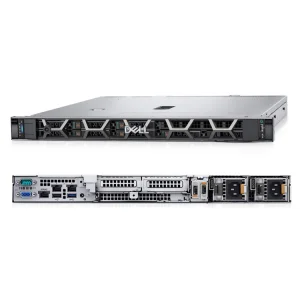
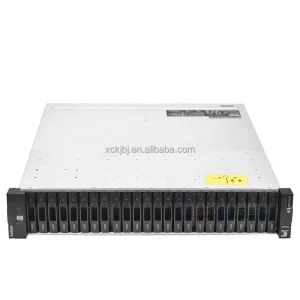
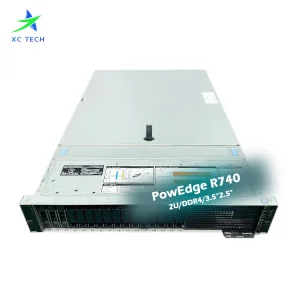
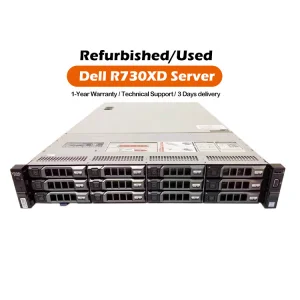
Explore our premium range of enterprise servers, high-density NAS/SAN systems, and customizable hosting clusters engineered to support dynamic cloud deployments and demanding containerized environments.
Historically, the domain hosting market operated on simple virtualization layers partitioned on off-the-shelf server hardware. Today, the convergence of ultra-low latency DNS routing, containerized microservices, and global content delivery networks (CDNs) has shifted the paradigm. Web hosting companies, cloud service providers (CSPs), and major domain registrars no longer rely on monolithic architectures. Instead, they demand highly customized physical hosting architectures optimized for high-density compute, localized edge caching, and scalable object storage.
As a dedicated manufacturer and supplier of hardware for domain hosting, we understand that hosting infrastructure requires continuous optimization across three critical pillars: memory bandwidth, storage throughput (IOPS), and network interfaces. A modern Domain Name System (DNS) server must handle millions of queries per second (QPS) with microsecond latency. If a server is choked by hardware bottlenecking, web applications fail, latency spikes, and SEO rankings decline globally. By engineering custom OEM and ODM server architectures, we allow hosting providers to bypass traditional hardware limitations, configuring custom PCIe lanes, dedicated IPMI monitoring, and optimized thermal signatures designed for continuous 24/7/365 runtimes.
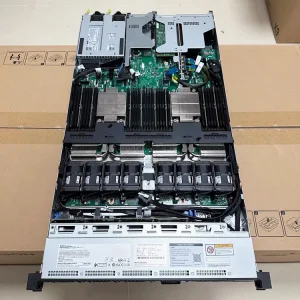
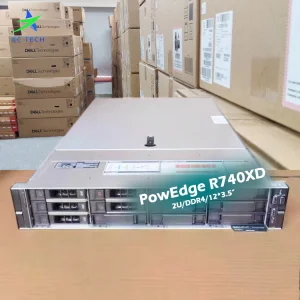
Multi-socket configurations utilizing AMD EPYC and Intel Xeon Scalable processors enable massive virtualization density. Hosting providers can run thousands of isolated VPS environments per rack unit without resource starvation.
Integrating NVMe storage arrays with U.2/U.3 interfaces ensures that database-driven websites load instantly. We customize backplanes to maximize throughput and ensure active-active controller redundancy.
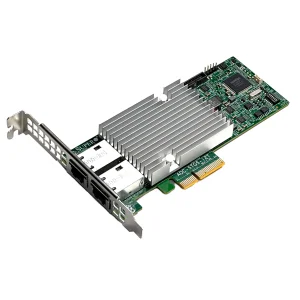
By leveraging high-speed network interfaces (NICs) such as the Intel I350-T2 and advanced 25G/100G controllers, we eliminate network card bottlenecks at the edge router level, keeping websites accessible and stable.
Procuring data center hardware is a complex operation requiring meticulous attention to life-cycle planning, cost-to-performance metrics, and deployment speed. Enterprise IT buyers, global web host providers, and network engineers demand custom configurations that match their exact software stacks. Whether it is custom BIOS branding, custom port configurations, or specific power distribution unit (PDU) compatibilities, off-the-shelf hardware often falls short.
By serving as a dedicated ODM/OEM partner, we bridge this gap. Our processes are designed around the strict requirements of hyper-scale environments. We implement a rigorous supply chain strategy that addresses the volatility of silicon supply while maintaining cost efficiency. Our customization options extend down to the component level: from selection of memory chips with specific ECC specifications, to selecting specialized cooling fans that fit specific hot/cold aisle parameters of the client's colocation facility.
| Procurement Factor | Standard Retail Offerings | OEM/ODM Custom Solutions | Business Impact |
|---|---|---|---|
| Hardware Customization | Fixed configurations, limited expansion capability | Tailored PCI-e configurations, custom chassis, specific NICs | Optimizes Capex; eliminates paying for unused features |
| Traceability & QA | Batch-level testing, basic certifications | 100% inspection, raw material sourcing tracking | Maximizes MTBF (Mean Time Between Failures) |
| Firmware Integration | Generic AMI/Award BIOS, standard IPMI | Custom firmware, pre-configured BIOS settings, remote management profiles | Plug-and-play installation; immediate deployment at scale |
| Life-cycle Support | 1-2 year standard cycle before end-of-life | Extended support, guaranteed replacement supply chain | Protects investment, simplifies long-term maintenance |
Modern enterprises are transitioning away from standard web hosting toward specialized solutions like Hyper-Converged Infrastructure (HCI), private clouds, and AI-accelerated workloads. For instance, the deployment of large language models (LLMs) requires hardware configurations that differ significantly from standard hosting servers. Hosting providers now offer "AI Instance Hosting" alongside traditional domain hosting, necessitating high-density GPU nodes that are optimized for massive parameter calculation.
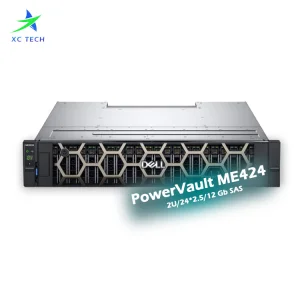
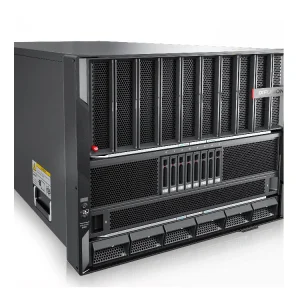
Our comprehensive enterprise solutions portfolio includes high-density GPU platforms like the FusionServer G8600 V7, alongside storage solutions like the Lenovo ThinkSystem DE Series and Dell PowerVault Series. By integrating these systems into a unified architectural layout, we help enterprises design hybrid architectures that handle transactional database hosting and heavy analytics processing simultaneously.
Integration of high-performance GPU systems (e.g., G8600 V7) to provide the computational horsepower needed for next-generation AI model APIs, deep learning, and advanced rendering workloads.
Configuring highly scalable SAN and NAS layers utilizing Dell PowerVault and Lenovo DE solutions. These systems guarantee data redundancy with multi-petabyte scalability, vital for large-scale SaaS platforms.
By implementing physical firewalls, load balancers, and multi-port Gigabit and 10GbE network cards (like the I350-T2), we safeguard entry points against DDoS attacks and high-volume traffic spikes.
Reliability is paramount in enterprise hosting. Hardware failure directly correlates to downtime, financial losses, and brand erosion. As a trusted manufacturer established on 2021-08-27, we operate with a strict Quality Management System (QMS). Our testing facility spanning 160㎡ is equipped for component-level stress testing, thermal chamber simulation, and burn-in processes that run for up to 72 hours per machine.
We execute 100% inspection protocols on all departing products, supervised by our dedicated Quality Assurance (QA) and Quality Control (QC) engineers. From validating raw materials to checking storage array configurations and testing optical transceiver compatibility, every server unit receives a comprehensive diagnostic report. This commitment to quality has enabled us to achieve an annual export revenue of USD 1,180,000 within just 4 years in the industry.
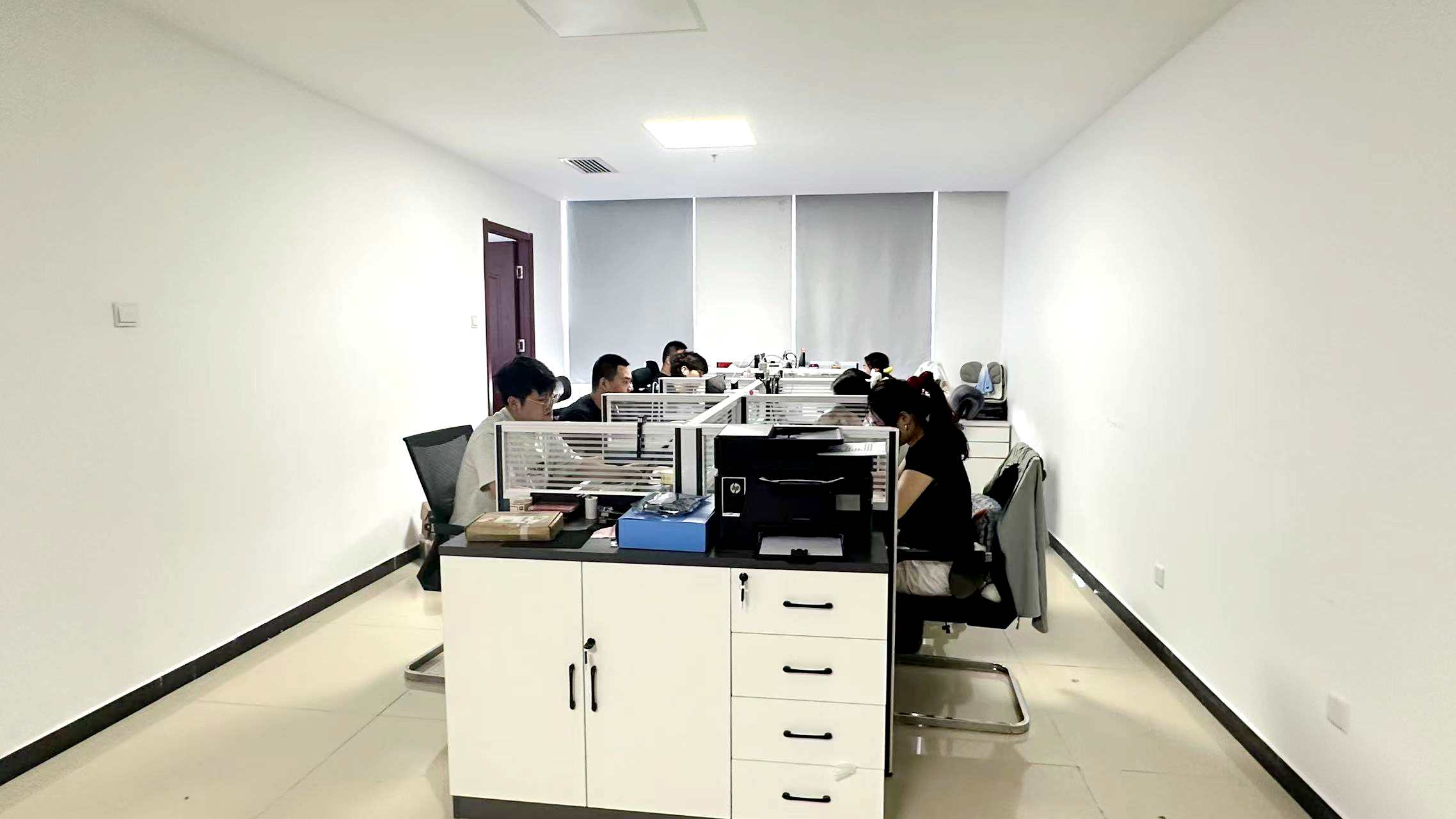
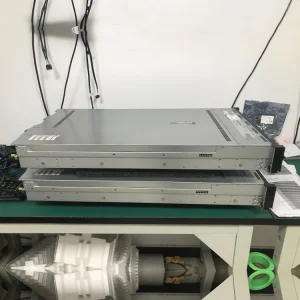
Figure 1: Fully custom-configured server racks undergoing QA network diagnostics and burn-in testing.
Our products are distributed across key international markets, satisfying regional regulatory compliances such as CE, FCC, RoHS, and WEEE. Our primary customer base consists of:
We support a diverse client portfolio, including brand businesses, regional retailers, custom integration engineers, IT wholesalers, and original equipment manufacturers. This global experience ensures we can meet complex, cross-border technical compliance standards.
As we look toward the next generation of cloud architectures, several technical shifts will redefine the hosting hardware landscape. Hosting providers must prepare their physical infrastructure for these developments:
By doubling the data transfer rates of previous generations, PCIe Gen 5 and Gen 6 interfaces will enable NVMe drives and network interfaces to operate at peak capacity, eliminating internal data routing bottlenecks.
As CPU thermal design power (TDP) exceeds 350W, transition to rear-door heat exchangers and direct-to-chip liquid cooling systems is essential for reducing power usage effectiveness (PUE) in modern data centers.
Implementing advanced redfish APIs and AI-driven telemetry units to predict fan failures, power supply degradation, and memory single-bit errors before they result in hosting downtime.
Here we address common technical queries from data center architects, system integrators, and procurement officers regarding our hardware configurations.
Browse our selection of GPU-optimized compute systems, enterprise servers, and networking components designed to handle high-traffic environments and demanding web hosting workloads.
 Vertex AI Server