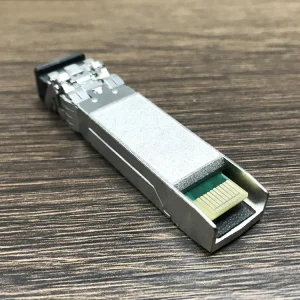
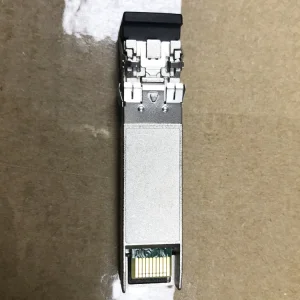
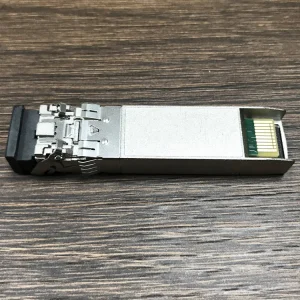
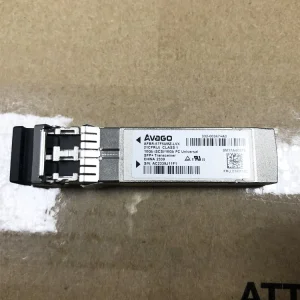
Industrial-grade SFP+ and Fiber Optic modules designed for high-altitude environments, delivering low-latency compatibility across major vendor switch platforms.
The Federal Democratic Republic of Ethiopia is undergoing an unprecedented digital transformation. Driven by the liberalization of the telecommunications market and the ambitious national strategies laid out in the Digital Ethiopia 2025 blueprint, the requirement for high-reliability fiber networks has expanded exponentially. The entry of Safaricom Ethiopia to challenge the incumbent state giant Ethio Telecom has sparked massive capital investments in FTTH (Fiber-to-the-Home), metropolitan area transport networks, and localized carrier-neutral data centers.
Addis Ababa, hosting one of Africa's most prominent diplomatic and business hubs, is rapidly converting into a hyper-connected metropolis. These deployments rely on one critical component to bridge the gap between active routing hardware and optical fibers: the Small Form-Factor Pluggable (SFP) transceiver. Because Ethiopia's geography spans extreme altitudes (with Addis Ababa sitting at over 2,300 meters above sea level), networking equipment faces lower atmospheric pressure and decreased cooling efficiency. SFP transceivers deployed here must support stringent operating temperatures and feature robust Digital Diagnostics Monitoring (DDM/DOM).
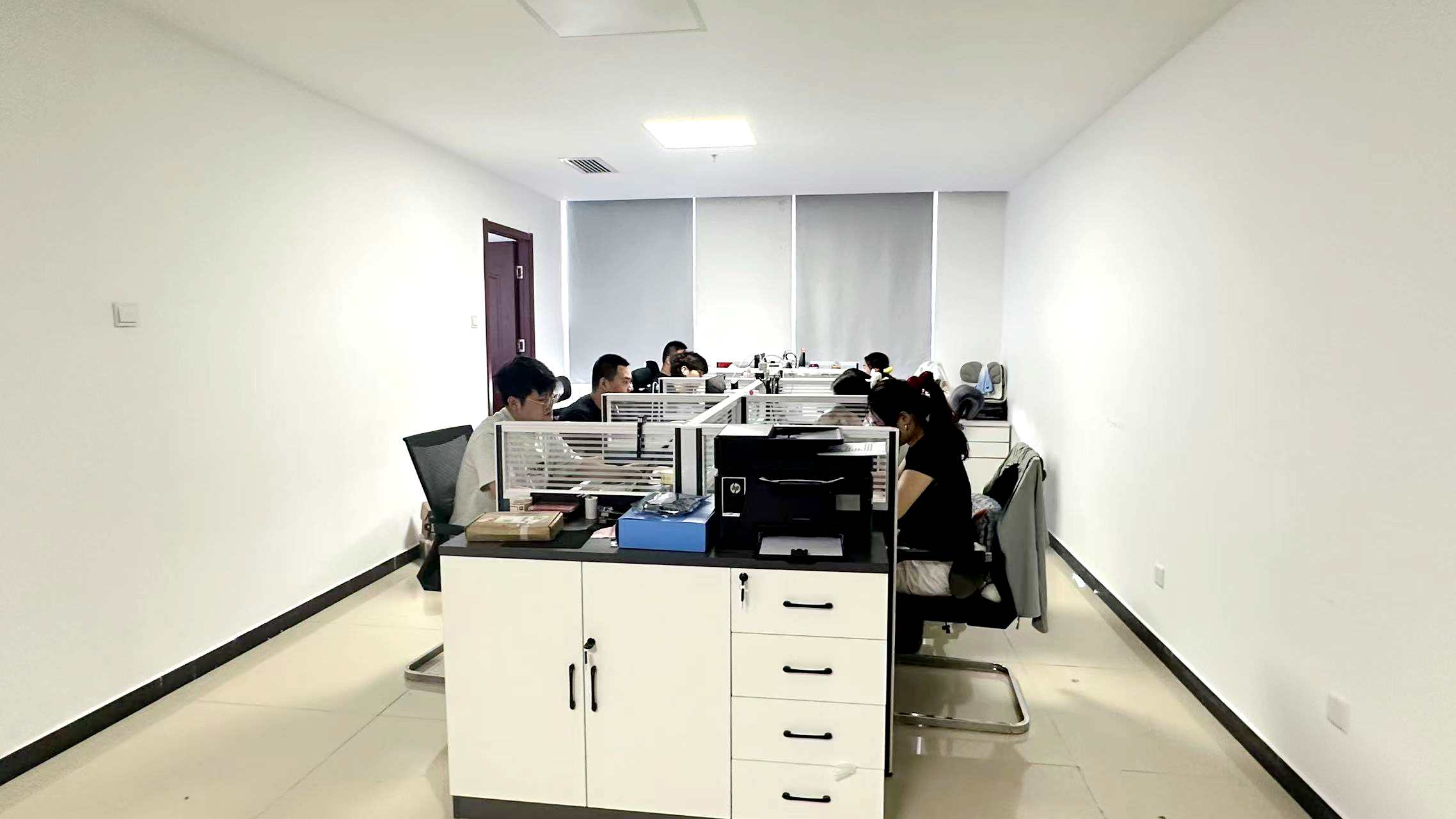
Our industrial output aligns with international standards, ensuring seamless operability in multi-vendor telecommunication topologies.
When selecting an SFP optical transceiver manufacturer for the Ethiopian market, engineering competence is paramount. The modern optical layer is no longer a simple plug-and-play medium; it requires deep compliance with Multi-Source Agreement (MSA) standards. Our advanced R&D laboratories test each batch of optical components for multi-vendor compatibility. Whether your network architecture leverages Cisco, Huawei, ZTE, Juniper, HPE, or Dell, our transceivers undergo EEPROM coding verification to prevent diagnostic locked-out errors in local configurations.
Furthermore, East African enterprise networks require high optical budgets. Given the geographical distances between industrial parks (such as Hawassa, Bole Lemi, and Adama) and central processing sites in Addis Ababa, single-mode long-haul fiber (using 10G SFP+ ER/ZR or 100G QSFP28 LR4 modules) is critical. Our factory utilizes high-performance distributed feedback (DFB) lasers and electro-absorption modulated lasers (EML) alongside top-tier PIN/APD receivers to maximize link budgets and minimize bit error rates (BER).
Complies perfectly with INF-8074i, SFF-8431, and SFF-8472 specifications, allowing integration across legacy and next-generation switches.
Real-time tracking of parameters such as temperature, laser bias current, optical TX/RX power, and supply voltage levels.
100% component testing through specialized environmental aging chambers to simulate real-world physical stress and high thermal loads.
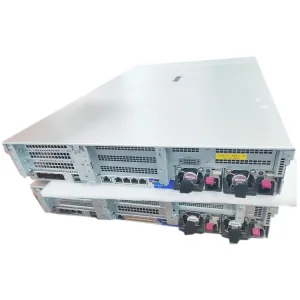
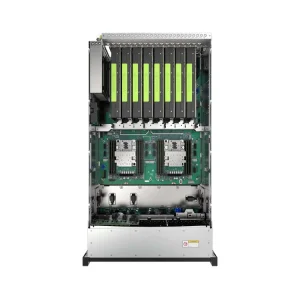
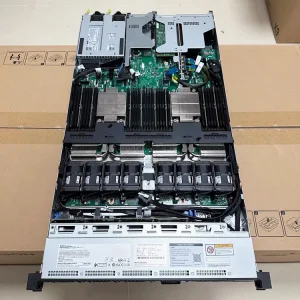
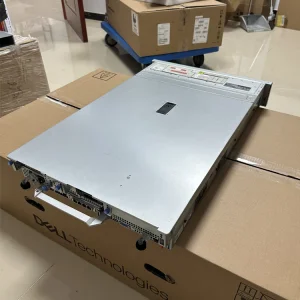
Enterprise AI training, databases, and heavy processing nodes designed to support emerging technical research in East African universities and corporations.
Importing active network and storage gear into Ethiopia requires strict adherence to localized regulatory structures. The Ethiopian Communications Authority (ECA) supervises telecom type approvals, ensuring that imported transceivers and hardware do not compromise national grid safety or telecom networks. Furthermore, products handling encryption and secure routing might be subject to reviews by the Information Network Security Administration (INSA).
Financially, procuring directly from Chinese manufacturing lines presents a highly efficient solution to the current foreign exchange (forex) shortages administered by the National Bank of Ethiopia (NBE). Through our experienced commercial department, we accept various structured payment models, working with major regional banks like the Commercial Bank of Ethiopia (CBE) and Awash International Bank to facilitate Letters of Credit (L/C) and CAD procedures smoothly. Sourcing direct from China reduces intermediary costs, preserving precious local capital and ensuring optimal hardware ROI.
For more than a decade, China has been Ethiopia's leading industrial development partner. The transport infrastructure, including the Addis Ababa-Djibouti railway, creates a reliable pipeline for electronic and telecommunication components moving from our Chinese manufacturing sites into the interior of Ethiopia. Sourcing from our modern production facility provides major advantages:
Our raw material trace systems verify every component, guaranteeing that critical components (including silicon chips, PCB layouts, and optical sub-assemblies) trace back to certified suppliers. This transparency is crucial for security compliance in banking systems, national infrastructure, and enterprise data nodes operating within the region.
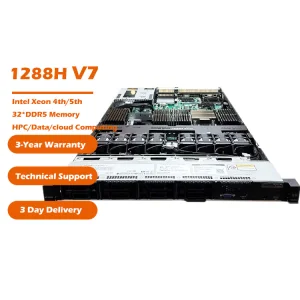
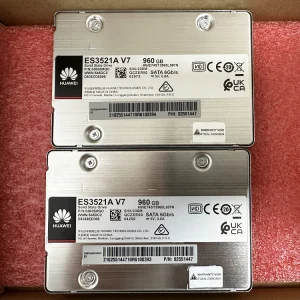
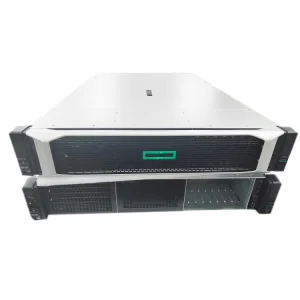
Expandable storage arrays, virtualization nodes, and components optimized for reliable operations within public and private cloud architectures.
Note on SFP Supply Security: Our factory coordinates with top-tier silicon and micro-controller foundries to guarantee consistency in our supply chains. This structural independence prevents deployment bottlenecks and delivers reliable delivery schedules for major enterprise data centers and telco networks in Addis Ababa.
In-depth, expert answers regarding specifications, compatibility, import regulations, and system design.
Each batch of optical modules undergoes strict testing in our EEPROM programming laboratory. We code and verify transceivers to match target vendors' firmware configurations, bypassing compatibility locks on switches like Cisco, Huawei, Juniper, Dell, and ZTE. Real-time DOM (Digital Optical Monitoring) parameters are cross-verified to align with the host device's warning thresholds.
We provide full documentation suites to simplify customs processes, including Commercial Invoices, Packing Lists, Certificates of Origin, and Conformity Certificates. We support logistics routing through Djibouti Port via the Ethio-Djibouti Railway corridor for standard shipping, or Bole International Airport for priority air freight.
Elevations above 2,300 meters mean thinner air, which reduces natural convection cooling in datacenters. We use industrial-grade optical sub-assemblies (TOSA/ROSA) with extended operating temperature ranges (-40°C to +85°C) to keep SFP modules running reliably, preventing premature thermal degradation.
Yes, we work with the banking sector in Ethiopia. We accommodate Letters of Credit (L/C) and CAD structures through local institutions, matching National Bank of Ethiopia foreign exchange rules to simplify transaction compliance.
Sourcing directly from our production lines avoids local distributor markups, helps optimize forex spending, and ensures direct access to factory technical support and our 3-year warranty program.
Single-mode fiber (SMF) configurations use a narrow core to enable long-distance signal propagation, suitable for 10km to 80km links between towns and regional hubs. Multi-mode fiber (MMF) is optimized for short-reach, high-bandwidth applications under 300 meters, ideal for server racks in localized server rooms.
Yes, our transceivers support 5G CPRI/eCPRI interfaces, running at 10G/25G line rates. This supports cell tower backhaul connections for Safaricom and Ethio Telecom setups.
We provide a 3-year warranty on all optical transceivers. If a module fails validation tests in the field, we fast-track replacement shipments directly to your local offices or datacenter facilities.
Request customized compatibility coding, detailed price lists, and technical specifications tailored for your enterprise operations in Ethiopia.
Send Inquiry Now Vertex AI Server