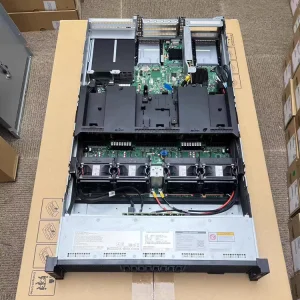
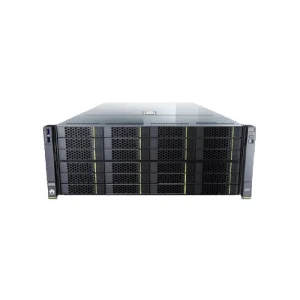
Explore our premium selection of 2U and 4U rack servers, optimized for deploying software-defined firewalls, virtual security gateways, and high-throughput enterprise edge security nodes.
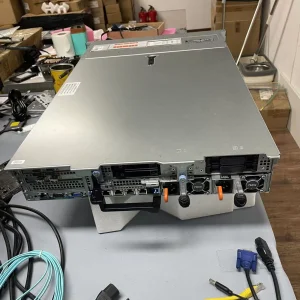
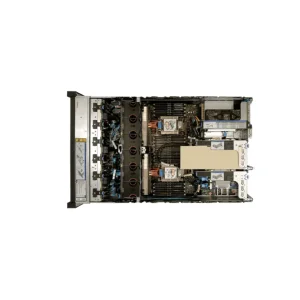
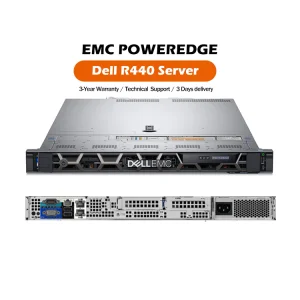
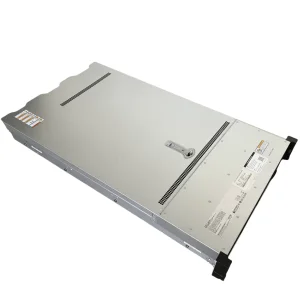
In the modern digital landscape, security firewalls serve as the frontline defense against sophisticated cyber threats. For global enterprise clients, deployment is not just a question of network throughput and software intelligence—it is a strict matter of hardware reliability and regional compliance. Selecting a CE certified firewall manufacturer guarantees that your hardware meets the rigid electromagnetic compatibility (EMC), safety, and environmental standards required within the European Economic Area (EEA) and global markets.
CE certification (Conformité Européenne) verifies that the physical security appliances conform to key Directives including the Low Voltage Directive (LVD) 2014/35/EU and the Electromagnetic Compatibility Directive 2014/30/EU. Without these certifications, custom security hardware running firewalls (such as pfSense, OPNsense, or proprietary UTM systems) faces high risks of failure, operational instability due to electrical noise, and custom clearance blockages at international borders.
True CE compliance from a top-tier manufacturer involves testing at the component level. This includes ensuring all internal power units, motherboards, network interface cards (NICs), and solid-state drives (SSDs) bear their own compliance documentation. Our hardware platforms maintain 100% component traceability, verifying that every single element has undergone strict quality gates.
Compliance with EN 62368-1 for audio/video, information, and communication technology equipment. This standard ensures high-voltage safety, thermal protection, and structural integrity for continuously running 24/7 firewall appliances.
Ensuring that high-frequency data transmission across multi-gigabit copper or fiber ports does not emit disruptive electromagnetic interference (EMI) and remains immune to ambient external signals.
Compliance with the Restriction of Hazardous Substances (RoHS) Directive. Our firewall hardware restricts toxic materials (such as lead and cadmium), guaranteeing environmental safety during lifecycle usage and disposal.
Firewall deployment requirements differ significantly depending on the local environment, network topology, and security frameworks. Our CE-certified systems are built to adapt dynamically.
In automated factories and utilities, ruggedized firewall hardware acts as a security gateway isolating Operational Technology (OT) from Information Technology (IT) zones. Supporting DIN-rail or standard rack layouts, they filter MODBUS and PROFINET industrial protocols while withstanding severe ambient temperatures.
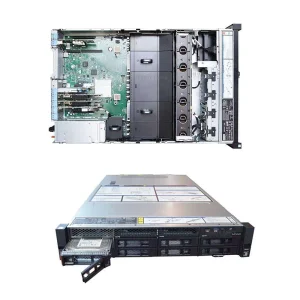
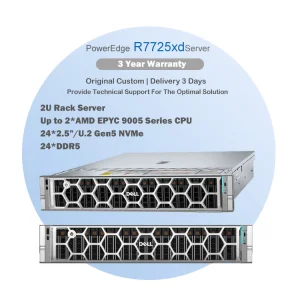
Utilizing high-compute platforms like the ThinkSystem SR650 or Dell PowerEdge R740 as security hypervisors allows organizations to run multiple Virtual Network Functions (VNFs). These handle deep packet inspection (DPI), SSL decryption, and sandboxing without introducing latency.
For decentralized enterprises with hundreds of retail stores or branches, localized security appliances provide secure SD-WAN tunnels, centralized logging, and PCI-DSS compliant localized encryption, acting as the local anchor for Zero Trust Network Access (ZTNA).
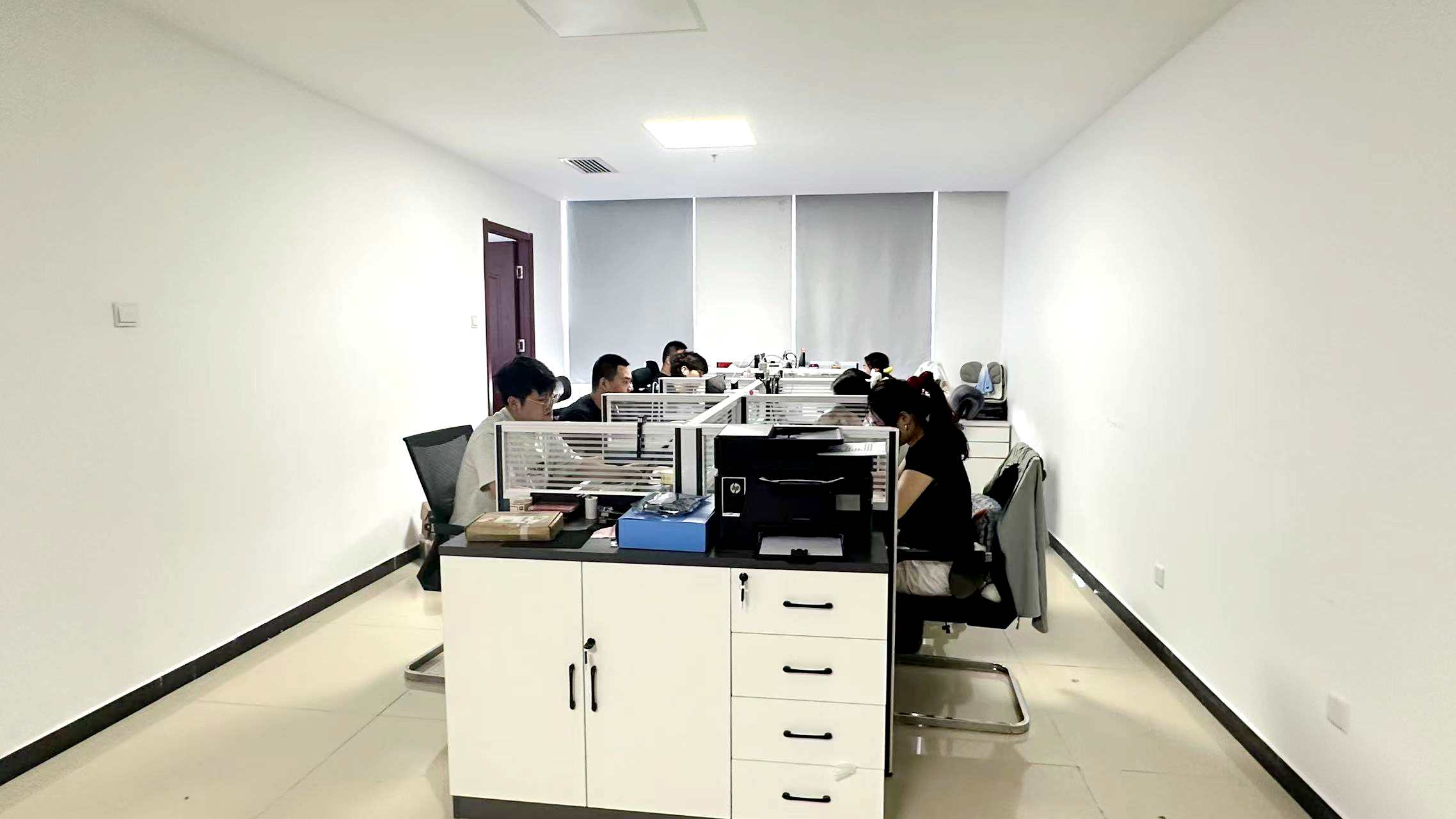
As a leading region for electronics manufacturing, China offers unparalleled supply chain advantages for firewall and server hardware. Our factory integration leverages local component sourcing ecosystems to source microcontrollers, capacitors, chassis, and custom PCBA components at high speed and low cost.
This localized cluster allows us to quickly scale production, prototype customized network expansion cards, and resolve component shortages that typically halt production in other parts of the world. Our 100% inspection quality control protocol ensures that every system built, from standard 2U servers to tailored security appliances, undergoes extreme thermal burn-in testing, memory checking, and port configuration verification prior to export.
Transparent operations build trust. Below is our verified structural capability profile, demonstrating our dedication to quality, regulatory compliance, and international exports.
As cyber threat groups adopt machine learning and automated exploit toolkits, traditional static firewall architecture is no longer sufficient. Enterprise firewall design is shifting from simple signature-based packet filtering to multi-layered, dynamic behavior analysis.
Future firewall systems will heavily leverage localized AI models, including lightweight LLMs and DeepSeek integrations, to analyze logs and identify anomalies directly on the hardware. Hardware platforms must feature specialized instruction sets (like Intel AVX-512) or integrated hardware acceleration (NPUs/GPUs) to execute real-time payload inspection without creating bottlenecks in network traffic.
With the rise of hybrid workforces, hardware firewalls are shifting towards Secure Access Service Edge (SASE) endpoints. Instead of treating the corporate network as safe, the firewall treats all requests as hostile until authenticated. This requires modern hardware systems to feature trusted cryptoprocessors like Trusted Platform Module (TPM) 2.0 to secure hardware keys and handle deep TLS 1.3 decryption workloads seamlessly.
Compliance is a multi-dimensional challenge. For operators deploying in Europe or North America, meeting CE and FCC standards is only the first step. Ensuring that systems align with the General Data Protection Regulation (GDPR) and local cybersecurity laws requires robust data isolation features on the storage devices inside the appliances.
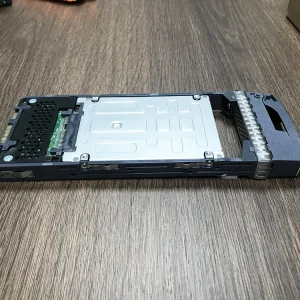
Integrating enterprise solid-state drives (such as the Lenovo PX05SRB or Huawei ES3500S V5 SAS drives) within our security hardware platforms provides the write-endurance, hardware encryption, and power-loss protection (PLP) needed for continuous log storage. If a local system experiences an unexpected power cut, these components prevent database corruption and preserve forensic security logs required by compliance audits.
To support clients in Europe, North America, and elsewhere, we offer comprehensive technical files, direct engineer-to-engineer communication channels, and clear installation guides. This ensures smooth installation, hardware updates, and quick component replacements to keep security networks online and fully compliant.
Technical details and compliance questions answered by our system engineering team.
CE certification is a legal requirement indicating that the hardware complies with safety, health, and environmental protection standards within the European Economic Area. For firewalls, this prevents electromagnetic interference with other network equipment and ensures electrical safety, protecting devices from overheating or electrical failure during continuous operation.
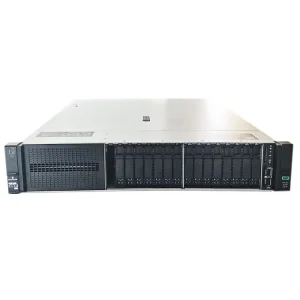
Standard off-the-shelf firewall hardware can run into performance bottlenecks under heavy data loads. Using enterprise servers like the Dell R740 or ThinkSystem SR650 provides multi-socket Intel Xeon or AMD EPYC processing power, redundant power supplies, and hot-swappable enterprise SSD storage. This setup allows businesses to deploy high-throughput software-defined firewalls (like pfSense, OPNsense, or virtualized UTMs) that handle deep packet inspection (DPI) and secure VPN tunnels at high speed.
Our inspection process includes an electrical safety test, visual check, and boot verification. We run the motherboard, CPU, memory, and storage through hardware diagnostics to test memory stability and port data integrity. The system also undergoes a high-temperature burn-in test to verify thermal management and ensure stability before shipping.
SAS SSDs (such as 12Gb/s enterprise drives) provide dual-port redundancy, higher read/write endurance, and faster data access speeds compared to SATA. Firewalls continuously log high volumes of data; using enterprise-grade SAS SSDs prevents drive wear-out and helps keep historical security logs accessible for audit and compliance purposes.
Yes. Although the core server motherboards are standard architectures, we support customizations for PCIe network expansion cards. Clients can configure system ports to include dual 10G SFP+, quad 1GbE RJ45, or high-speed 40G/100G fiber connections, tailoring the physical security appliance to match specific network topologies.
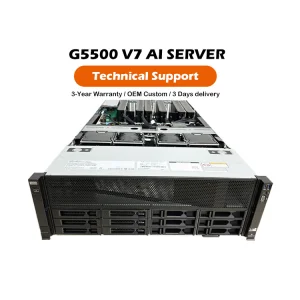
Configure your security systems with our compliant, high-performance components, high-density storage drives, and deep-learning server nodes.
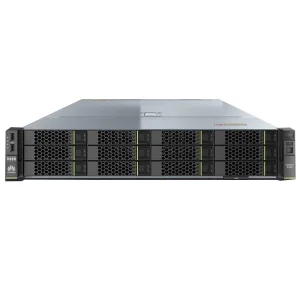
 Vertex AI Server