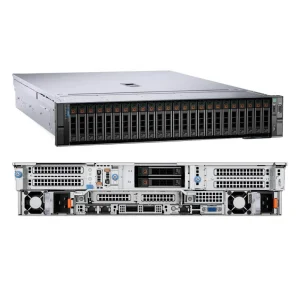
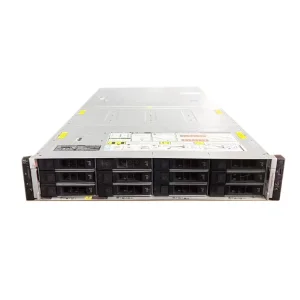
Engineered infrastructure platforms optimized for massive data storage, hyper-converged virtualization, and next-generation deep learning workflows.
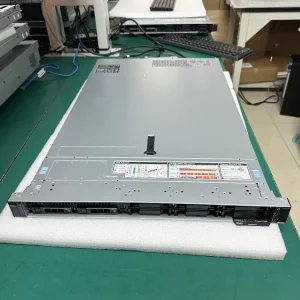
As networks scale to support massive generative AI, LLM fine-tuning, and ultra-high-definition enterprise data streams, the humble network adapter has evolved. No longer just a physical interface, modern Ethernet Network Interface Cards (NICs) act as compute offload engines. Our OEM/ODM adapter division is committed to manufacturing high-performance, cost-effective, and deeply compatible interface cards that empower data centers to operate at optimal efficiency.
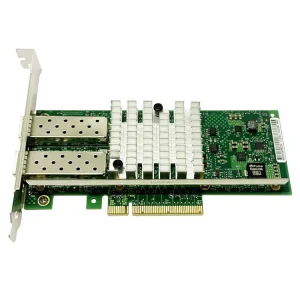
By shifting computational load away from server CPUs toward localized ASIC platforms on our custom adapters, we help cloud service providers and enterprise networks secure significant latency reductions and higher throughput. With options starting from legacy 10GbE solutions up to cutting-edge 100GbE multi-host environments, our adapters power data arrays, deep learning nodes, and high-performance server farms.
Historically, system integrators relied purely on proprietary tier-1 brand network cards. Today, global cloud networks choose white-box OEM/ODM partnerships. By eliminating vendor lock-in, tailoring driver profiles, and mapping direct ASIC supply contracts, enterprise buyers can reduce CapEx by up to 35% while retaining full physical layer reliability and firmware autonomy.
How developments in high-speed protocols, virtualization, and specialized workloads drive next-generation interface requirements.
RDMA over Converged Ethernet (RoCE v2) has emerged as the standard protocol for AI clusters, permitting memory access directly over network bounds without operating system host overhead. Our adapters leverage ASIC-level RoCE engines to optimize latency under intense parallel computing tasks.
Transitioning from standard PCIe configurations to the Open Compute Project (OCP) NIC 3.0 form factor has significantly improved thermal dissipation and simplified hot-swap capabilities in enterprise datacenters. Our ODM lines support varied interface styles to accommodate these form-factor demands.
Security is the foundation of network reliability. Our newer enterprise adapters support secure boot protocols, using micro-cryptographic hashes on-board to ensure only authorized firmware updates can execute, protecting networks from baseboard-level intrusion.
Transparent profile details highlighting our rigorous quality frameworks, operational milestones, and international market experience.
| Operational Parameter | Detailed Specifications & Capabilities |
|---|---|
| Quality Control Framework | 100% inspection method on all finished units, including high-frequency signal integrity verification and temperature stress tests. Supported by a dedicated QA/QC controller. |
| Traceability of Raw Materials | Yes. Component-level tracking systems guarantee source validation for critical silicon, oscillators, and multi-layer PCBs, complying with REACH and RoHS standards. |
| Primary Export Regions | Eastern Europe (20%), Domestic Market (15%), North America (10%), with growing shares in APAC and Western Europe. |
| Target Client Archetypes | Brand business partners, System Engineers, Retail Distributors, Enterprise Wholesalers, Equipment Manufacturers, and private system builders. |
| Factory Infrastructure | 160 square meters specialized facility featuring custom test benches, environmental validation chambers, and software flash modules. |
| Language & Communication | Full sales and engineering support in English, securing clear design requirements for custom OEM firmware projects. |
Custom engineering solutions designed to tackle complex integration requirements across typical modern system configurations.
For workloads powered by GPU architectures running DeepSeek or other demanding AI models, our high-bandwidth adapters offer optimized PCIe lanes to keep communication delays low, ensuring that data pipelines feeding high-performance cards remain full.
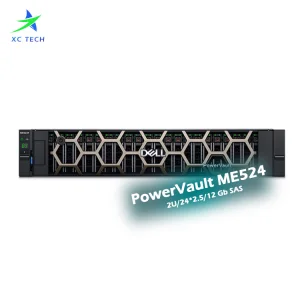
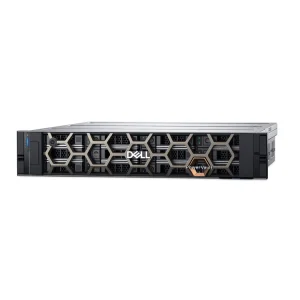
Network Attached Storage (NAS) configurations, such as Dell EMC PowerVault series, require continuous disk throughput. Our adapter units integrate storage-specific acceleration (like NVMe-oF or iSER) to dramatically improve IOPS while keeping CPU utilization minimal.
We work closely with global regulatory standards to achieve seamless custom verification processes. All supplied adapters are built under strict ISO-inspired tracking systems, ensuring full hardware compliance in North American, Domestic, and Eastern European markets.
Our commitment to research and manufacturing advancement ensures client hardware remains relevant in future infrastructure updates.
With data traffic scaling exponentially, network adapter bandwidth needs to expand rapidly. Our engineering target involves adapting early to PCIe Gen 5 and Gen 6 system architecture, utilizing high-density PAM4 signaling platforms to multiply the data density flowing through optical transceivers.
Our upcoming engineering designs focus on deeper integration with SmartNIC frameworks, incorporating flexible FPGA or ARM-based processing units right on the network interface card. This allows datacenters to implement security firewalls, routing protocols, and disk RAID setups directly at the entry point of the server, saving system bus capacity and boosting workload isolation.
| Phase & Timeline | Key Milestone & Engineering Targets |
|---|---|
| Phase 1 (Current) | Expansion of 25G/100G PCIe Gen 4 controller layouts, ensuring backward compatibility with legacy servers. |
| Phase 2 (2025-2026) | Development of OCP NIC 3.0 SmartNIC platforms featuring on-board hardware offload microcontrollers. |
| Phase 3 (2027+) | Introduction of optical co-packaged technologies (CPO) to support 400G throughput under low-thermal profiles. |
Answers to critical integration, specification, and procurement queries written by our lead hardware engineers.
By offloading packet verification, frame checksum computing, and routing actions directly onto the adapter's dedicated silicon (ASIC), host CPUs can drop out of high-power compute loops. This lowers server power draw, reducing localized heat generation and cutting datacenter cooling costs.
All finished adapters undergo rigorous in-circuit testing, operating system boot checks, and stress loops under virtualization environments. Because our adapters adhere strictly to IEEE and PCI-SIG standards, they interact seamlessly with systems like Dell EMC and xFusion without requiring proprietary BIOS hooks.
Traceability ensures that every component on our board is free from malicious firmware alterations and complies with strict environmental standards. For markets like Eastern Europe and North America, this provides clear compliance documentation, simplifying audits and reducing supply chain risk.
Yes. While standard operating systems are supported out-of-the-box, our ODM services allow engineers to request driver modifications, specialized boot settings (like PXE modifications), or customized NC-SI/MCTP control configurations to match specific infrastructure requirements.
Select from our extensive product inventory to configure and optimize your core enterprise database systems.
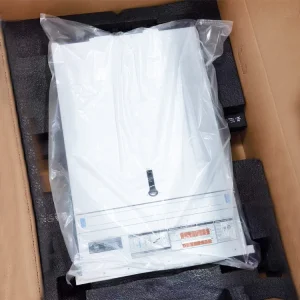
 Vertex AI Server