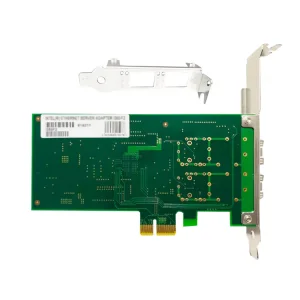
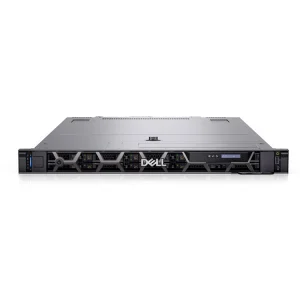
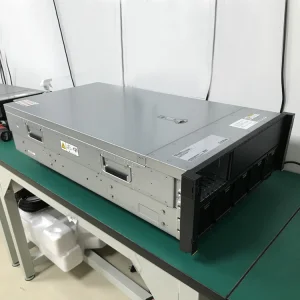
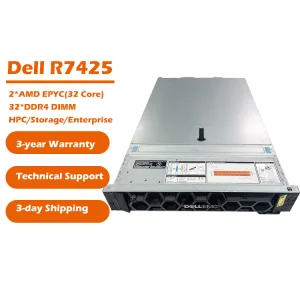
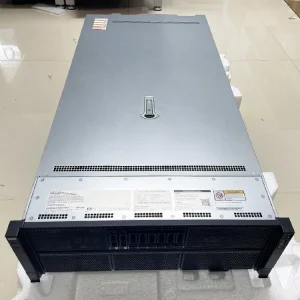
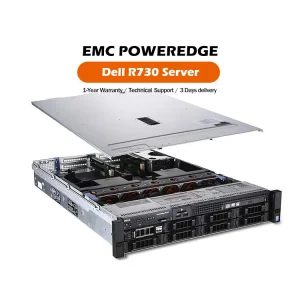
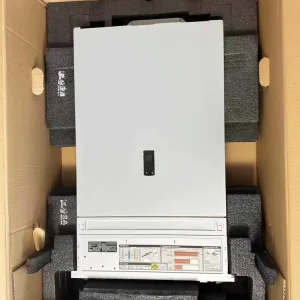
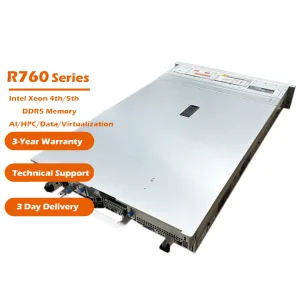
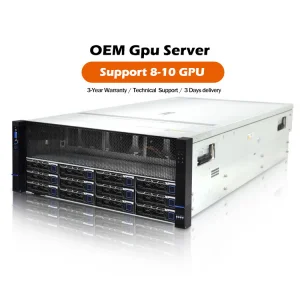
High-throughput server host nodes, networking interface cards, and high-density PCIe enterprise arrays ready for global logistics integration.
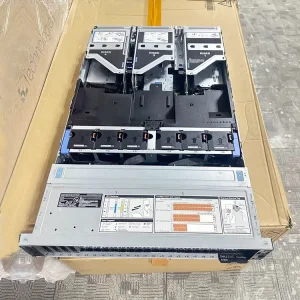
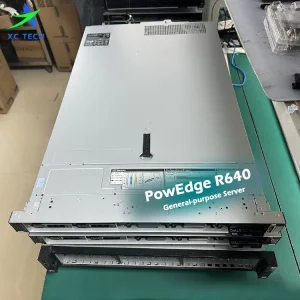
The global data landscape is undergoing a monumental architectural shift. The rise of large language models (LLMs), deep learning computation frameworks, and high-performance computing (HPC) nodes has placed unprecedented workloads on enterprise storage sub-systems. Today's solid-state drives (SSDs) are no longer simple replacement options for mechanical hard disks; they are crucial pipelines that directly influence CPU and GPU training efficiency.
As search engines shift toward semantic search and neural matching models, the velocity of transactional operations demands ultra-low latency write capabilities and high queue-depth read throughput. Industrial deployment mandates a deep understanding of storage technologies, ensuring that the components chosen minimize bottleneck risks during execution.
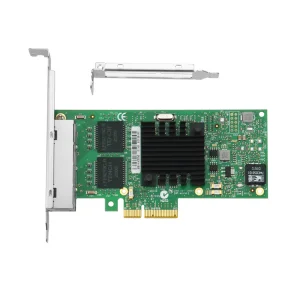
For modern datacenters, the primary metric of performance has evolved from raw capacity to input/output operations per second per watt (IOPS/W). A high-speed network infrastructure populated with components like the 100Gb Intel server adapter requires enterprise SSDs capable of matching the line-rate capacity without causing buffer overflows.
Furthermore, SSD factories and export structures must adhere to rigid specifications to assure global hyperscalers that the drives deployed in mission-critical environments possess the physical longevity to sustain years of uninterrupted writes.
Operating as a highly integrated technical partner since our registration on 2021-08-27, we oversee specialized validation facilities spanning 160 square meters of dedicated testing and inspection labs. Rather than serving as a high-volume consumer goods manufacturer, our focus is geared strictly toward enterprise reliability, QA audit execution, and custom solution delivery.
With an annual export revenue of $1,180,000 USD and four years of localized export capabilities, our network provides direct coordination with premier fabrication foundries to supply custom firmware SSDs, verified high-end enterprise servers, and advanced network adapter lines. We bridge the gap between heavy wafer fabs and local distribution demands.
An engineering comparison highlighting performance profiles across multiple storage interconnect tiers.
| Interface Protocol | Max Theoretical Bandwidth | Typical Latency Range | Primary Application Profiles | Power Consumption (Active) |
|---|---|---|---|---|
| SATA III (6Gbps) | 600 MB/s | 50 - 100 microseconds | Legacy servers, cold data archiving, boot drives | Low (1.5W - 3W) |
| PCIe Gen4 NVMe (x4) | 8,000 MB/s | 10 - 20 microseconds | Virtualization, transactional database storage | Medium (5W - 8W) |
| PCIe Gen5 NVMe (x4) | 16,000 MB/s | < 10 microseconds | High-performance AI model caching, real-time analytics | High (9W - 14W) |
| CXL 2.0/3.0 (Over PCIe Gen5/6) | 32,000 MB/s+ | Near-DRAM Latency | Heterogeneous computing, disaggregated pool storage | Variable (Application dependent) |
As we advance toward 300+ layer 3D NAND and sophisticated PCIe Gen6 architectures, key technical pivots define the SSD industry landscape.
Foundries are transitioning beyond 232 layers toward 3D TLC/QLC topologies exceeding 300 layers. The physical reduction of pitch size introduces significant cell-to-cell interference challenges. To counteract this, advanced controller architectures utilize LDPC (Low-Density Parity Check) algorithms to maintain data integrity across microscopic nodes.
Quad-Level Cell (QLC) SSDs are capturing substantial market share in large-scale storage servers. By housing 4 bits per cell, QLC drives provide up to a 33% storage density increase compared to TLC counterparts. While write durability historically posed a challenge, modern controllers leverage intelligent wear-leveling and dynamic SLC caching to extend durability parameters.
The standard 2.5-inch U.2/U.3 formats are gradually yielding position to Enterprise & Datacenter SSD Form Factors (EDSFF). Standardizations such as E1.S and E3.S optimize cooling mechanics, increase board layout efficiency within 1U and 2U nodes, and allow higher drive densities to support greater global storage architectures.
Evaluating an SSD factory requires viewing the production methodology from the silicon wafer level down to the finalized enclosure assembly. High-end solid-state drives require advanced Surface Mount Technology (SMT) lines within Class 100 sterile environments. Even minor particle interference during controller soldering can generate latency spikes or high sector failures under thermal stress.
A premier manufacturer works in lockstep with controller providers (such as Marvell, Phison, or Silicon Motion) to write tailored firmware versions that suit specific client environments. Features like hardware-encrypted AES-256 blocks, secure erase features, and advanced wear-leveling engines are optimized directly within the controller memory before the final product assembly is completed.
Wafers from major global foundries are tested for bad sectors and flash memory grading. Only Premium-tier TLC or MLC cells are selected for enterprise deployments, ensuring extended endurance cycles (TBW).
Completed drives undergo continuous write loops under varying temperatures ranging from 0°C to 70°C. This helps isolate early-life hardware failures before shipping to datacenter hubs.
Our quality systems confirm full documentation adherence to CE, FCC, RoHS, and WEEE requirements. Detailed traceability reports trace every batch to its constituent controllers and flash chips.
Sourcing large storage configurations requires more than comparing unit prices. Purchasing teams must look into technical, logistics, and legal variables to secure a resilient, high-performing supply chain:
By using these standards to vet suppliers, procurement managers can prevent unexpected field failures that lead to high replacement costs and unplanned downtime.
Clear answers on technical specifications, procurement practices, and customization options for enterprise storage.
Scale compute capacities and storage nodes with enterprise x86 processors, high-memory capacity AI training hosts, and premium components.
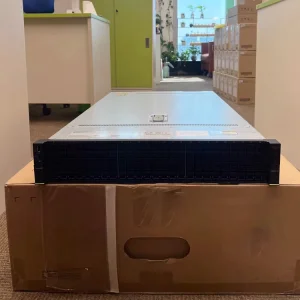
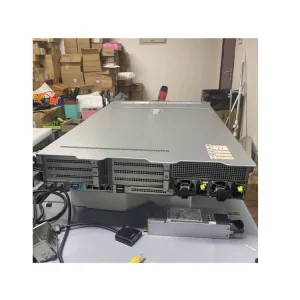
 Vertex AI Server