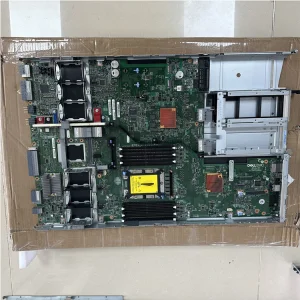
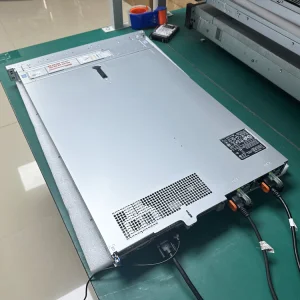
Premium server architectures, flash arrays, and processing hardware deployed across Sydney's digital centers and scalable corporate architectures.
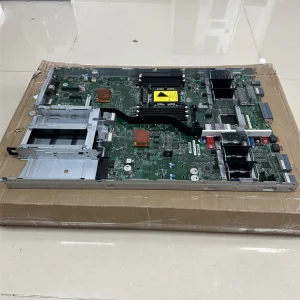
Sydney stands as the focal point of the Southern Hemisphere’s digital infrastructure. With critical hyperscale developments concentrated across Macquarie Park, Eastern Creek, and Alexandria, the demand for enterprise computing solutions that balance reliability, price, and energy efficiency has surged. To maintain operational continuity, Sydney’s corporations—ranging from global financial institutions to public utilities—rely heavily on robust supply chains that deliver enterprise servers, all-flash storage configurations, and advanced network interfaces.
As the Australian economy pushes toward comprehensive digitization, IT procurement managers face significant hurdles: high capital costs (CapEx), supply chain bottlenecks, and the urgent need for architectures that support emerging AI pipelines. In this ecosystem, authorized suppliers and expert exporters of brand-new and high-quality refurbished components bridge a crucial market gap. By providing access to versatile hardware architectures—including high-density x86 platforms and performance-optimized ARM chips—exporters enable businesses to scale their infrastructure dynamically without succumbing to localized inventory shortages.
Deploying physical servers in secure Sydney facilities ensures strict compliance with Australia's Privacy Act and Data Security Standards.
Placing storage nodes near regional business sectors minimizes fiber path lengths, optimizing micro-second trades and analytics execution.
Every piece of hardware undergoes a 100% component-level diagnostic cycle before dispatch to eliminate localized field failures.
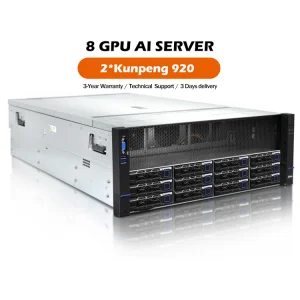
In the global ICT arena, Huawei's hardware developments represent a core pillar of efficiency and high-density performance. The development of the Kunpeng processor lineage—built on high-efficiency ARM architectures—has redefined the compute density possible within typical enterprise rack environments. In contrast to legacy x86 architectures, ARM-based silicon like the Kunpeng 920 allows datacenters to run multi-threaded workloads, container microservices, and virtualization platforms with a significantly lower thermal and electricity profile.
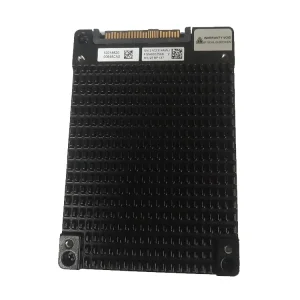
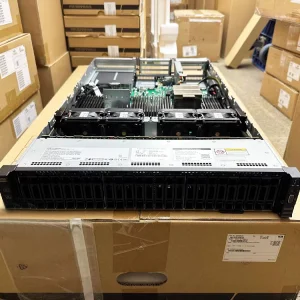
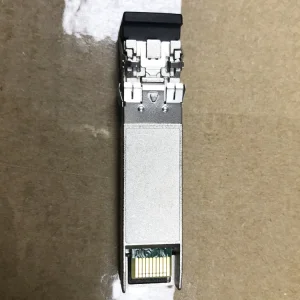
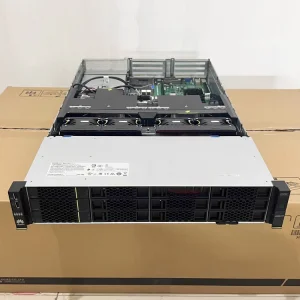
Simultaneously, the transition of computing lines under the xFusion brand has preserved the reliable architecture of the FusionServer product line. These platforms (such as the FusionServer 2288H V5, V6, and V7) represent versatile x86 machines compatible with Intel Xeon Scalable processors, allowing Sydney operators to seamlessly mix and match architectures within their server racks. By utilizing trusted, high-performance components like Huawei's ES3500P V6 NVMe SSDs and Lenovo-engineered 5G/16Gb SFP fiber optic transceivers, local tech stacks can achieve high-speed throughput and long-term durability while driving lower operational expenditures (OpEx).
The visual structure of modern datacenters is changing. Instead of isolated server nodes, hyperconverged layouts combine computation, all-flash arrays, and high-speed network fabrics. The diagram below illustrates the flow of high-efficiency enterprise architecture in modern Sydney deployments, combining storage layers like the Dell EMC PowerStore with processing fabrics under the Kunpeng and xFusion series.
The rapid integration of modern artificial intelligence models, including DeepSeek and Llama architectures, has fundamentally changed hardware demands. Standard servers are no longer sufficient; enterprises require hardware capable of processing complex calculations with minimal interconnect latency. This shift demands dedicated AI servers utilizing GPU arrays, high-speed RAM, and ultra-high-speed solid-state drives.
In Sydney's academic, financial, and logistics research centers, the implementation of DeepSeek model clusters requires hardware that supports multiple GPU configurations and direct PCIe lanes. For instance, the combination of Kunpeng 920 processors and high-speed GPU accelerators offers a robust, highly parallel computation platform. Similarly, systems like the xFusion FusionServer 2288H V5/V6/V7 provide the necessary power distribution, PCIe slot spacing, and airflow management to sustain sustained deep learning workloads. The integration of high-performance NVMe storage, such as the U.2 PCIe Gen4 SSDs, guarantees that dataset loading stages do not bottle the throughput of expensive processing pipelines.
Modern data demands are characterized by rapid creation and read-intensive access patterns. Sydney businesses operating in retail, healthcare, and finance require systems that can scale capacity and speed concurrently. Traditional mechanical hard disks (HDDs) are increasingly confined to cold storage archives, replaced by NVMe All-Flash arrays designed for rapid random access.
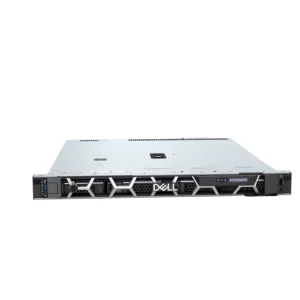
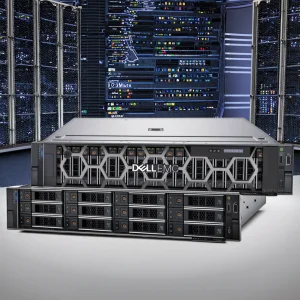
The Dell EMC PowerStore series (including the 500T, 1000T, 3000T, and up to the 9000T models) represents this technological shift. By leveraging high-performance Intel Xeon processors, dynamic deduplication, and inline compression, these units provide storage efficiency ratios exceeding 4:1. This ensures that Sydney datacenters can lower their floor space, power consumption, and cooling costs while maintaining high-speed access to databases, virtual desktops, and cloud environments. For businesses migrating workloads to hybrid-cloud architectures, these appliances act as reliable local cache arrays, working alongside public cloud infrastructure to satisfy data residency requirements while maintaining fast data access.
Understanding how this enterprise hardware integrates into real-world applications highlights its value to local businesses. Sydney's specific economic makeup shapes how these servers and storage components are deployed:
Connect with our expert technical team to design, procure, and deploy high-performance computing hardware customized for your Sydney datacenter requirements.
Send Inquiry NowThe next five years will bring significant shifts in enterprise hardware. The transition from PCIe Gen4 to Gen5 and Gen6 interfaces will double datapath bandwidth, paving the way for ultra-fast storage arrays and faster GPU interconnects. Furthermore, the adoption of DDR5 RAM will lower operational voltages while boosting memory bandwidth, addressing a key bottleneck in large-scale AI model execution.
Environmental footprint guidelines will also reshape Sydney's datacenters. The NSW Government's Net Zero Plan is pushing colocation facilities to enforce strict Power Usage Effectiveness (PUE) limits. This policy pressure will accelerate the migration to high-efficiency ARM silicon (like Kunpeng architectures) and liquid cooling setups. Forward-thinking suppliers must offer hardware that balances raw processing performance with energy efficiency, helping enterprises scale their computing power while meeting sustainability targets.
Get answers to common integration, shipping, and technical compatibility questions for Sydney enterprise setups.
A: The Kunpeng 920 ARM processor excels in multi-threaded container workloads and microservices by delivering high core density with lower power consumption. While Intel Xeon processors offer high single-thread clock speeds, ARM-based servers are optimal for modern web applications, distributed databases, and high-density virtualization, lowering datacenter PUE in the process.
A: Yes. Our E-E-A-T compliant quality protocol features 100% inspection of all components. This process includes comprehensive diagnostic burn-in tests, controller firmware updates, memory stress tests, and physical inspections, ensuring that all refurbished HPE, Dell, and Huawei parts meet original OEM tolerances before shipping.
A: Bulk components, SFP modules, and stock enterprise servers typically ship via express international air freight (DHL/FedEx/UPS), arriving in Sydney (Mascot or Port Botany logistics hubs) within 5 to 10 business days. Custom system integration layouts may require additional testing and assembly time before dispatch.
A: PowerStore arrays employ a dual-controller, active-active architecture that prevents single-point failure modes. Their inline deduplication and hardware-assisted compression achieve an average 4:1 data reduction ratio, allowing enterprises to maximize storage efficiency, speed recovery processes, and lower overall storage expenses.
Explore our complete catalog of enterprise-grade ICT hardware, servers, and transceivers, fully compatible with Sydney infrastructure demands.
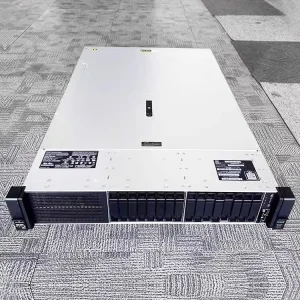
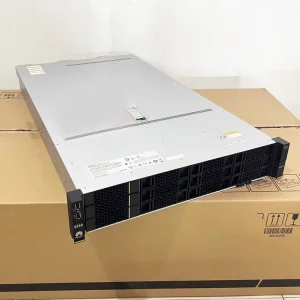
Deploy brand-new and certified hardware with guaranteed system integration support. Secure your logistics pipeline today.
Send Inquiry Now Vertex AI Server