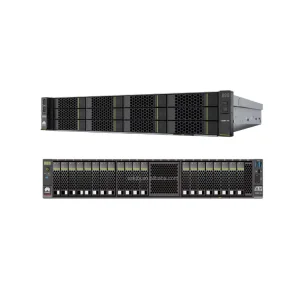
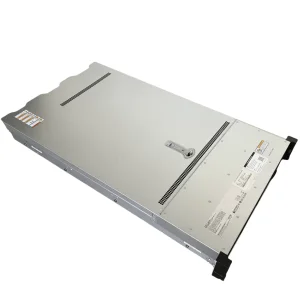
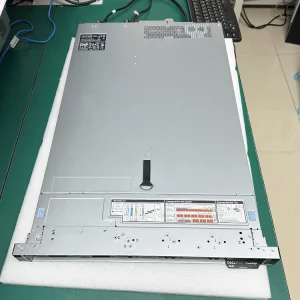
Explore our foundational rack mounts, servers, and storage products engineering the backbone of modern video telepresence systems globally.
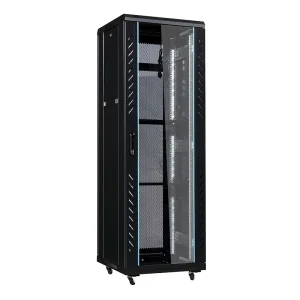
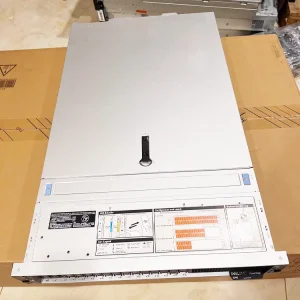
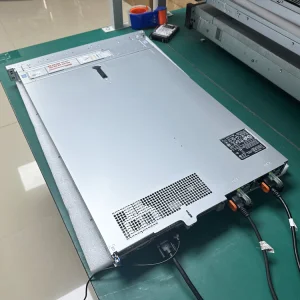
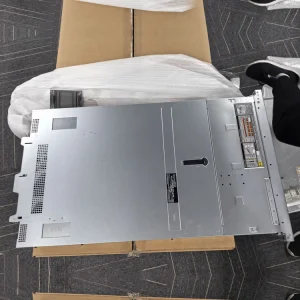
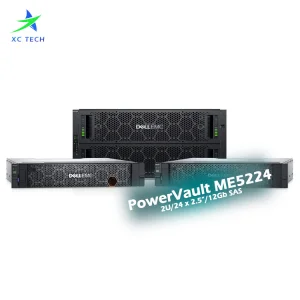
Understanding the hardware orchestration, structural compliance, and processing capability required to power high-definition real-time communication networks.
Modern global organizations are no longer satisfied with simple point-to-point webcams; they demand high-fidelity, zero-latency immersive telepresence environments. To establish robust, compliant, and highly integrated networks, enterprises look to CE Certified Video Conferencing Manufacturers and Factories. The CE (Conformité Européenne) marking is not merely a label—it serves as the absolute baseline confirming that critical hardware interfaces, power routing units, thermal regulators, and high-frequency communication protocols satisfy rigorous EU health, safety, and environmental protection standards.
From a global procurement standpoint, building a scalable video conferencing network involves two primary hardware groups: edge endpoints (such as cameras, microphone arrays, and displays) and core back-end systems (including Multipoint Control Units - MCUs, media gateways, video encoding arrays, and virtualization server racks). Global buyers from North America, Europe, and the APAC region require these infrastructures to handle dynamic video routing, hybrid cloud configurations, and high-bandwidth processing without dropping packages or triggering latency spikes.
Behind every seamless virtual board meeting lies a complex setup of compute clusters. These platforms manage multi-party video processing (H.264/AVC, H.265/HEVC, and newer AV1 codecs), real-time acoustic echo cancellation (AEC), and deep-learning video optimization. This is why leading AV consultants recommend selecting hardware verified to integrate seamlessly with standard corporate IT frameworks.
Deploying specialized compute ecosystems to serve medical, financial, administrative, and educational organizations.
Real-time, ultra-high-definition clinical examinations require zero-latency diagnostic streaming. Combining HIPAA-compliant software with certified local compute structures guarantees medical feeds are rendered at up to 4K resolutions with strict frame consistency, avoiding diagnostic errors during remote consultation.
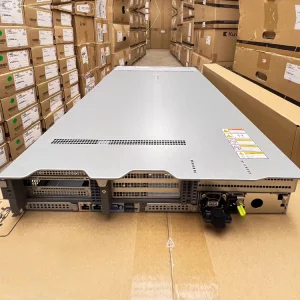
Multinational investment banks and regulatory bodies operate under absolute data sovereignty rules. On-premise enterprise server architectures—coupled with high-density monitoring rack cabinets—allow companies to host private MCU systems, ensuring external cyber threats cannot breach secure corporate communications.
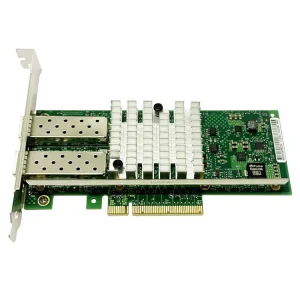
To broadcast educational lectures globally to thousands of concurrent users, educational institutions require massive transcoding throughput. Implementing high-speed PCIe network adapters (10GbE to 100GbE) in host server nodes ensures dynamic bandwidth adjustments can accommodate mixed-quality end-user connections.
A statistical snapshot highlighting the reliability, quality inspection levels, and international footprint of our facility network.
How the emergence of edge artificial intelligence and high-efficiency compute boards is transforming communication infrastructure.
The traditional server architecture that simply routes video packets is rapidly evolving. The next generation of video conferencing deployment utilizes high-performance AI Computing servers and GPUs to handle local intelligence tasks. Features like real-time multi-speaker tracking, semantic video compression (compressing video down to key facial markers to dramatically reduce bandwidth requirements), and low-latency audio filtering require raw parallel computing power.
By virtualizing the Multipoint Control Unit (MCU) onto enterprise-grade rack servers, corporations can rapidly spin up and tear down dynamic conference channels based on internal load demands. Leveraging 10/25/100Gb PCIe network cards guarantees that raw streaming data travels from the outside fiber trunk directly to the core processing unit with minimal latency.
Corporate compliance directives increasingly mandate that video call recordings, virtual transcripts, and collaborative file exchanges are stored securely. By combining high-speed hybrid flash storage arrays with redundant SAS disk arrays, organizations can maintain immediate access to recent meeting recordings (Tier-1 hot storage) while automatically offloading older recordings to high-capacity storage racks (Tier-2 cold storage).
As server density increases inside modern server closets and enterprise data centers, managing heat dissipation becomes a significant concern. The utilization of smart network cabinets with integrated thermal monitoring sensors and automatic ventilation controls prevents hardware throttling during heavy video processing operations.
Over the next five years, the industry will transition towards Versatile Video Coding (H.266/VVC) and immersive object-based spatial audio. These protocols demand roughly double the processing computational intensity of previous-generation codecs, while cutting the required data rate in half. Investing in upgradable rack server platforms with replaceable PCIe expansion slots ensures that systems deployed today remain operational through this technological shift.
A closer look at the logistical, quality assurance, and distribution frameworks driving our international operations.
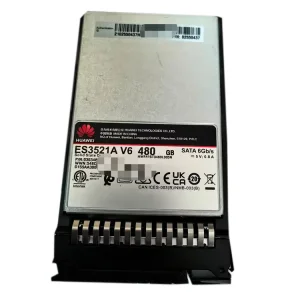
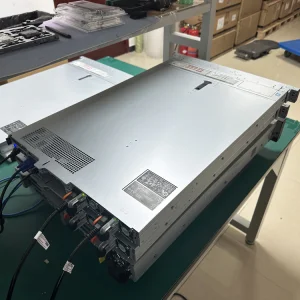
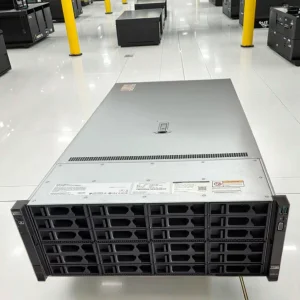
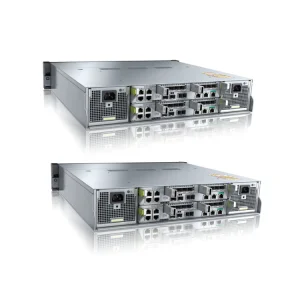
Choose from our selection of rack servers, enterprise network cards, and advanced data storage solutions to optimize your communication arrays.
How we guarantee high reliability and alignment with global industrial standards across multiple deployment zones.
Navigating the complex landscape of international trade requires structural compliance. As a focused manufacturer operating globally, we verify that all high-density compute and storage infrastructure items are manufactured under strict QA/QC methodologies. By inspecting 100% of our products before shipment, we reduce the rate of dead-on-arrival (DOA) equipment in critical enterprise data centers to virtually zero.
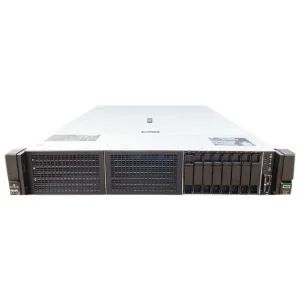
Our global footprint spans key distribution areas, with 20% of operations in Eastern Europe and 10% in North America. This established channel network guarantees that whether you are installing systems in Warsaw or New York, you receive hardware optimized for local electrical grids and environmental conditions. Our components are housed in robust, standardized server rack designs, facilitating direct mounting into pre-existing network rooms without requiring custom engineering.
For organizations deploying unified communications setups, standard compliance with the RoHS (Restriction of Hazardous Substances) and CE directives ensures that the electromagnetic emissions generated by server fans and multi-gigabit NIC cards do not interfere with other critical business equipment. This represents a significant advantage for integration partners who must satisfy complex governmental or educational tender specifications.
Furthermore, our supply chain is designed for long-term product lifecycle support. We provide spare components, network adapters, storage expansion disks, and rack structural elements for up to five years post-deployment. This guarantees that your video infrastructure investment does not suffer from early obsolescence due to a single component failure.
Communication transparency is critical during global rollout schedules. We conduct all technical consultation, system architecture planning, and support ticketing in English, ensuring clear communication pathways with system engineers, project leads, and global operations teams.
Addressing direct technical queries from procurement officers, IT administrators, and systems architects.
CE certification confirms that the hardware satisfies EU health, safety, and electromagnetic compatibility requirements (such as the Electromagnetic Compatibility Directive 2014/30/EU). In real-time communications, where high-bandwidth, high-frequency signals are transmitted via physical cables and wireless channels, CE-certified hardware prevents interference with other telecommunications devices while guaranteeing electrical safety within the facility housing the hardware.
The Multipoint Control Unit (MCU) or SFU (Selective Forwarding Unit) is responsible for receiving multiple high-definition video inputs, decoding, compositing or routing them, and re-encoding the output streams for each participant. If server CPU or GPU processing performance is inadequate, frame rendering delays (transcoding latency) occur. Employing high-density server configurations with multicore processors minimizes this processing step, reducing overall system latency to less than 150ms.
Active monitoring inside network cabinets tracks local temperatures, relative humidity, and power load variations. If a cooling fan fails on an active media gateway or a server PSU begins to fluctuate, the monitoring system triggers alerts before the hardware enters critical thermal shutdown. This ensures continuous service availability for high-priority organizational operations.
A single 1080p60 WebRTC video stream requires approximately 2-4 Mbps of network bandwidth. When a server processes multiple concurrent sessions, standard gigabit connections quickly saturate, causing packet drop and video degradation. Upgrading to 10Gb, 25Gb, or 100Gb PCIe adapters allows servers to handle thousands of concurrent streams, ensuring smooth scaling across the network.
Yes. By utilizing tiered storage, active index lookups and recent call logs are stored on high-speed SSDs, allowing users to instantly retrieve recordings. Historical files are migrated to SAS hard disks, balancing retrieval performance and overall storage economics.
Whether you are designing a high-capacity corporate control center or deploying an active global telemedicine network, our specialists are available to review your design drawings, network diagrams, and equipment requirements.
Submit RFQ / Query Vertex AI Server