Engineered for high-density computational environments requiring sophisticated thermal mitigation topologies.

An Industrial Analysis of Thermal Management in High-Density AI, Edge, and Hyperscale Computing
The global digital economy is undergoing an unprecedented paradigm shift. Driven by generative artificial intelligence (AI), complex neural networks (such as DeepSeek-R1 and GPT-4), big data analytics, and edge processing, computation densities have surpassed legacy expectations. As silicon chips evolve with shrinking process nodes (e.g., 3nm and 2nm technologies), the Thermal Design Power (TDP) of modern central processing units (CPUs) and graphics processing units (GPUs) has dramatically escalated. Current high-performance hardware regularly exceeds 400W to 1000W per chip. Legacy air cooling mechanisms, relying on convective heat transfer of air currents, are approaching their physical limitations.
As a leading China Wholesale Cooling System Manufacturer & Exporter, we engineered our business model to deliver the structural and thermal solutions required to support high-performance server architectures (including Dell PowerEdge, HPE ProLiant, and FusionServer series). Our mission centers on solving the thermodynamics dilemma: maximizing computational uptime, optimizing power usage effectiveness (PUE), and minimizing environmental impact through advanced thermal design.
Traditional air cooling relies on the low heat capacity of air (Cp ≈ 1.005 kJ/kg·K). When rack density crosses 15kW to 20kW, the volumetric airflow required to keep silicon junction temperatures below critical limits (Tj < 85°C) creates unsustainable acoustic levels, massive fan power draw, and substantial thermal hot spots.
Market Shifts, Policy Directives, and Sustainable Directives Shaping the Thermal Engineering Market
The global cooling market is experiencing explosive demand. Hyperscalers in North America, Western Europe, and the Asia-Pacific region are redesigning greenfield and brownfield sites to meet stringent decarbonization targets. In jurisdictions like China, the "East-to-West Computing" (东数西算) national strategy mandates strict limits on PUE—often requiring data centers to operate with a PUE below 1.25, and in some areas, below 1.15. Similar energy efficiency directives in the European Union (EU) force operators to account for waste heat recovery and utilize eco-friendly dielectric fluids.
This dynamic has propelled liquid cooling from a niche, high-performance computing (HPC) option to a mainstream requirement. Industry projections indicate that the global data center liquid cooling market will exceed USD 21 Billion by 2030, exhibiting a compound annual growth rate (CAGR) of over 24%. As a premier wholesale cooling partner, we operate at the intersection of quality component manufacturing and global supply chain optimization, facilitating cost-effective procurement pathways for system integrators worldwide.
Deploying specialized cold plates and manifold units compatible with OEM systems like the Dell PowerEdge and HPE ProLiant lines, supporting up to 100kW per rack.
Protecting micro-data centers and industrial gateways in dusty, non-climate-controlled environments through sealed liquid loop structures and heat exchangers.
Reclaiming waste heat from server farms to supply municipal district heating networks or preheat boiler feeds, converting a thermal liability into a green asset.
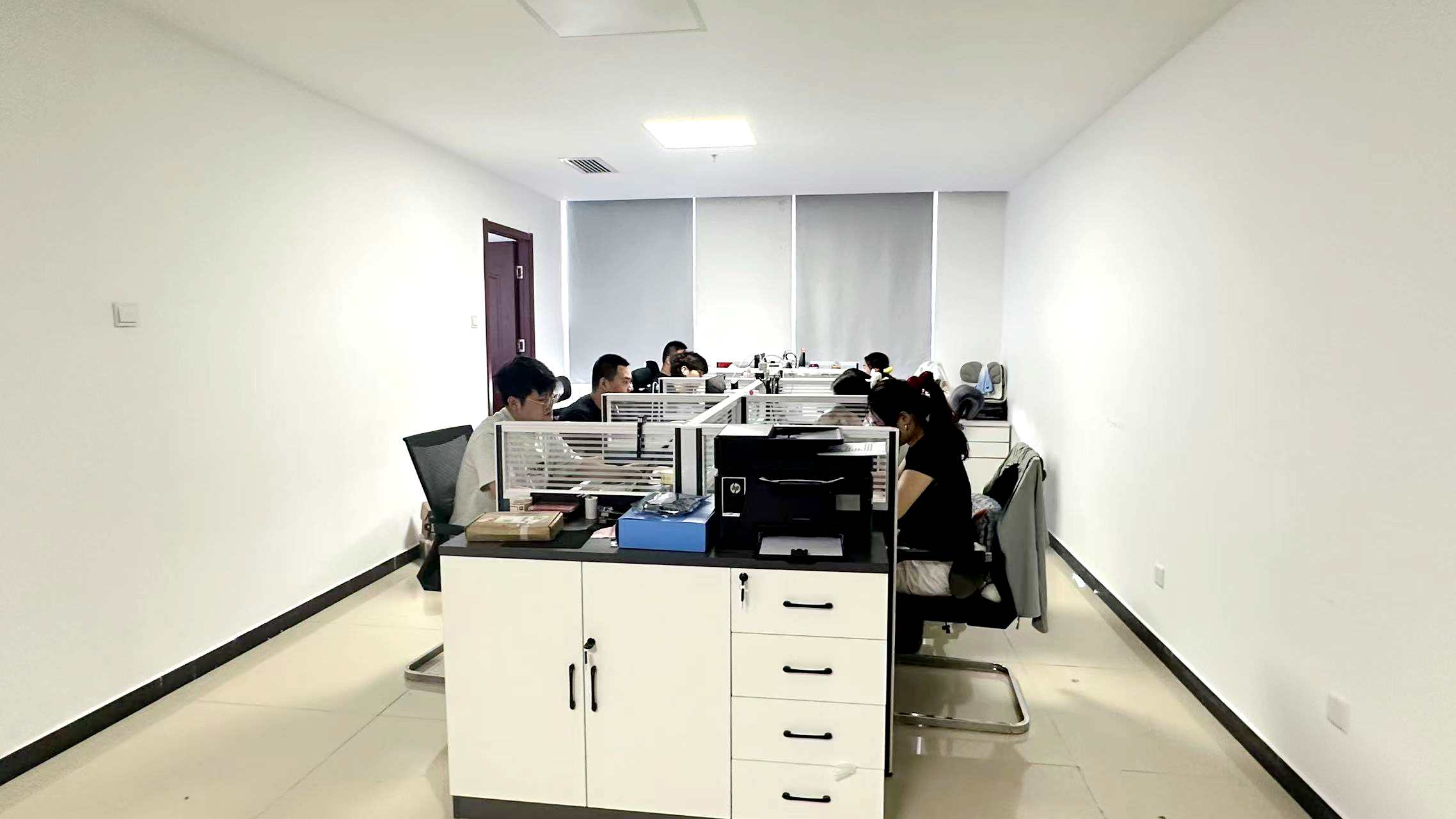
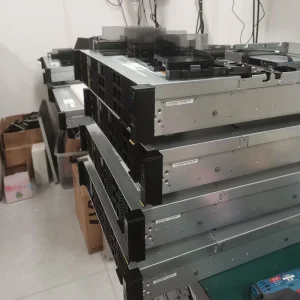
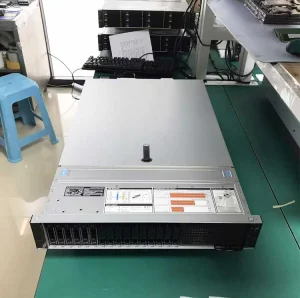
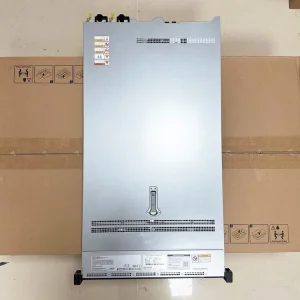
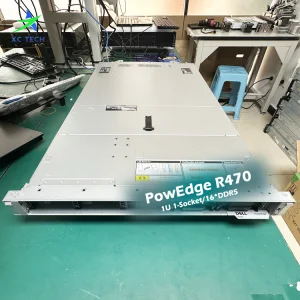
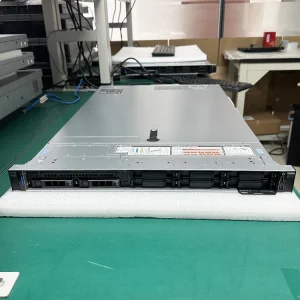
Figure 1: State-of-the-art server chassis manufacturing and automated testing assembly line.
A Comprehensive Analysis of Air Cooling vs. Liquid Cooling Paradigms
To choose the correct cooling strategy, thermal architects must evaluate factors such as initial capital expenditure (CAPEX), operating expenditure (OPEX), rack densities, geographic climate, and spatial constraints. The table below represents a structural engineering comparison of mainstream solutions exported by our facility:
| Technology Profile | Optimal Power Limit | Approximate PUE | Cooling Medium | Primary Industrial Use Case |
|---|---|---|---|---|
| Direct-to-Chip (DLC) Liquid Cooling | Up to 100 kW / Rack | 1.10 - 1.15 | Water / Propylene Glycol Mix | AI Model Training Clusters & High-Density Compute |
| Single-Phase Immersion | Up to 150 kW / Rack | 1.05 - 1.08 | Synthetic Hydrocarbons / Silicon Fluids | Hyperscale Cloud Data Centers & Cryptomining Labs |
| Two-Phase Immersion | Exceeding 200 kW / Rack | 1.02 - 1.04 | Low-Boiling Fluorinated Fluids | Supercomputers & Advanced Aerospace Simulations |
| Rear Door Heat Exchangers (RDHx) | Up to 45 kW / Rack | 1.18 - 1.25 | Chilled Water / Refrigerant | Retrofitting Legacy Air-Cooled Enterprise Centers |
Innovations in Micro-Channel Cold Plates and Intelligent Coolant Distribution Units (CDUs)
Our research and development pipeline focuses on next-generation materials and structural designs. Over the coming years, we are scaling the production of micro-channel cold plates utilizing advanced chemical vapor deposition (CVD) diamond coatings. This technique dramatically increases thermal conductivity across the silicon-to-cold-plate interface, decreasing local thermal resistance by up to 40%.
Concurrently, the integration of intelligent Coolant Distribution Units (CDUs) equipped with machine learning-driven variable frequency drive (VFD) pumps allows real-time tuning of coolant flow rates. By analyzing telemetry data directly from the server BMC (Baseboard Management Controller), our CDUs can dynamically adjust pump pressure and temperature based on CPU/GPU work profiles, preventing thermal lag before it occurs.
Expert Answers on Liquid Cooling Retrofits, PUE Optimization, and Supply Logistics
Reliable global hardware solutions optimized for advanced enterprise and cloud thermal installations.
 Vertex AI Server