The Hardware Backbone Powering High-Concurrency Enterprise Resource Planning Systems
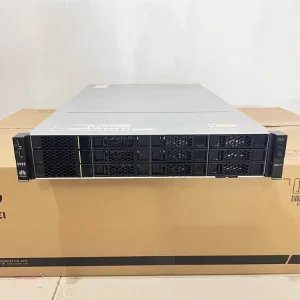
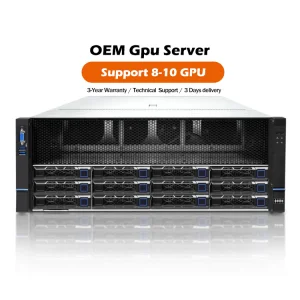

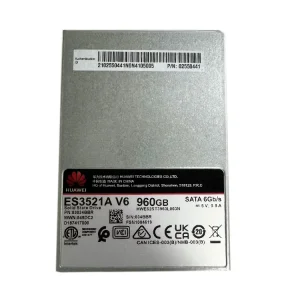
In the digital-first global economy, Enterprise Resource Planning (ERP) systems represent the nervous system of modern business operations. As corporations scale across geographical boundaries, the selection of an ERP ecosystem is no longer merely a software procurement decision. Instead, it has evolved into a strategic integration project where software workflows, hardware processing capacities, and high-performance databases converge. Organizations often face systemic bottlenecks when trying to execute resource planning, financial consolidation, and supply chain tracking without considering the physical infrastructure supporting their applications.
As a leading player in ERP business integrations and dynamic server exporting, our expertise lies in building custom on-premise, hybrid, and private cloud architectures that allow ERP software to operate with zero latency, complete database reliability, and structural elasticity. By aligning advanced database solutions with customized infrastructure (such as enterprise-grade rack servers, solid-state arrays, and fiber-optic networking), we bridge the gap between abstract software processes and physical hardware execution. This integration provides our global clients with unmatched system reliability, lower total cost of ownership (TCO), and higher processing speeds.
"The success of a global ERP deployment is fundamentally constrained by its database layer. Without high-concurrency server frameworks, fast NVMe or SSD data access, and low-latency network interconnects, even the most advanced ERP software will fail to support real-time enterprise management."
Deploy dual-socket, high-core processors to process thousands of simultaneous ERP entries, transaction logs, and material requirements planning calculations without throttling.
Leverage enterprise SATA and NVMe solid-state drives with high read-write endurance (DWPD) to eliminate input/output bottlenecks in large relational databases.
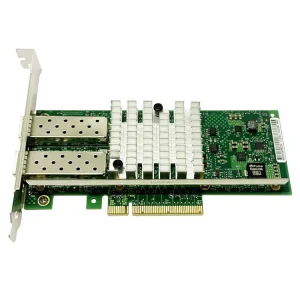
Integrate 10Gb to 100Gb multi-port network adapters (NICs) to guarantee zero packet loss and seamless data sync across global head offices and production facilities.
Different industries require specialized ERP infrastructures. A generic software approach often overlooks the unique data structures, latency profiles, and operational demands of specific sectors. Our customized ERP hardware configurations target three main industrial sectors:
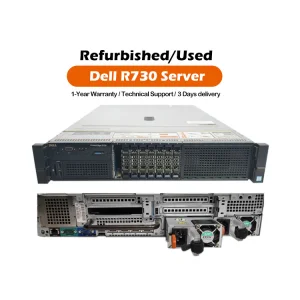
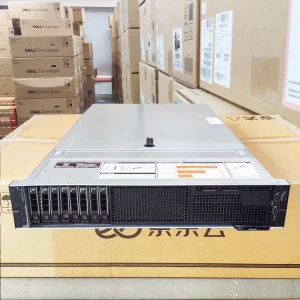
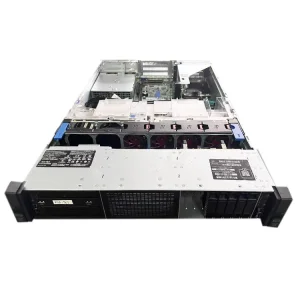
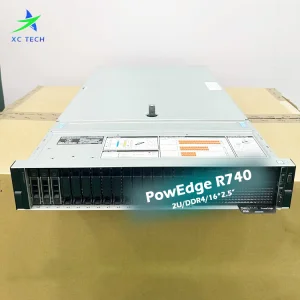
For modern smart factories, real-time material requirements planning (MRP) is the core operational driver. When manufacturing facilities run advanced CAD tools, IoT sensors, and shop-floor MES (Manufacturing Execution Systems) simultaneously, they generate huge volumes of transactional data. Our hardware deployments—utilizing platforms like the HPE ProLiant DL380 Gen10 and Dell PowerEdge R740—provide the compute power needed to run predictive inventory algorithms, material ledger valuations, and automated procurement cycles. These systems prevent production halts by instantly matching raw material availability with production schedules.
Modern supply chains operate across multiple transport modes, time zones, and customs jurisdictions. Warehouse management systems (WMS) require reliable database platforms to coordinate real-time tracking, barcode scanning, and fleet logistics. High-throughput network cards like the Intel X520 PCIe series enable continuous data synchronization between remote distribution centers and centralized ERP data stores. This ensures fleet operators, dispatch crews, and supply chain managers access identical real-time logistics data, drastically reducing shipping errors.
Multinational corporations must consolidate complex accounting records across several international subsidiaries, currencies, and tax codes. Financial modules within ERP software require deep memory capacities and highly secure processing environments to run month-end closings quickly. By deploying dual-socket database servers with enterprise-grade storage redundance, organizations can process massive general ledger updates, execute automated currency conversions, and generate audit-ready financial reports in minutes rather than days.
Operating an ERP system globally requires meeting strict international compliance and data protection laws. As data privacy regulations become more complex worldwide, businesses must ensure that enterprise database architectures comply with the specific legal frameworks of every jurisdiction they operate in.
Ensures that European citizen data is processed locally within the EU, utilizing localized hosting setups with complete physical and logical isolation.
Requires localization of crucial infrastructure, personal data protection, and localized cryptographic frameworks for systems operating inside mainland China.
Establishes unalterable system logs and database backup policies via hardware write-once-read-many (WORM) storage modules to support external audit trails.
To address these requirements, we recommend and build hybrid ERP infrastructures. By deploying local servers (e.g., Huawei Taishan Storage platforms powered by Kunpeng processors) within sovereign borders, companies can keep sensitive customer information and operational data in the country of origin. Simultaneously, clean, anonymized analytical data can be securely synced back to the global corporate headquarters via encrypted VPN tunnels. This hybrid approach meets compliance requirements while giving corporate leaders access to consolidated global performance metrics.
The integration of Artificial Intelligence (AI) and Large Language Models (LLMs) is transforming modern ERP software. Legacy systems that only record historical transactions are giving way to intelligent platforms capable of predicting supply chain changes, suggesting pricing strategies, and automating complex workflows.
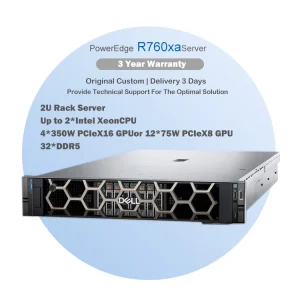
Running advanced AI integrations like DeepSeek R1 models locally on enterprise data requires GPU-accelerated computing. This is why our technology roadmap focuses heavily on GPU-optimized, AI-ready servers like the 4th/5th Gen Intel Xeon Processor AI Inference Server and the Dell PowerEdge R760xa. These hardware systems enable businesses to run large language models and predictive algorithms locally, keeping sensitive business data completely secure.
Our roadmap includes three key technological trends:
Operational Metrics Confirming Our Export Leadership and Infrastructure Reliability
Reliable Enterprise Hardware Ready for Worldwide Export
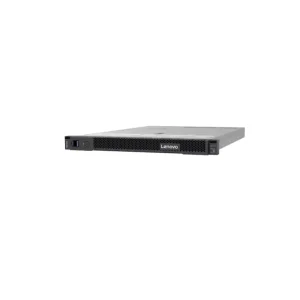
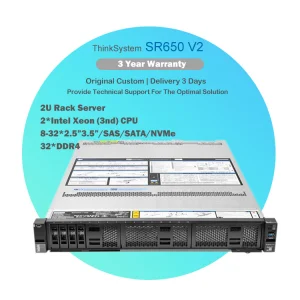
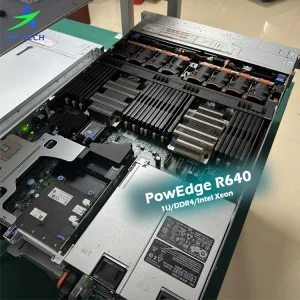
 Vertex AI Server