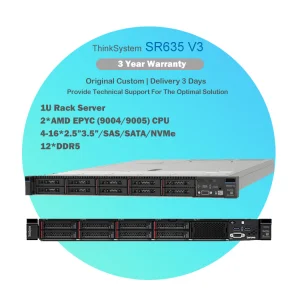
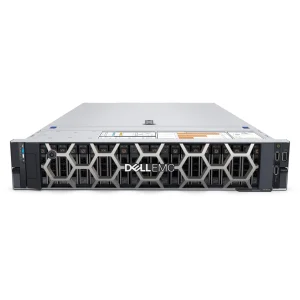
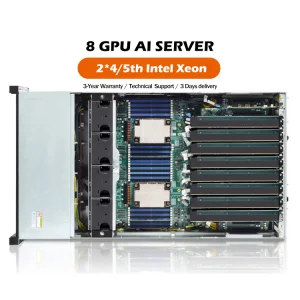
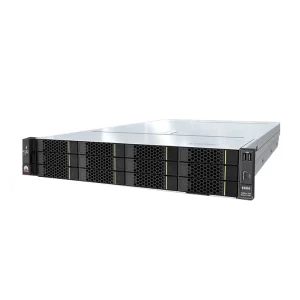
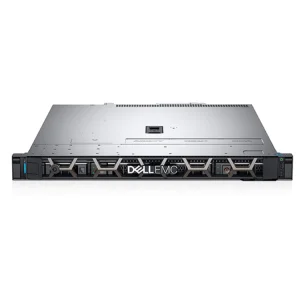
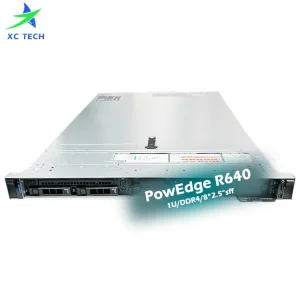
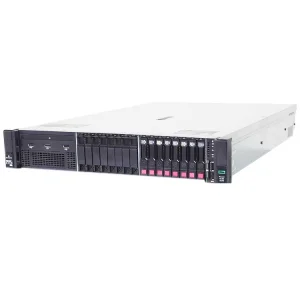
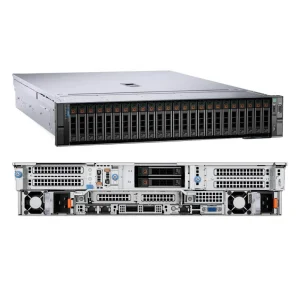
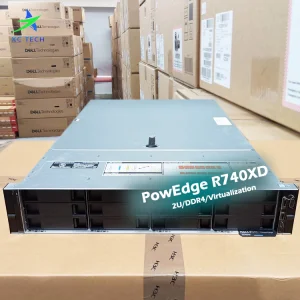
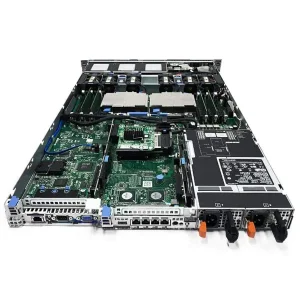
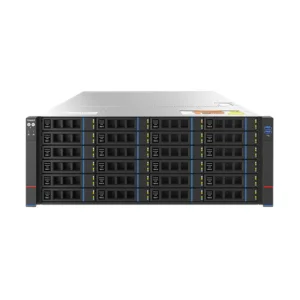
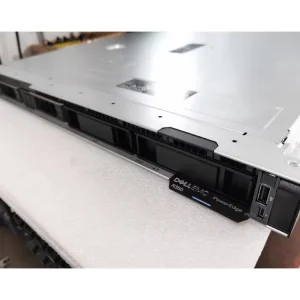
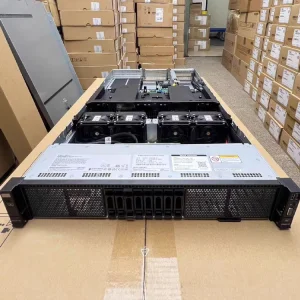
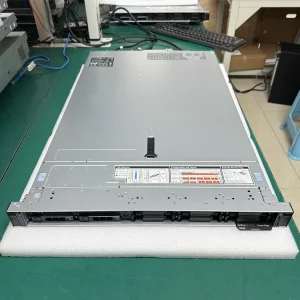
Enterprise-grade computing hardware designed to power high-definition multi-channel DisplayPort architectures, digital signal processing nodes, and AI-driven rendering infrastructures.
As video resolution transitions rapidly from Ultra-HD 4K to high-refresh-rate 8K and next-generation 16K, the constraints of interface bandwidth have become the bottleneck of industrial displays, server outputs, and virtualization clusters. OEM/ODM DisplayPort factories play a pivotal role in maintaining physical layer signal integrity across complex enterprise topologies.
DisplayPort 2.1 introduces Ultra High Bit Rate (UHBR), offering raw bandwidths up to 80 Gbps. This technology relies on high-speed copper and optical transmission pathways. Factory engineering must ensure minimal impedance mismatch and cross-talk to enable DSC (Display Stream Compression) to transmit compressed, visually lossless HDR content at extremely low latencies.
Multi-GPU server setups, like the ones driving Deepseek AI model inferences and visual processing clusters, require unified multi-display nodes. DisplayPort over USB Type-C Alt Mode and Multi-Stream Transport (MST) allow Daisy-Chaining up to four separate ultra-high-definition visual nodes from a single physical server output port, saving rack layout space and cable density.
In industrial and medical imaging environments, electromagnetic interference (EMI) is a persistent operational hazard. Custom ODM DisplayPort cables incorporate multiple layers of tinned-copper braiding, aluminum foil shielding, and premium zinc-alloy connector shells to maintain a clean eye-diagram under extreme environmental noise conditions.
| DisplayPort Standard | Max Transmission Rate | Max Uncompressed Resolution | DSC Compressed Resolution | Key Applications |
|---|---|---|---|---|
| DisplayPort 1.2 | 21.6 Gbps | 4K @ 60Hz | Not Supported (Native) | Legacy Workstations, Basic Digital Signage |
| DisplayPort 1.4a | 32.4 Gbps | 8K @ 30Hz HDR | 8K @ 60Hz HDR | Professional Editing, High-end Computing, VDI Clusters |
| DisplayPort 2.0 | 80.0 Gbps | 10K @ 60Hz | 16K @ 60Hz HDR | VR/AR, Real-time Simulation, Multi-monitor Medical Systems |
| DisplayPort 2.1 | 80.0 Gbps (Enhanced PHY) | 10K @ 60Hz (Low-latency) | Two 8K @ 120Hz Displays | AI Server Visual Nodes, Next-Gen GPU Render Farms |
Our manufacturing partnership aligns with rigorous technical specifications. Operating with trace-monitored raw materials and a structured quality inspection framework, we secure enterprise sourcing pipelines worldwide.
Our raw materials feature 100% verified traceability back to standard smelting and chemical refining runs. With dedicated engineering QC leads, all high-frequency cabling units undergo automated signal checking, physical stress validation, and bandwidth throughput examinations to minimize field failure rates.
Supplying components across key zones including Eastern Europe (20%), Domestic Markets (15%), and North America (10%). We support brand businesses, industrial engineers, volume wholesalers, and OEM system builders seeking robust displays matching strict local specifications.
Why the world's leading brands source their display infrastructures from localized high-tech industrial parks in China.
Close geographic proximity to advanced copper extrusion plants and high-grade PVC/TPE formulation centers allows factories to scale manufacturing up or down rapidly depending on target volume. Supply chain lead times are significantly shorter than global alternatives.
Modern production lines incorporate automated soldering machines and laser stripping equipment, reducing Human-Error variations. High precision tooling ensures sub-millimeter compliance for internal grounding shielding layouts.
Whether integrating DisplayPort interfaces into locking industrial housings, custom medical display arrays, or ultra-thin panel setups, China's engineers quickly model CAD adjustments to support flexible ODM modifications.
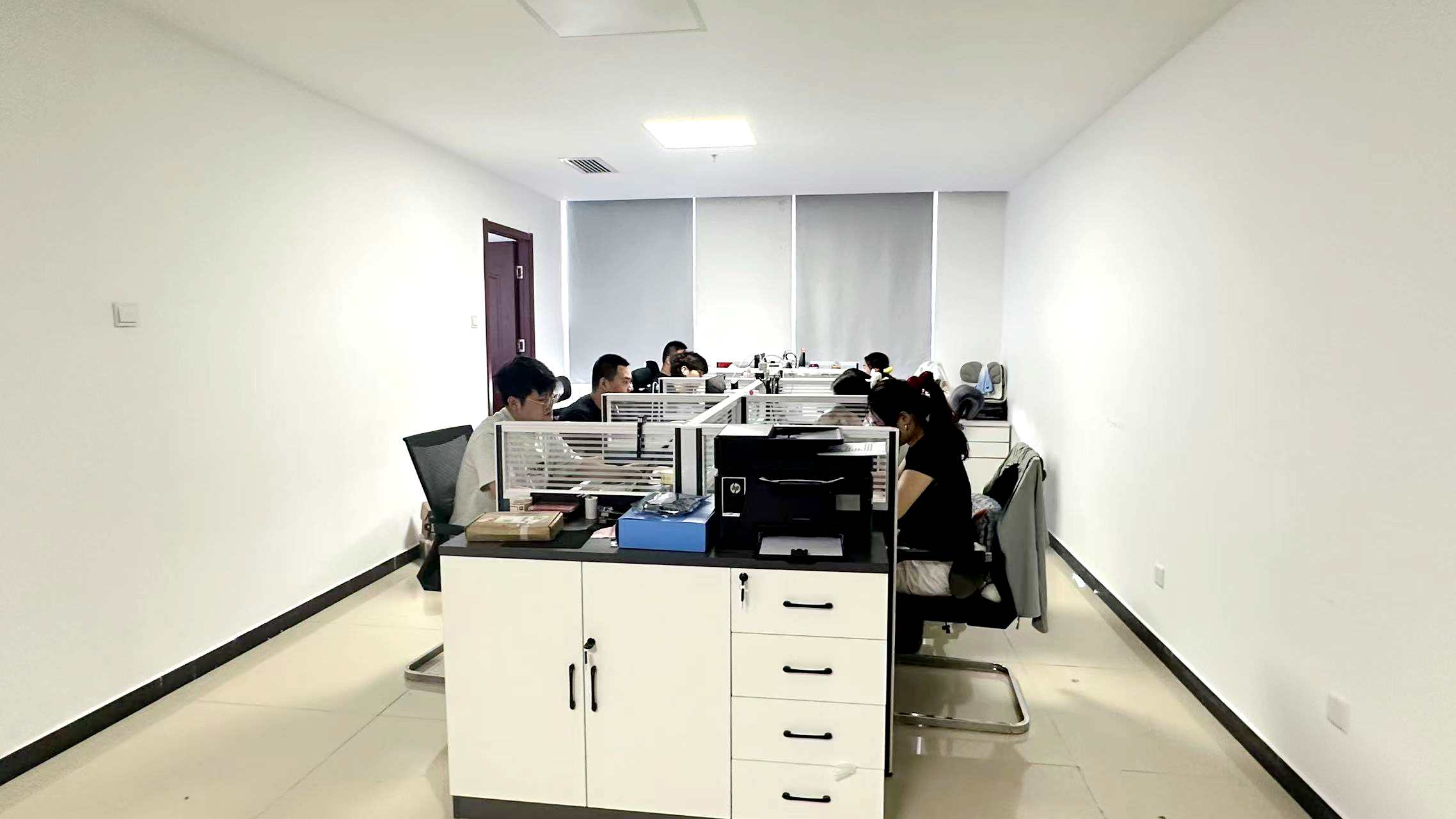
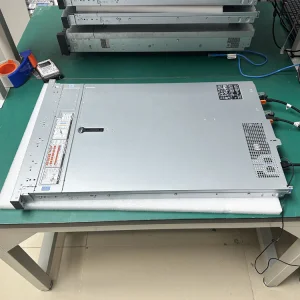
Enterprise-grade integration and testing center verifying computational nodes and visual output pathways.
From computational server arrays to control centers, our specialized OEM/ODM architectures are deployed across diverse verticals.
High-fidelity grayscale displays used in MRI and CT scans demand absolutely stable and error-free pixel data. DisplayPort 1.4a/2.1 standards with forward error correction (FEC) provide the lossless medical diagnostics workspace professionals rely on.
VDI terminals built on top of high-density server configurations require display connections capable of splitting signal bands through MST daisy-chain networks, decreasing complex workstation clutter.
High-performance AI model visuals, immersive simulators, and synchronized video wall panels utilize active fiber-optic DisplayPort connectors to span long distances without signal degradation.
A deep-dive decision matrix for international procurement managers aiming to optimize lead times, costs, and quality when sourcing interface cables and adapters.
Copper cabling signal strength drops off over distance. While standard patch cords of 1 to 2 meters use thin 30 AWG or 32 AWG conductors, longer configurations (5m+) must use thicker 28 AWG or active optoelectronic IC modules to maintain bandwidth specifications without dropouts.
Under VESA guidelines, standard source-to-display connections must isolate Pin 20 (DP_PWR). Low-tier factories sometimes route raw power through Pin 20, risking damage to graphics processing hardware. Our rigorous QC ensures compliance to eliminate hardware failure risks.
Technical answers to frequent procurement queries concerning our high-performance display interface systems.
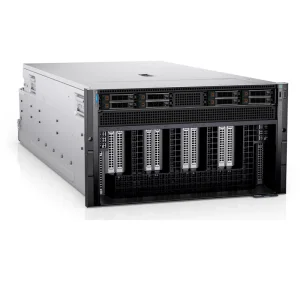
Enterprise computing hardware engineered for deep learning, virtualization, cloud networks, and high-performance computing installations.
 Vertex AI Server