High-reliability rackmount server configurations engineered to power modern UCaaS platforms, private clouds, and heavy enterprise workloads.
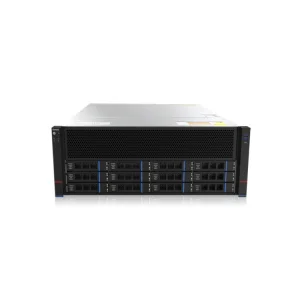
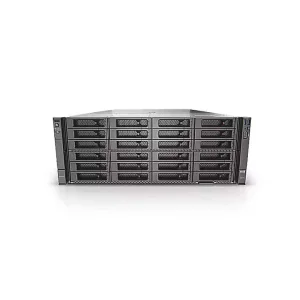
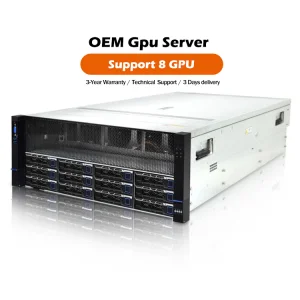
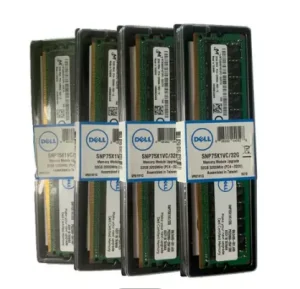
Executive Summary: The convergence of Artificial Intelligence, Edge Computing, and hybrid workforce distribution has transformed Unified Communications (UC) from simple software overlays into complex, high-throughput infrastructural pipelines. As a premier global supplier and exporter of enterprise hardware, we investigate the fundamental engine powering modern connectivity: high-performance computing, fault-tolerant network servers, and deep-learning infrastructure.
Unified Communications (UC) is no longer confined to isolated VoIP lines and software-based chat tools. Modern enterprises demand a unified canvas that weaves real-time audio, high-definition video conferencing, dynamic team collaboration workspaces, instant messaging, and automated workflow integrations into a single, cohesive framework. However, behind the seamless user experience lies a complex network of cloud and on-premise infrastructure. Delivering packet-perfect audio and 4K real-time video stream processing requires massive compute power, highly optimized network nodes, and high-density storage arrays.
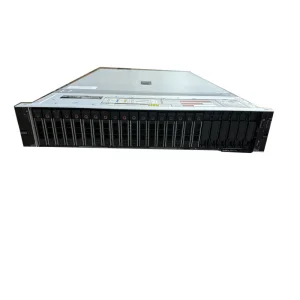
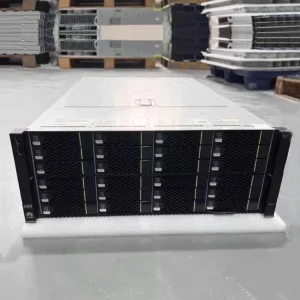
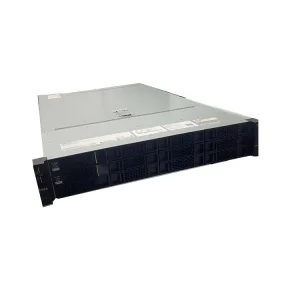
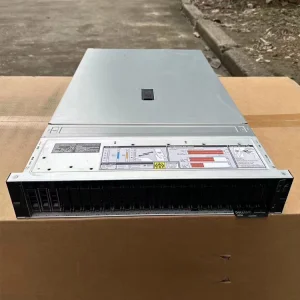
To sustain low-latency visual collaboration and instant system transitions, enterprise data centers rely heavily on rugged, ultra-efficient hardware architectures. High-speed 1U and 2U servers, like the Dell PowerEdge and Huawei xFusion lines, form the backbone of these deployments. Serving as SIP (Session Initiation Protocol) proxies, WebRTC endpoints, and application hosts, these machines process millions of concurrent connections while maintaining zero-packet-loss reliability under fluctuating load profiles.
Leveraging high-speed NVMe storage and Intel Xeon/AMD EPYC processors to compress and route real-time media streams with sub-millisecond execution times.
Employing hyper-converged architecture setups that enable instant CPU and RAM allocation scaling as user call volumes spike throughout peak hours.
Designed with fully redundant dual-plug power supplies and intelligent thermal controls to guarantee continuous operational availability.
The roadmap of Unified Communications points toward complete integration with deep learning model sets and edge computing paradigms. Historically, UC platforms executed central processes on monolithic remote cloud servers, causing considerable voice lag and high data transport overhead. In the near future, enterprise UC networks will shift tasks to edge processors, handling compression, translation, and noise reduction close to local end-points.
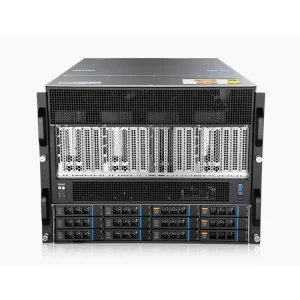
Unified Communications is morphing into Cognitive Communications. Artificial intelligence engines are now embedded directly in the call paths. Features like real-time multi-language translation, predictive meeting transcriptions, sentiment analysis, and automated follow-ups require massive processing capabilities. Hardware solutions such as the AMD EPYC 9004/9005 Deepseek AI Servers are specifically designed to meet these intensive computation demands. Utilizing high-density GPU configurations, these servers run natural language models with minimal latency, translating and summarizing conversations live.
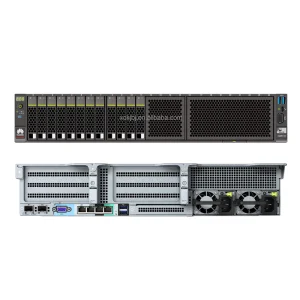
HCCI merges compute, storage, virtualization, and switching capabilities into single physical nodes. For organizations managing sensitive intellectual property or operates in highly regulated jurisdictions, hosting UC tools on-premise or in private clouds via modular servers like the xFusion 1288H V6/V7 provides the absolute control over data sovereignty. HCCI minimizes internal routing loops, dramatically decreasing jitter and system crashes.
As video standards migrate toward 4K and virtual reality workspaces, codecs like AV1 require massive encoding resources. Modern compute servers equipped with advanced instruction sets (such as Intel AVX-512) ensure hardware acceleration for these video compression pipelines, reducing bandwidth requirements by up to 50% without compromising visual clarity.
Different industries require unique structural architectures to run their communication suites effectively. Below is an overview of how tailored hardware infrastructure satisfies different macro-vertical constraints.
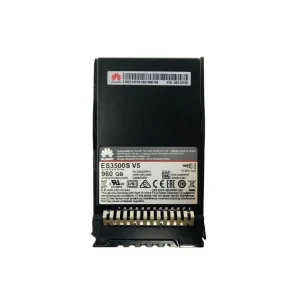
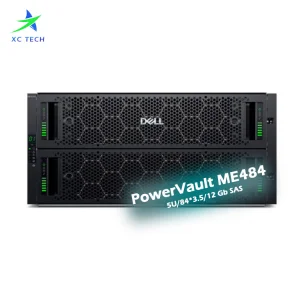
High-frequency trade desks and banking services require uninterrupted, recordable communication systems to comply with regulations like MIFID II and Dodd-Frank. Every interaction must be logged with high-precision timestamping. Financial organizations deploy dedicated high-speed server units and specialized enterprise storage networks (such as OceanStor V5 series storage systems) to handle millions of simultaneous channels, ensuring that call logs, chats, and records are instantly committed to immutable storage nodes.
In telemedicine, image resolution and continuous connections can make a difference in critical situations. Telemedicine applications require servers capable of processing high-bandwidth diagnostic visual feeds alongside real-time medical IoT metrics. This demands powerful multi-socket servers with robust GPU capabilities to process medical video layers, routing them instantly to remote specialists.
Factory 4.0 applications connect machinery status and human operations. Industrial unified communications integrate VoIP paging, sensor alerts, and predictive maintenance notices. To implement this, rugged on-premise servers process localized operational telemetry at the edge, guaranteeing that communications remain online even during external internet disruptions.
As an established exporter, our operations are optimized to guarantee hardware availability for global buyers. Operating out of highly advanced industrial hubs in China, our manufacturing and integration centers run on Factory 4.0 principles, integrating automated assembly with strict quality control frameworks.
Our supply chain robustness stems from deep integration with component manufacturers, from silicon and PCB boards to heavy-duty server chassis and cooling fans. This direct integration lets us navigate components volatility, guaranteeing reliable lead times even for custom server builds. While many global suppliers face extended delays, our 4-year export history has enabled us to optimize logistics, component sourcing, and testing cycles.
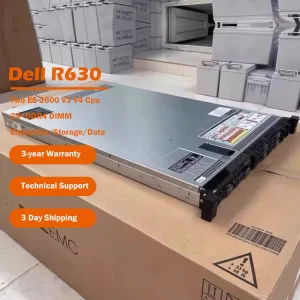
Quality control is central to our reputation. We conduct 100% product inspections. Each server node undergoes rigorous load testing, thermal checks, memory validation, and stress tests under synthetic workloads before dispatch. Our QA/QC protocols guarantee that every server—whether a refurbished legacy Dell R630 or a high-performance AMD EPYC AI node—is ready to plug in and perform from day one.
For procurement directors and CIOs, selecting the right hardware supplier requires evaluating metrics beyond initial acquisition cost. Below are the key pillars of modern enterprise procurement:
Deploying communications infrastructure globally requires navigating complex local regulations. Whether deploying systems in Europe (requiring strict adherence to GDPR storage policies) or in North America (requiring FCC emission certifications), matching your hardware platform to these frameworks is critical. Our export solutions include compliant documentation, CE certificates, and customized firmware options to meet local network regulatory standards.
Additionally, we support global logistics partners with tracking and secure packing to protect sensitive components during transit. By offering flexible hardware setups and working with key regional logistics networks, we ensure servers pass through customs and arrive at client data centers without delays.
Ensure data redundancy, expand archive capacity, and run workloads on reliable enterprise hardware.
 Vertex AI Server