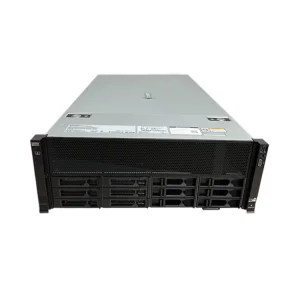
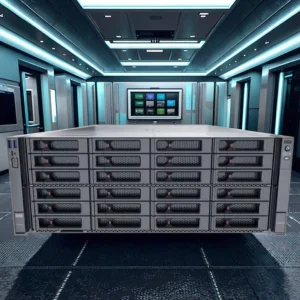
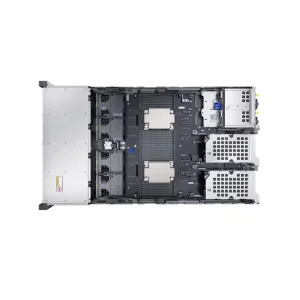
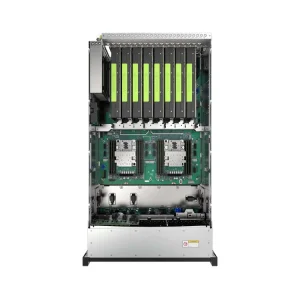
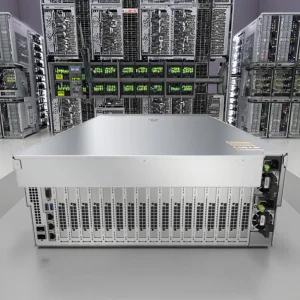
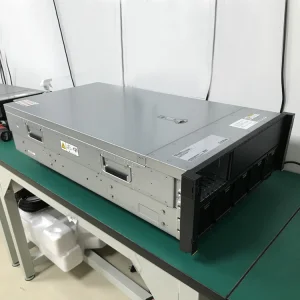
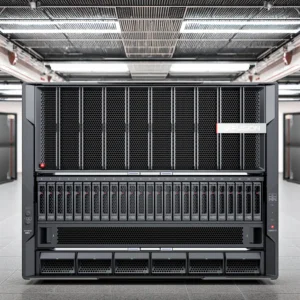
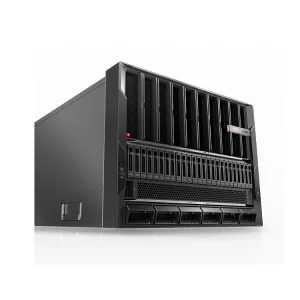
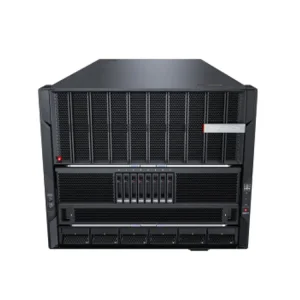
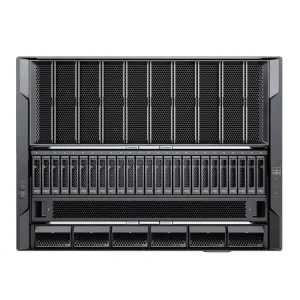
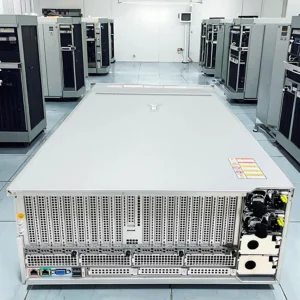
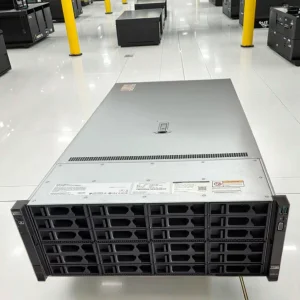
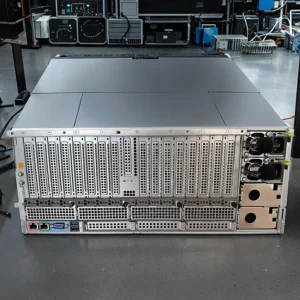
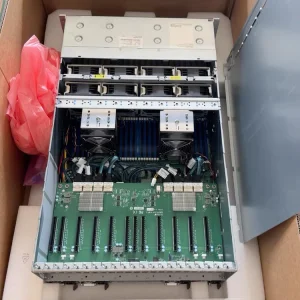
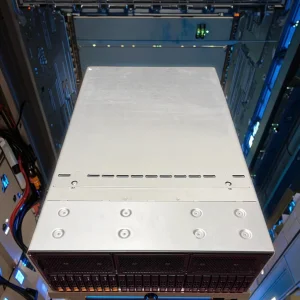
Designed to meet rigorous energy efficiency standards and seismic tolerances required for central Tokyo and Osaka enterprise datacenters.
As Japan moves forward with its revolutionary "Society 5.0" blueprint—an initiative designed to merge cyberspace and physical space to solve complex demographic and industrial challenges—the demand for local, resilient, and highly secure AI hardware has reached unprecedented heights. To power real-time AI modeling, automated manufacturing systems, and localized Large Language Models (LLMs) like Deepseek, enterprise buyers require server hardware that matches local infrastructural constraints.
In Tokyo, Osaka, and Nagoya's high-density urban areas, physical space and power limitations (regulated strictly under local green energy initiatives) force data centers to target maximum compute-density per square meter. Standard enterprise servers built with legacy layout architecture struggle to perform efficiently within these constraints. Modern Japanese infrastructure operations are shifting to custom GPU configurations, requiring specialized engineering from experienced manufacturers that can guarantee low-latency processing, robust electrical compliance, and mechanical designs built for seismic regions.
Deploying AI GPU and TPU clusters in Japan means adhering to complex parameters that differ from US and European benchmarks:
These platforms are configured to accelerate LLM fine-tuning, computer vision workloads, and private database processing.
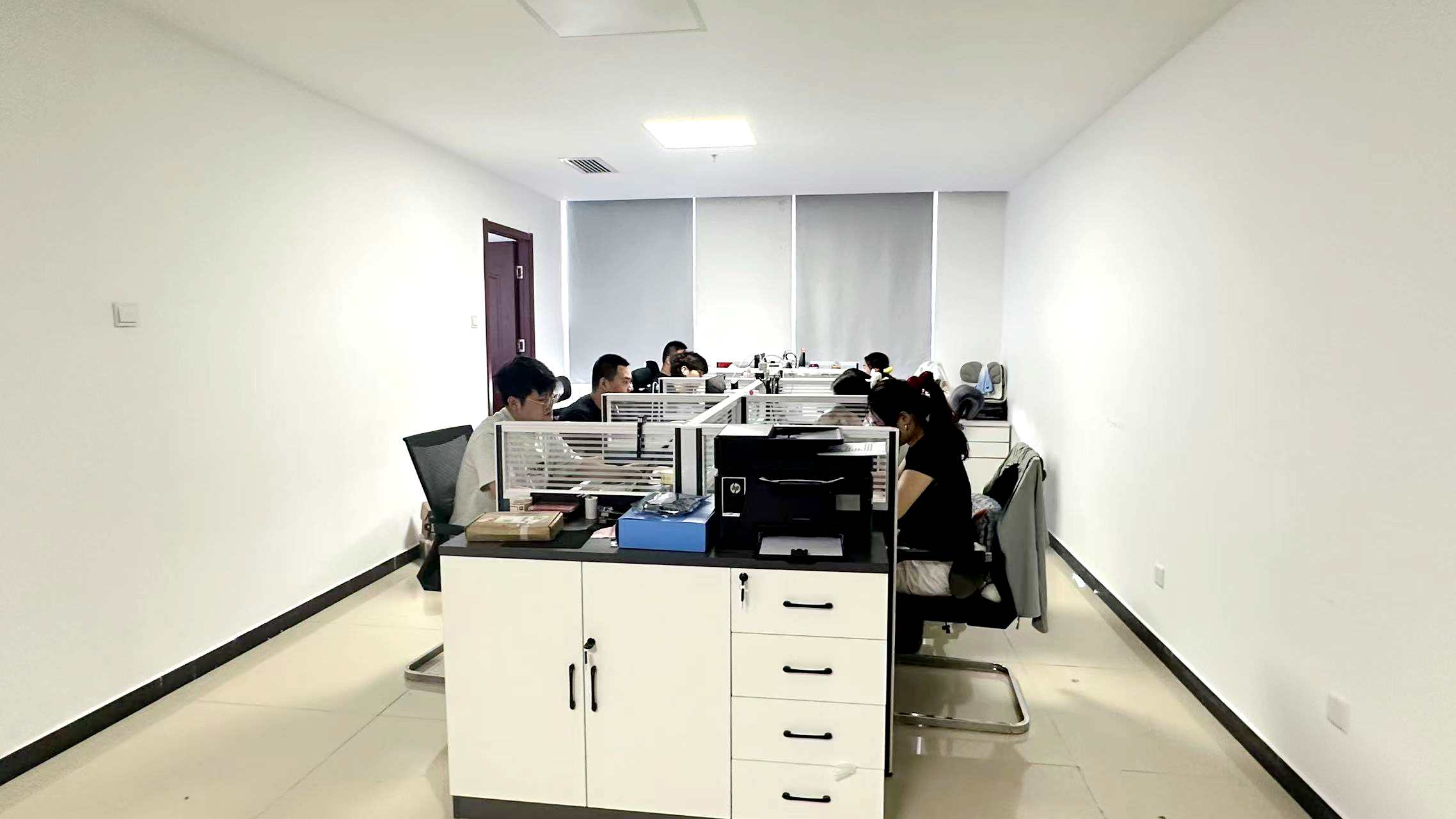
Meeting the strict demands of the Japanese computing market requires agile, high-precision manufacturing. China's advanced Factory 4.0 infrastructure addresses this by blending automation with rapid supply chain integration. The result is a manufacturing model that provides the level of customization, component quality, and cost-efficiency required by Japanese system integrators and enterprises.
Our production facilities utilize automated optical inspection (AOI) systems, X-ray component verification, and comprehensive testing to ensure signal integrity across high-speed PCIe Gen 5 buses and memory channels. This rigorous quality control ensures that high-density configurations remain stable under sustained workloads. Additionally, our flexible manufacturing lines allow us to custom-configure BIOS settings, IPMI/BMC firmware interfaces, and modify thermal parameters to align with local data center infrastructure requirements.
Component-level tracking guarantees reliability and transparency throughout the supply chain.
Optimized transport corridors minimize shipping delays from factory to Tokyo/Osaka hubs.
Every server undergoing stress-testing to avoid hardware failures in production.
Supporting advanced ADAS (Advanced Driver Assistance Systems) development and virtual test drives. Our server configurations provide the parallel computing pipelines required for real-time sensor processing and spatial data analytics.
Ensuring compliance with Japan's Act on the Protection of Personal Information (APPI). These local AI nodes keep proprietary algorithms and sensitive data stored safely within Japanese borders, preventing third-party transit.
Integrating seamlessly with automated optical inspection systems on assembly lines, delivering high-speed inference to maintain quality control without interrupting factory output.
| Use Case | GPU Form Factor | Network Interface |
|---|---|---|
| Seismic Data Processing | 8x SXM5 / PCIe H100/H800 | 400G InfiniBand ND |
| Smart Manufacturing Visuals | 4x / 8x RTX 4090 / L40S | Dual 10GbE / 25GbE SFP28 |
| Private LLM Fine-Tuning | 8x G8600 V7 Server Node | 100G/200G Mellanox ConnectX |
| Robotic Navigation AI | Intel Xeon Edge Nodes | Wi-Fi 6E/5G WAN Modules |
Explore our complete range of certified GPU compute systems, designed to handle workloads from edge inference nodes to database clusters.
Our systems conform to verified international manufacturing protocols, ensuring reliable operations and long-term hardware stability.
| Operations & Capability Metrics | |
|---|---|
| Company Registration | 2021-08-27 (Established B2B Operations) |
| Export Experience | 4 Years (Active Supplier for Global Markets) |
| Inspection Protocol | 100% Full Inspection (AOI, Burn-In, Functional Testing) |
| QA/QC Structure | Dedicated On-site Quality Assurance Officers |
| Key Export Markets | Eastern Europe (20%), Domestic (15%), North America (10%), serving Japan Integration Partners |
| Accepted Languages | English (Technical documentation, API schemes, engineering support) |
We apply a systematic evaluation process to every component, from raw material procurement to final server assembly. Each server undergoes a comprehensive burn-in testing cycle to minimize the risk of infant mortality in active data center racks.
Our quality control process focuses on three core principles:
Common architectural and integration questions addressed by our engineering team.
Japanese data centers frequently restrict power density per rack (often to 6kVA - 10kVA range, though newer facilities support higher). We customize our power distribution units (PSUs) using 80 Plus Titanium efficiency ratings to minimize heat load and maximize real-power efficiency. Additionally, BIOS configurations can limit the peak power consumption of GPU clusters to ensure they stay within local rack limits.
Yes. Our enterprise AI systems are designed and tested to meet electromagnetic emission standards equivalent to VCCI Class A. This prevents electromagnetic interference with neighboring network and storage gear within shared data center facilities.
For Japanese deployments, we provide reinforced rack rails with locking mechanisms. The internal layout of our 4U and 8U servers features card-retention brackets to secure dual-width GPUs and PCIe cards. This prevents vibration-induced connectivity issues and keeps hardware aligned during seismic events.
Absolutely. Our servers are configured with high-performance PCIe topologies and high-bandwidth interconnects (up to 400Gbps network interfaces) designed to support distributed LLM training and real-time inference workloads, ensuring high throughput for large-scale language models.
Standard custom server configurations are generally assembled, tested, and shipped within 3 to 5 weeks. Our proximity to key transportation hubs helps streamline shipping directly to Tokyo, Yokohama, or Osaka ports.
 Vertex AI Server