High-density, multi-GPU configurations engineered for extreme computational reliability in localized neural network model deployments.
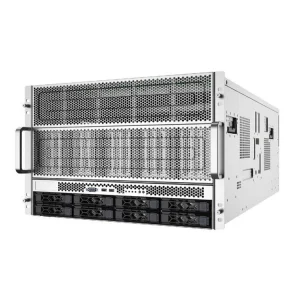
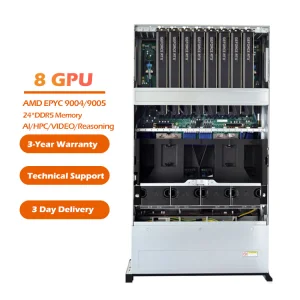
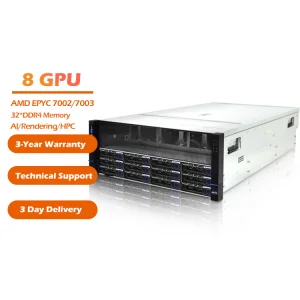
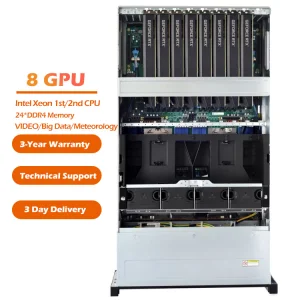
The Russian high-performance computing (HPC) and artificial intelligence sector is undergoing a profound structural transition. Driven by the strategic imperative of digital sovereignty, local enterprises, sovereign cloud operators, and scientific research institutes are rapidly localizing their hardware stack. From Moscow's financial complexes to Siberian research clusters in Novosibirsk, the deployment of custom, scalable OEM AI servers is no longer a luxury—it is a critical industrial mandate.
Russian corporate entities, spanning banks like Sber and digital platforms like Yandex, are actively training massive LLMs (Large Language Models) locally. This surge requires robust hardware that bypasses supply constraints through flexible OEM/ODM manufacturing partnerships, utilizing versatile, non-restrictive server designs that can handle local model frameworks such as GigaChat, YandexGPT, and the open-weights DeepSeek R1 models.
Rapid buildout of hyper-scale datacenter nodes in Saint Petersburg, Ekaterinburg, and Moscow, necessitating flexible GPU server designs that accommodate diverse processing architectures.
Integration of x86 (AMD EPYC, Intel Xeon) and ARM-based platforms (such as Huawei Kunpeng 920 and Atlas architectures) to insulate against single-origin supply-chain bottlenecks.
On-premise hardware deployments that keep data stored entirely within national boundaries, strictly supporting localized governance and industrial data storage guidelines.
On a global scale, high-performance computing is undergoing a structural paradigm shift from generic CPU architectures to highly accelerated GPU systems. Artificial Intelligence models—specifically generative AI (GenAI), multimodal models, and massive agentic workflows—require extreme memory bandwidth and low-latency interconnects. The rise of multi-tiered GPU server architecture (such as 4U and 7U form factors supporting 8 to 10 dual-width cards) has become the standard for modern computing clusters.
Technological developments in 2025 emphasize high-bandwidth memory (HBM3e/HBM4), PCIe Gen5/Gen6 system topologies, and advanced liquid-to-air cooling options to sustain thermal envelopes of up to 400W–700W per accelerator card. Organizations are transitioning their workloads away from centralized cloud instances to hybrid edge and on-premise compute pools. This reduces recurring operational expenditures and ensures absolute control over proprietary dataset training.
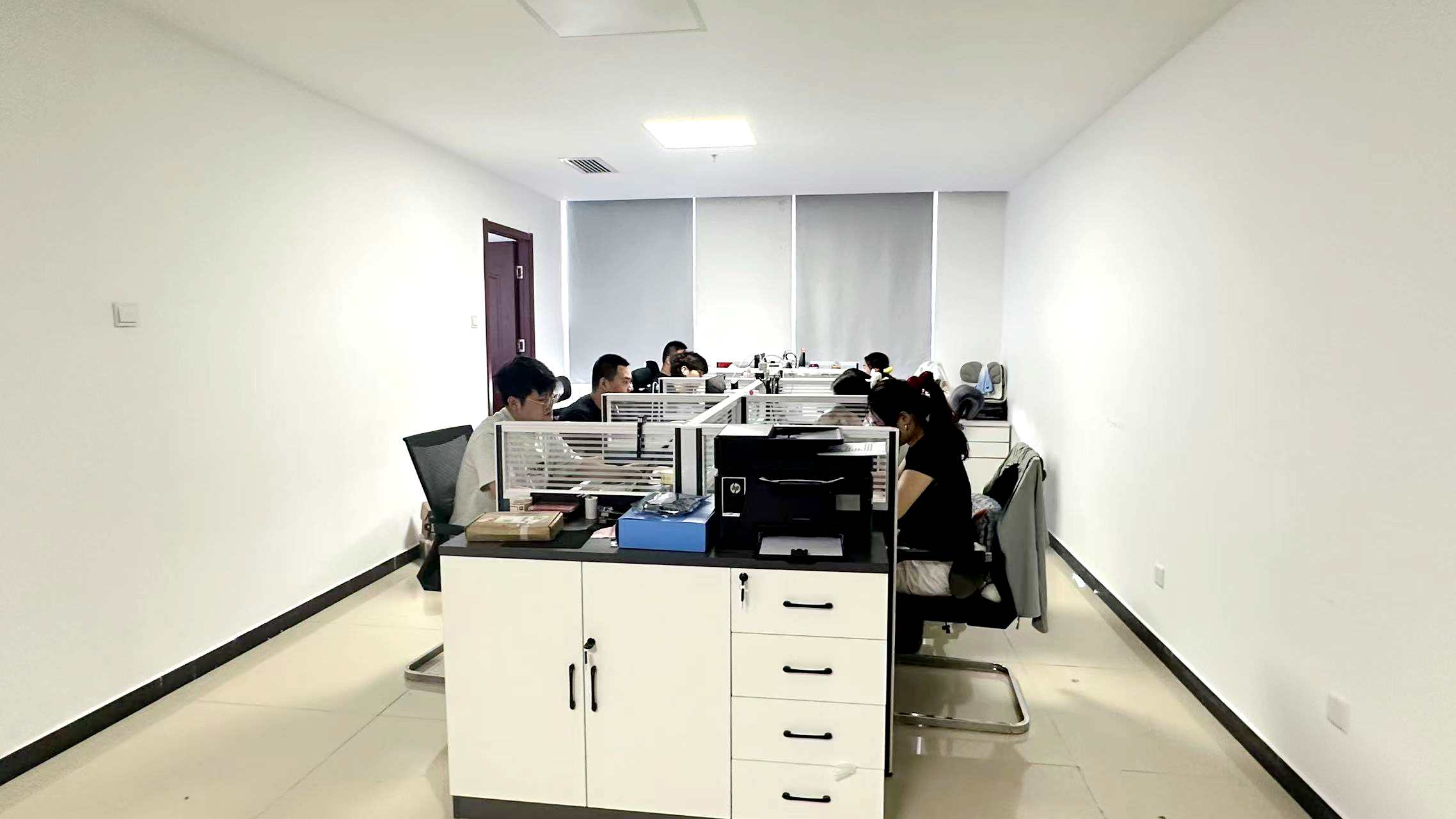
Transparent metrics validating our manufacturing capacity, quality control frameworks, and trade footprint.
Deploying hardware in Russia presents unique geographic, environmental, and computational demands. Our OEM AI servers are customized for localized scenarios, addressing both regulatory compliance and performance criteria.
For local language models (Yandex GPT, Sber GigaChat, and custom local instances of DeepSeek R1/V3), our GPU servers provide the vast system memory and low latency needed for high-velocity text processing and model reasoning. The high-capacity DDR5 setups ensure smooth operation under heavy user traffic.
In metropolitan hubs like Moscow, our servers are deployed to process hundreds of high-resolution video streams concurrently. They provide real-time spatial mapping, transit path tracking, and automated city-grid optimization using powerful, local CUDA-based video rendering.
Designed to withstand fluctuating industrial environments, our 4U and 7U server models run local analytics engines directly at oil wells, mining facilities, and gas extraction sites, allowing predictive mechanical diagnostics without relying on external cloud connections.
As enterprise models grow from billions to trillions of parameters, computing infrastructure must evolve in tandem. Our product development is aligned with key upcoming industry changes:
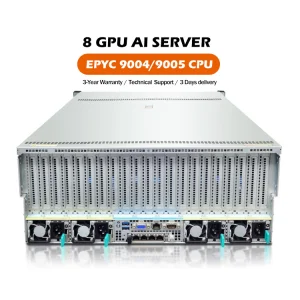
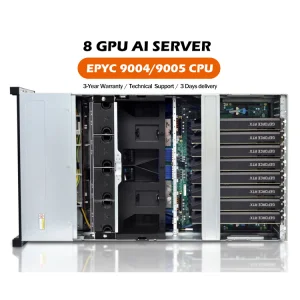
Gradual implementation of AMD EPYC 9005 Series CPUs and the latest generation of enterprise accelerators. By offering dual-socket motherboard integration, we aim to deliver up to 256 physical CPU cores per system to maximize data throughput for GPU tasks.
Recognizing the limitations of air-cooled datacenters under high GPU density, we are testing custom liquid-to-air cooling options for our 4U/7U servers. This reduces fans' power draw by up to 30% and keeps GPU core temperatures below critical thresholds under full load.
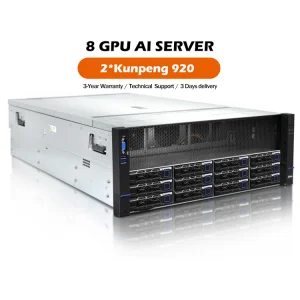
Expanding support for ARM processor platforms, including the Huawei Kunpeng 920 and Atlas series. This provides enterprise clients with alternatives to traditional x86 server hardware, creating a more resilient supply chain.
Our engineering team designs bespoke OEM hardware configurations optimized for your exact GPU, storage, and networking requirements.
Get a Custom QuoteImplementing computational systems goes beyond merely racking servers; it requires a structured approach to hardware integration, thermal engineering, and power management. We work closely with our partners in Russia and Eastern Europe to provide:
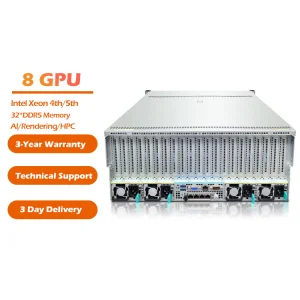
Explore our full line of rackmount platforms, from affordable inference nodes to high-density, multi-GPU supercomputing solutions.
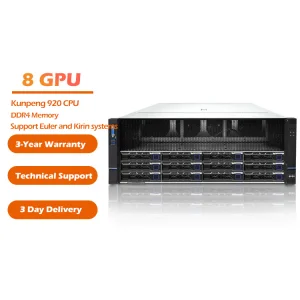
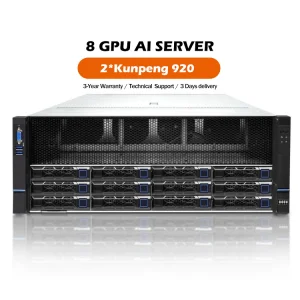
Answering technical questions regarding server customization, deployment, and logistics parameters for customers in Russia.
 Vertex AI Server